There have been many days this trip where rain showers were forecast. Every time, the forecast was wrong and the weather was great. Today that streak ended. But once again, I’m getting ahead of myself.
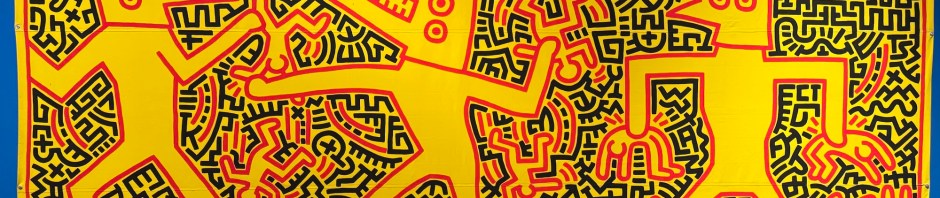
The first day we arrived in Rome we saw signs for a Keith Haring exhibit. The museum was only a four minute walk from our apartment, but we were busy seeing Roman ruins, so we hadn’t gotten to see the exhibition. But some of us were “Roman-ruined-out” and besides, with rain forecast, a museum close to home seemed like a good idea.
Jan was familiar with Keith Haring’s work, but I confess I wasn’t. I was impressed and found the exhibition fascinating, especially some of the videos showing him working on street art in realtime. He was a contemporary of Andy Warhol, and seeing his work, this wasn’t a surprise.
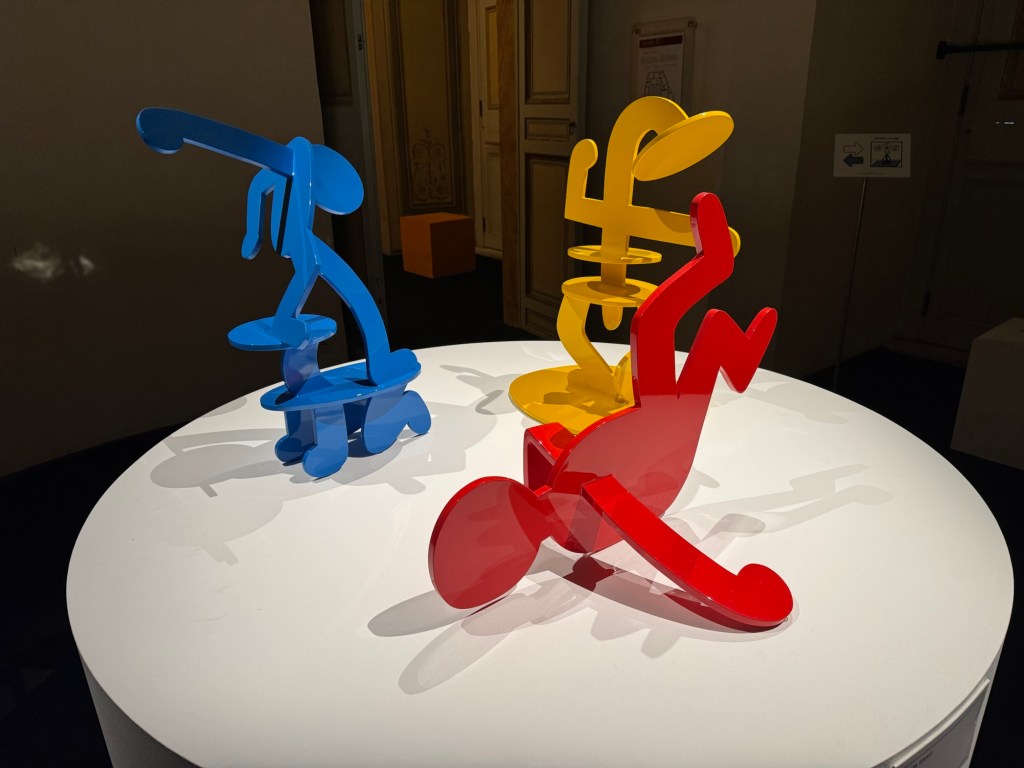
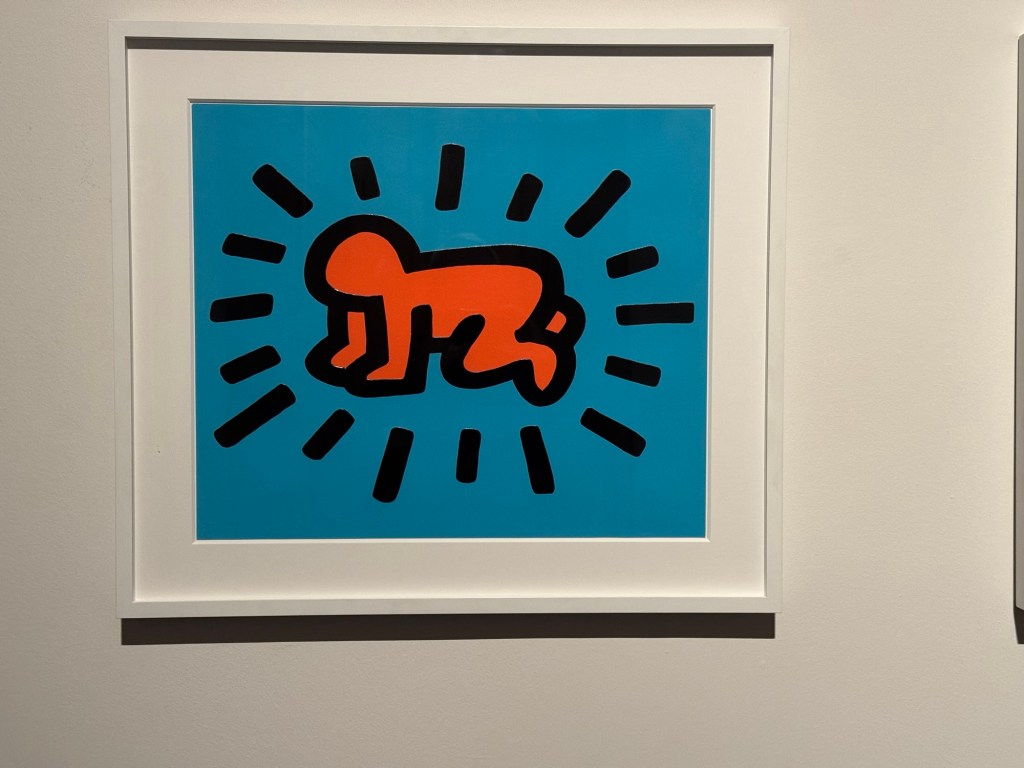
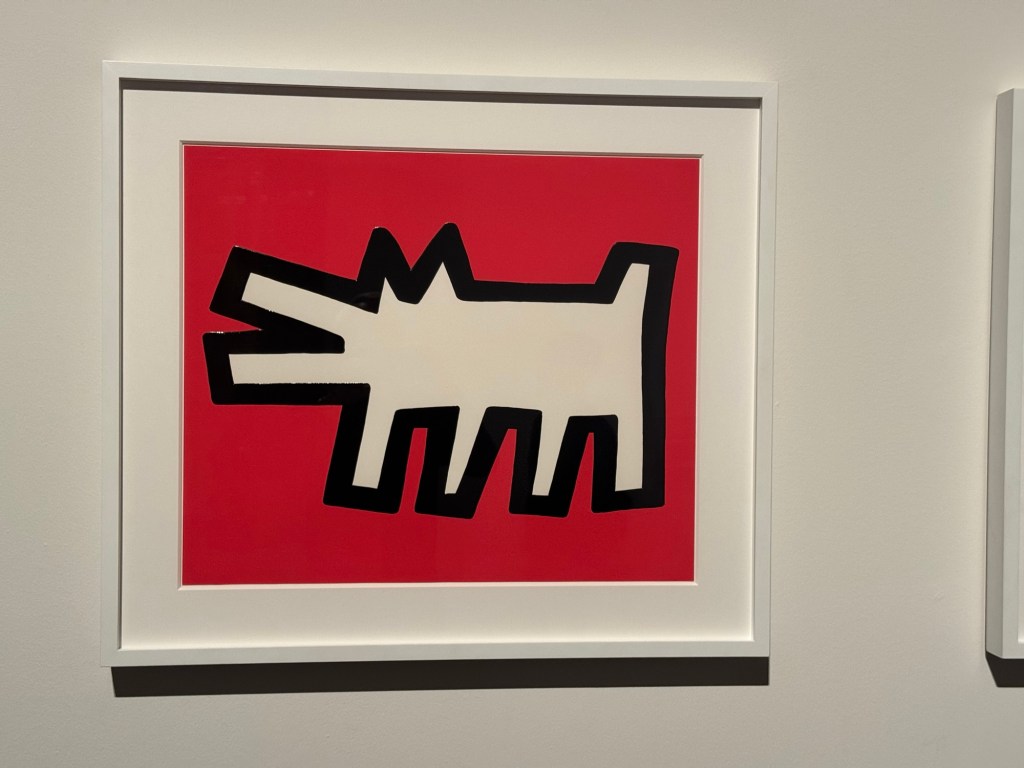
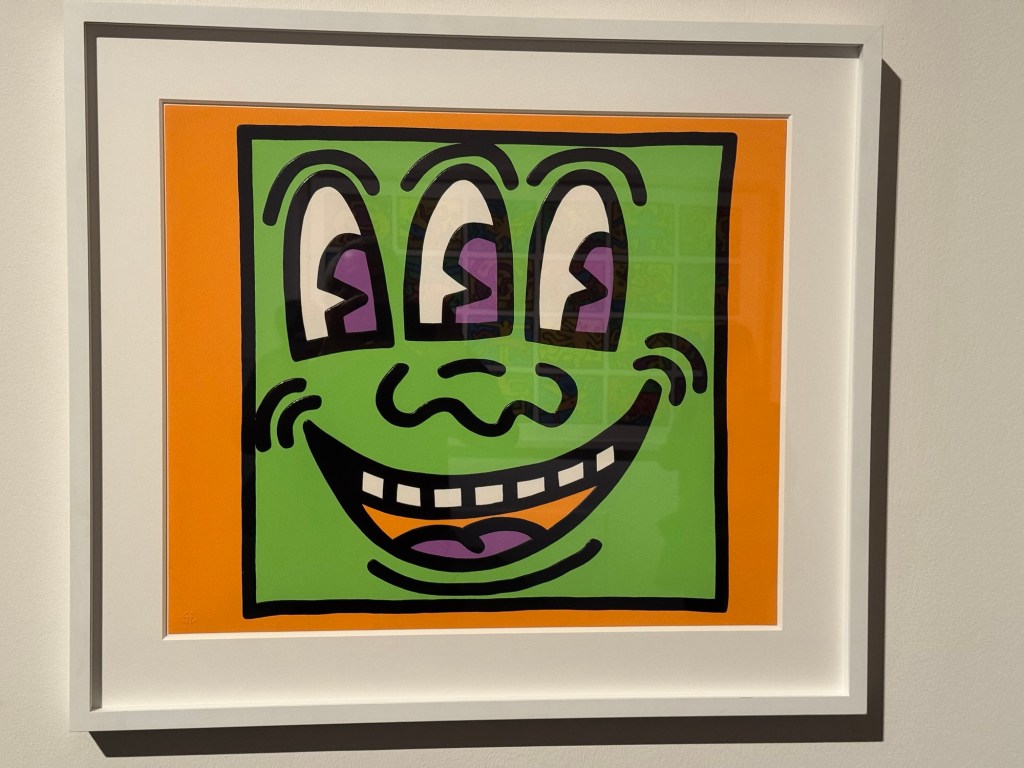
Keith Haring had a very distinctive style, developing a number of iconic images that appeared frequently in his work. Here is a sample of some of the most famous.
I’ll include one example of a piece that incorporates some of these ideas into a larger picture. This piece was part of an exhibit in support of victims of a 1980 earthquake. Look closely at the images in the lines.
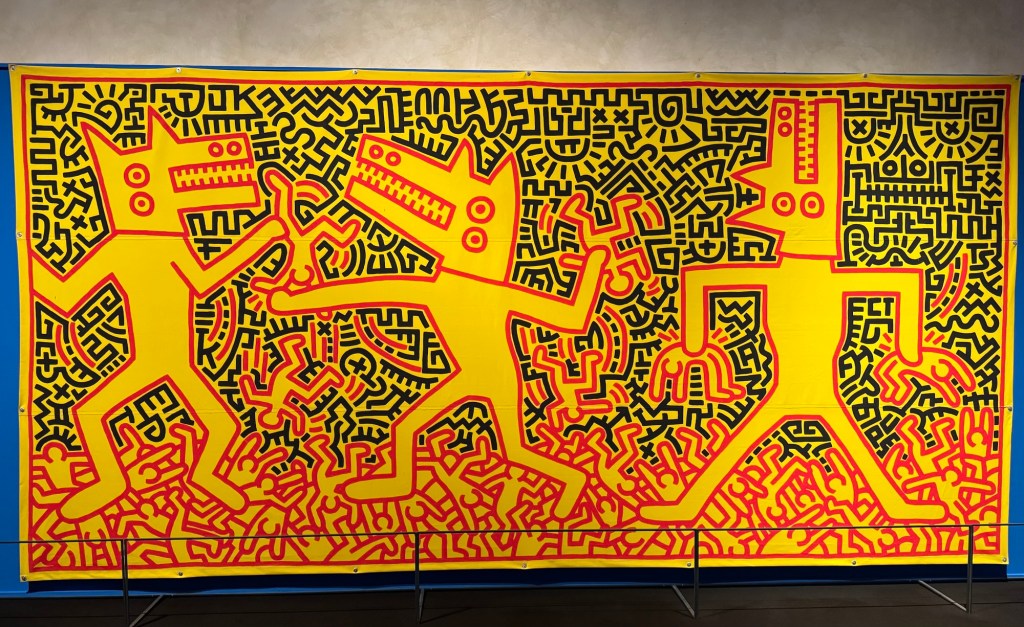
Keith Haring died young, in his early 30’s, from complications due to AIDS. What might he have achieved if he had lived longer?
The weather held for the morning, and after lunch, in spite of the fact that some of us were “Roman-ruined-out”, we decided to risk a somewhat longer walk to see the Ara Pacis – an altar dedicated to the emperor Augustus, celebrating Pax Romana (basically celebrating the end of the Roman civil war, which Augustus won). It is a relatively small museum dedicated to a single subject, but that was perfect for us. And the museum had a wealth of information about how the altar was rediscovered and pieced together.
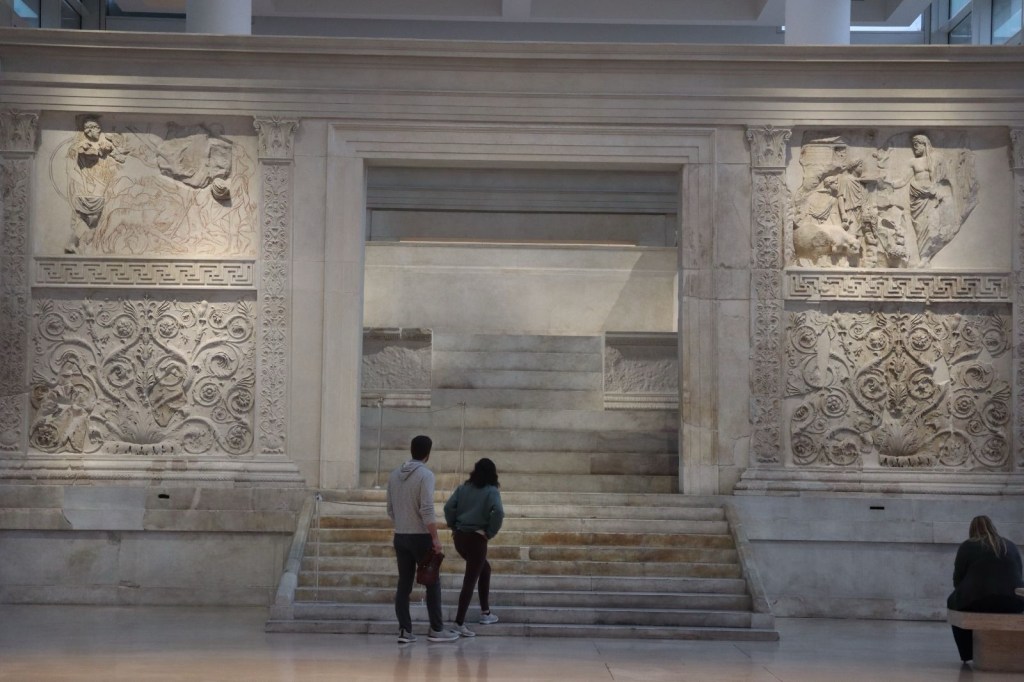
What you see is a mix of original pieces, plaster copies of originals held in other museums, and a bit of interpolation. It is put together in a way that allows you to see the altar as it would have appeared in the time of Augustus. Where there are gaps in the material, they try to show them, highlighting the pieces that are original. These pictures show some of the gaps.
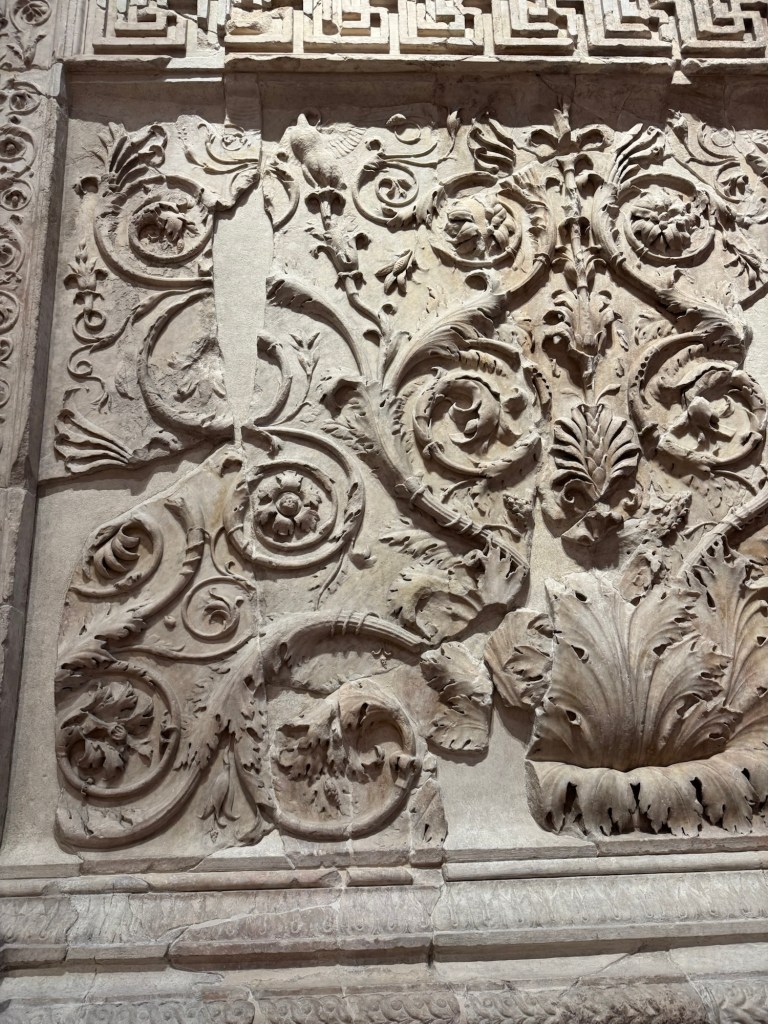
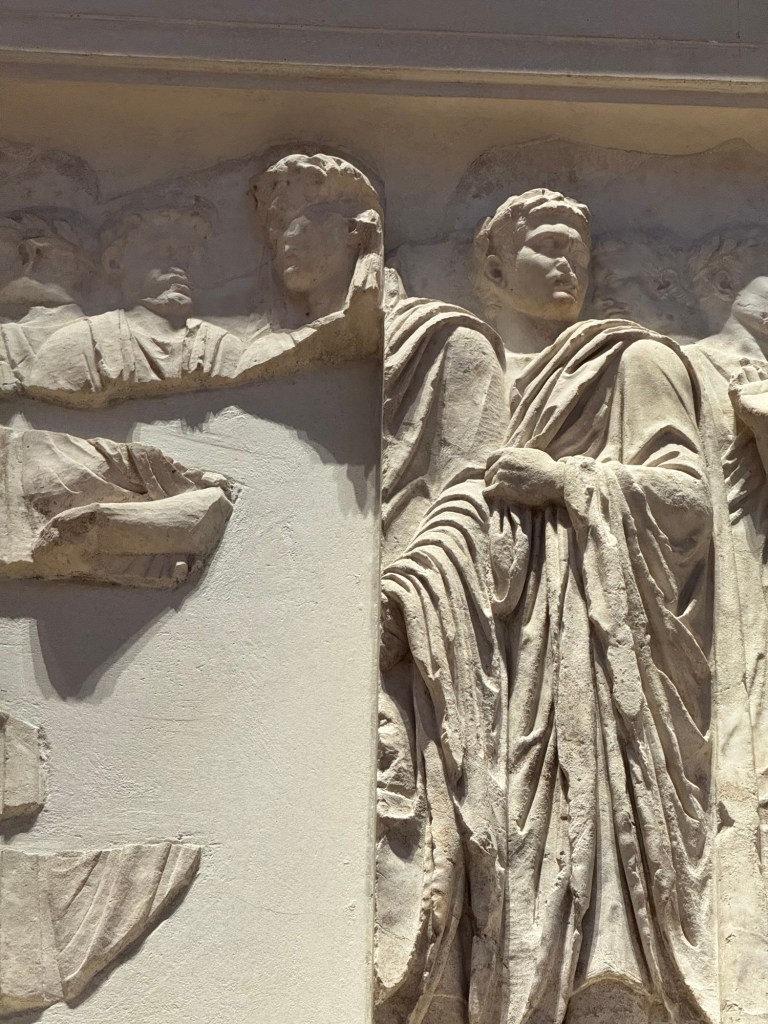
The detail in the remaining images is amazing. Here are a few to give you an idea.
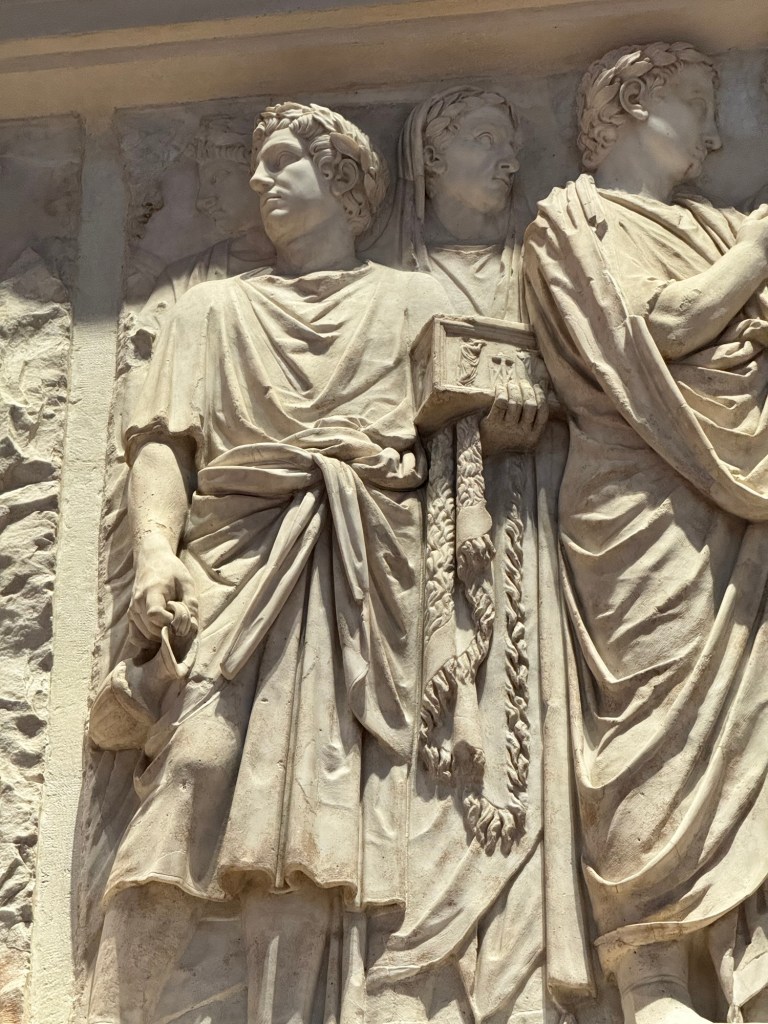
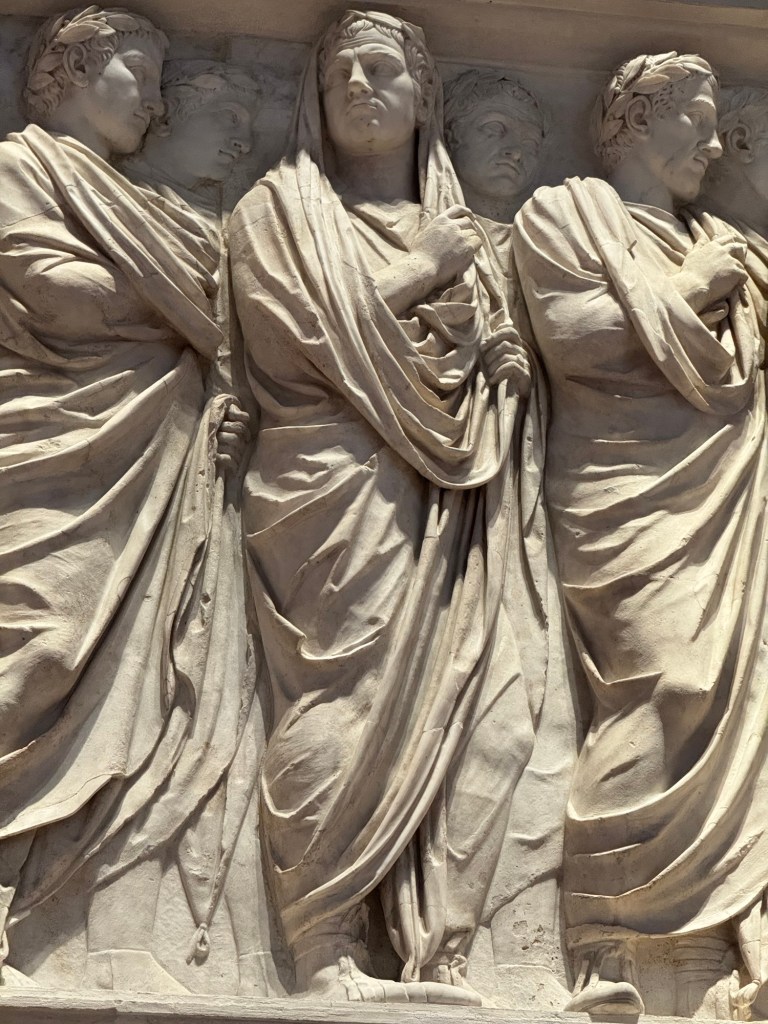
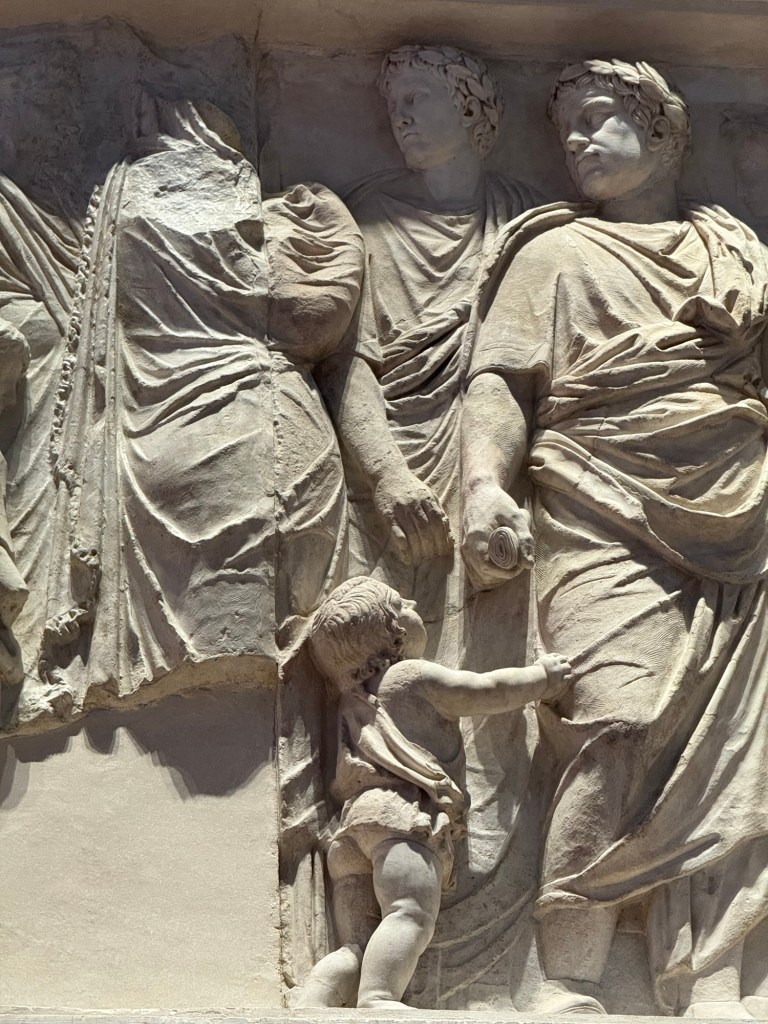
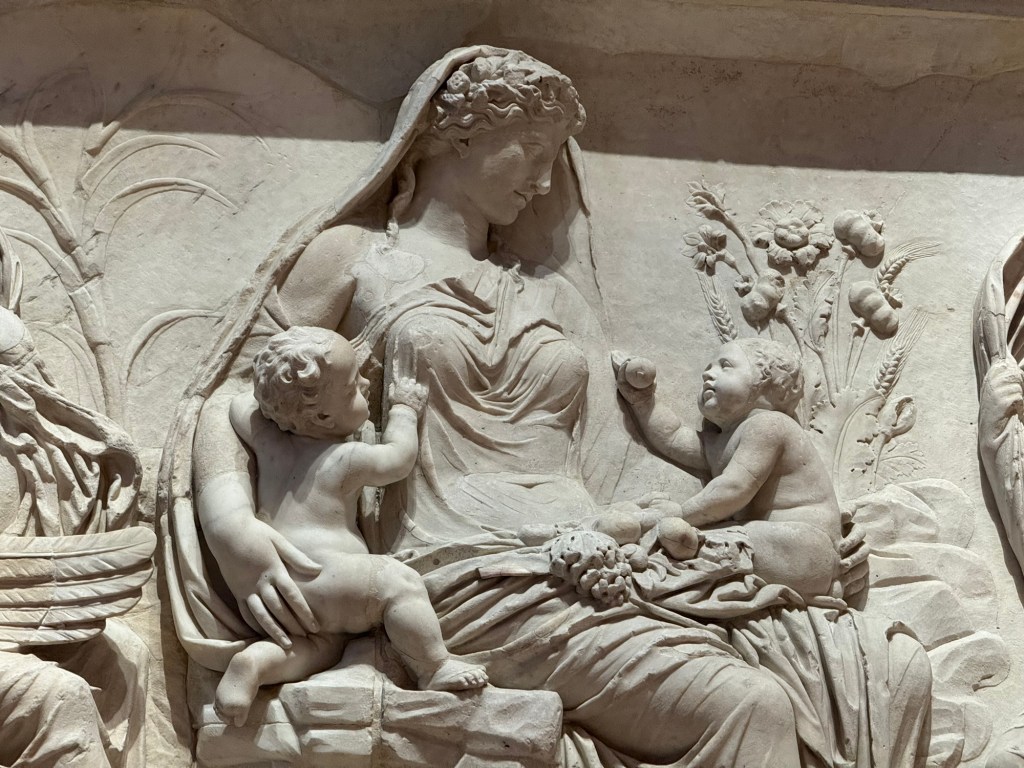
I started this post hinting at rain, but so far we had been lucky. But while we were in the museum, the skies opened up and we got quite wet on our walk back to the apartment. But it was definitely worth it.
Tomorrow … who knows? More rain is forecast.


Great to hear that you saw the Ara Pacis and enjoyed it! Its been a while, but I remember a few things about it that added to its story line (apologies if you’ve already read this). The murals were full of political spin; the one I remember was his putting children into the mural. Not common in Roman works – Augustus included them in the Ara Pacis as a way of sending a message “children are important, they are the future of our country”. In reality the message was “MY children (grandsons) are important, they will be the future emperors”. And 2,000 years Mussollinini promoted the recovery of the Ara Pacis as a way of pushing his own political spin. Some things never change!
They provided quite a bit of detail in the museum, but I don’t think they got into the political spin that Augustus put into it. But they did have a lot of info into the spin that Mussolini put into the whole project. And I agree – some things never change.