Our plan to visit the Papyrus Museum in Syracuse fell through when we discovered that it was only open in the morning. Fortunately, we had a plan B, which was to visit Maniace Castle, built on the far point of Ortygia Island (essentially the old city of Syracuse). We walked past the castle yesterday while walking around Ortygia island, but today we went in for a look.
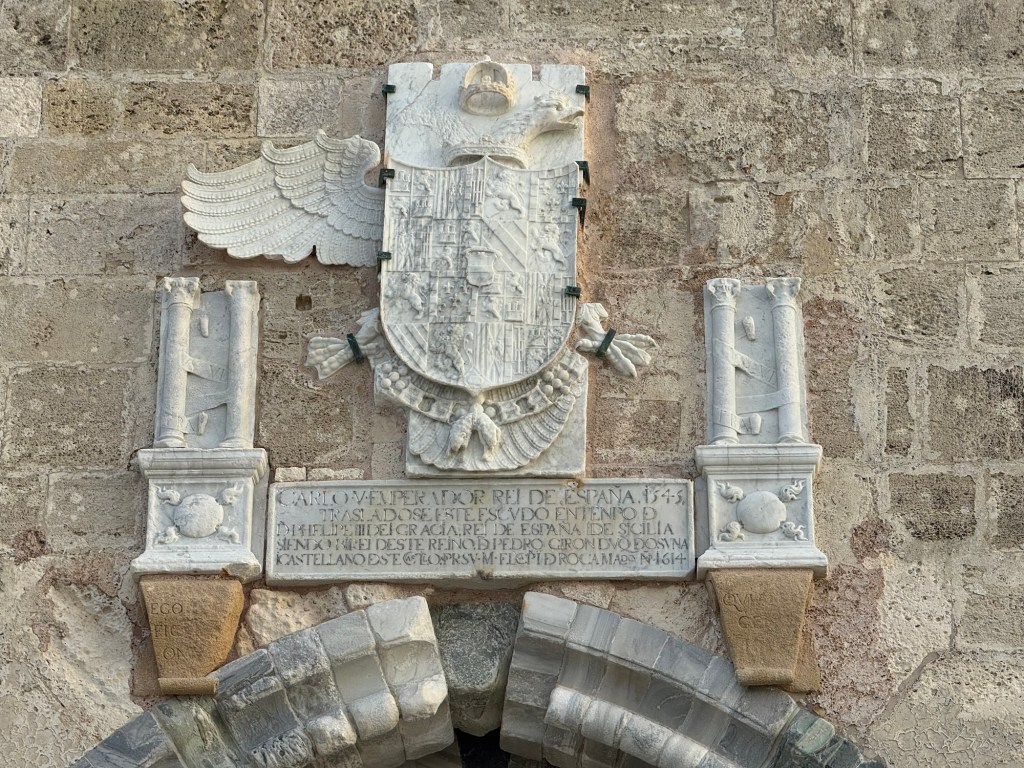
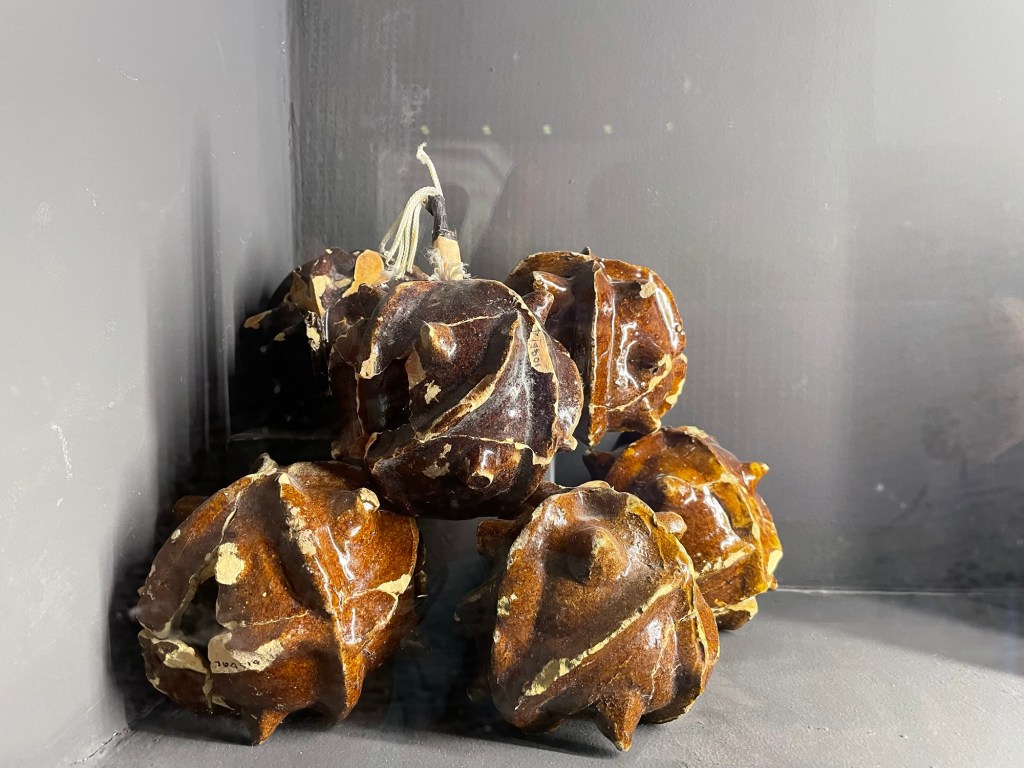
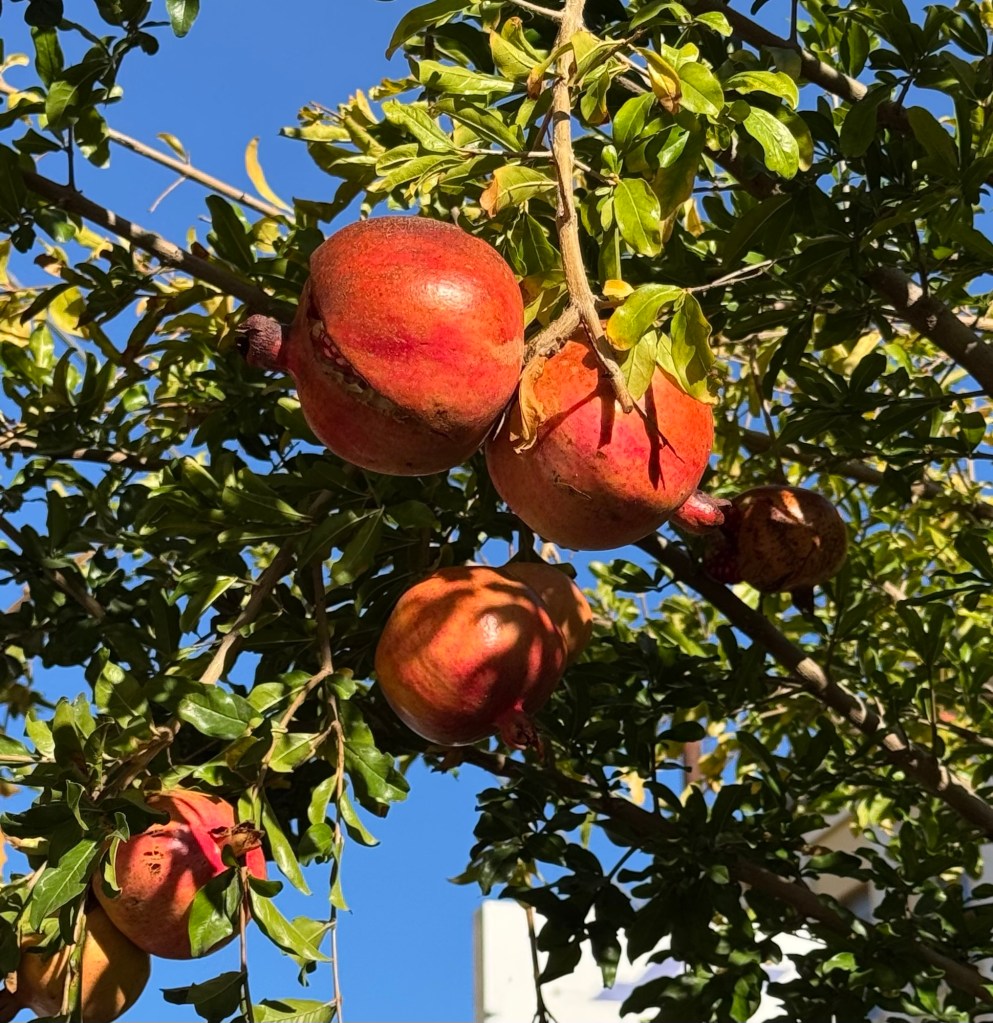
The castle was built between 1232 and 1240 by Frederick II, originally the king of Sicily, and eventually the Holy Roman Emperor. There were various exhibits lining the walls as we waited in line to buy tickets, and Jan spotted one of the displays showing early grenades. Have you ever wondered why they are called grenades? Well, it’s because the early ones resembled pomegranates, which are “granata” in Italian. You can see the resemblance.
At the start of the tour, there was a display dedicated to Frederick II, so we had a look. Turns out that I knew next to nothing about Europe at that time, so it was an excellent introduction to the castle. With that out of the way, we headed inside.
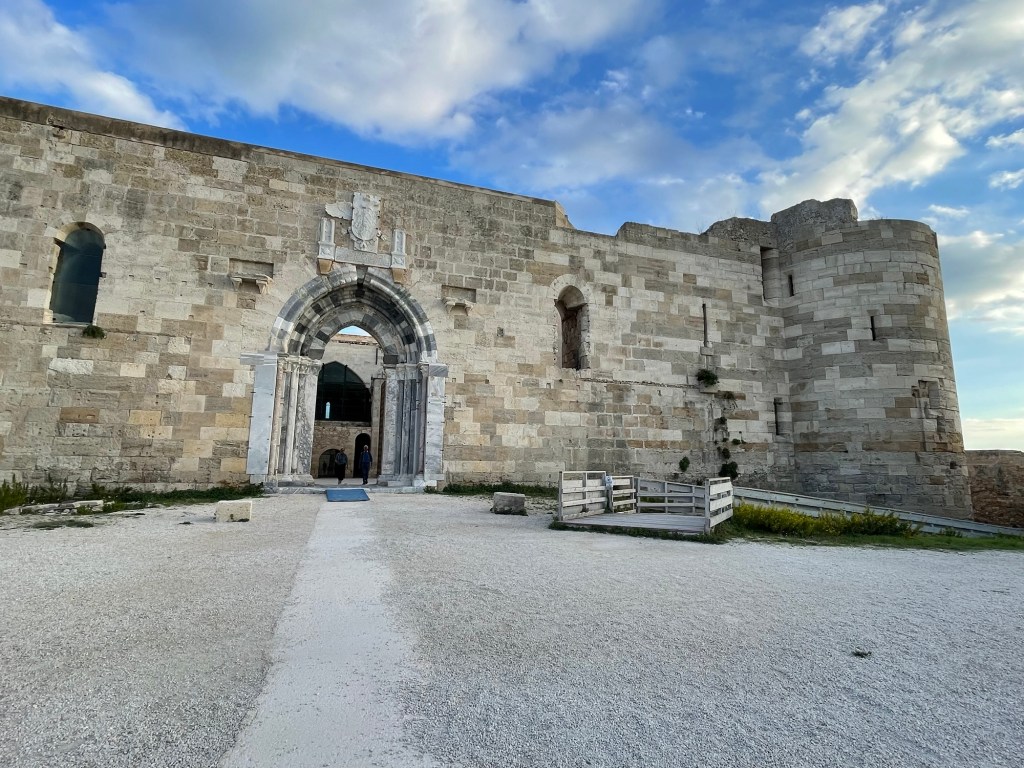
The castle included a great hall, which is rather impressive.
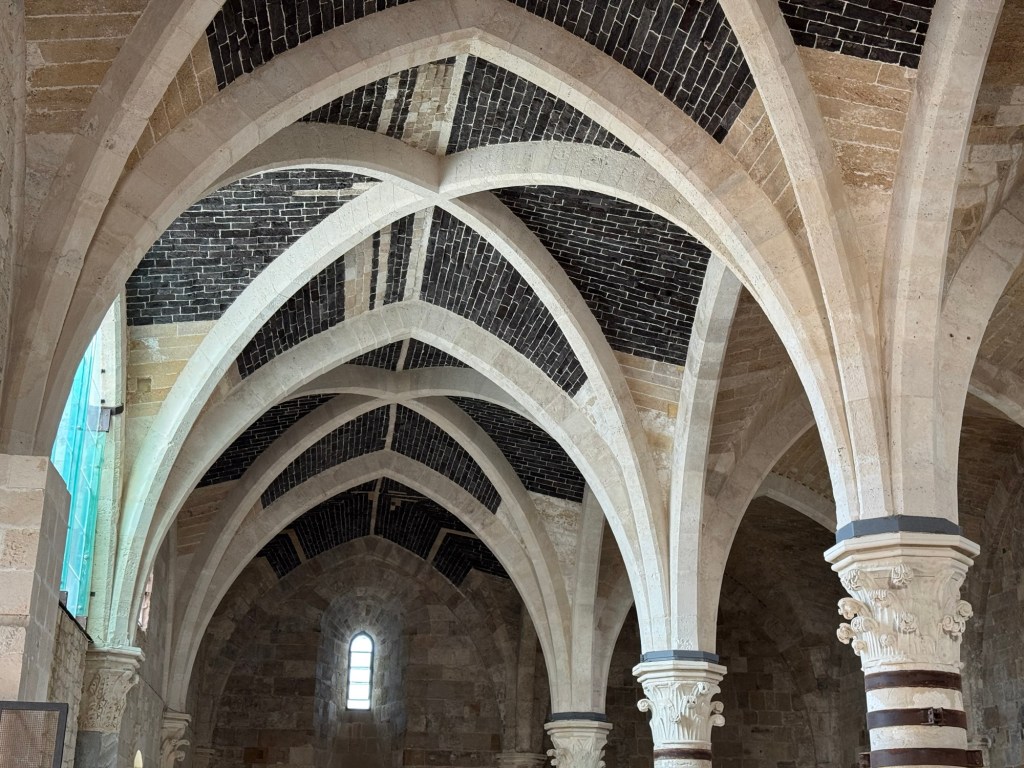
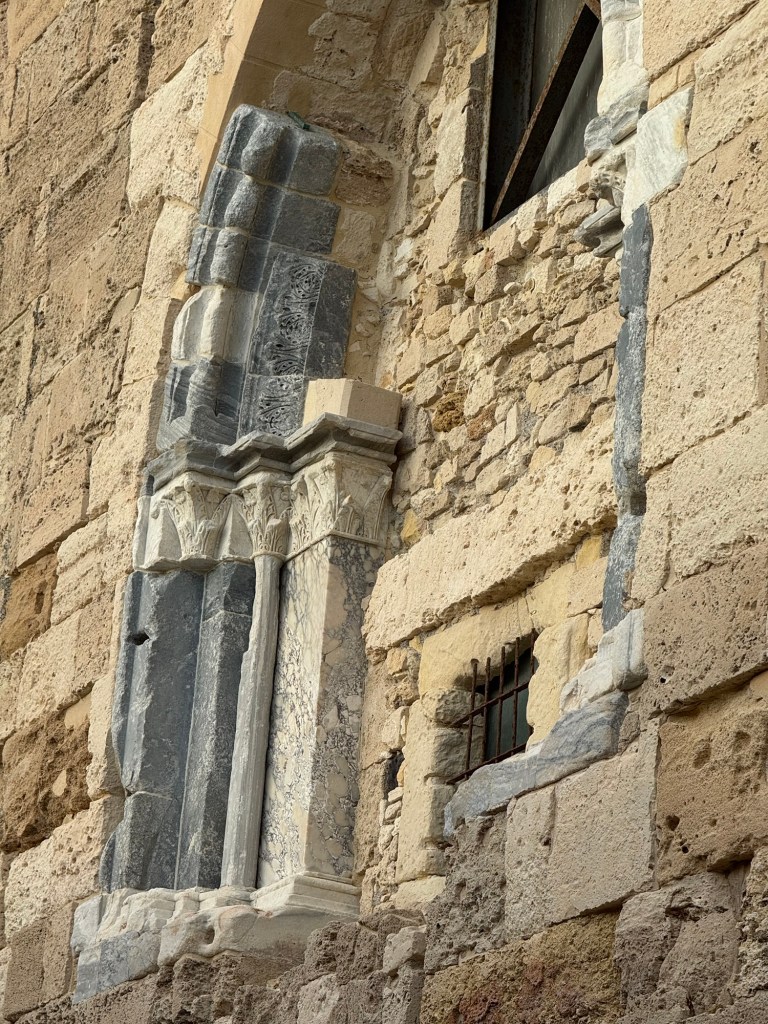
As you walk around, you can see areas in various states of repair … or decay. It isn’t always clear which. But in many ways it makes it more interesting.
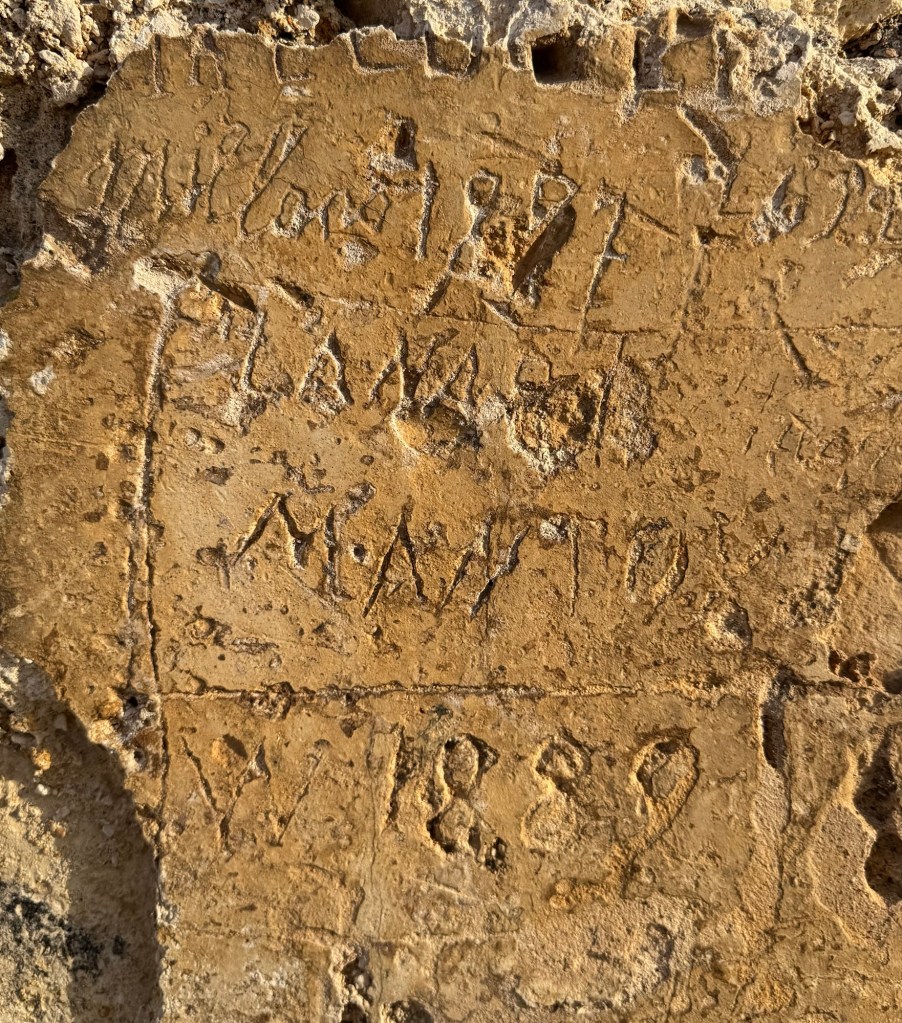
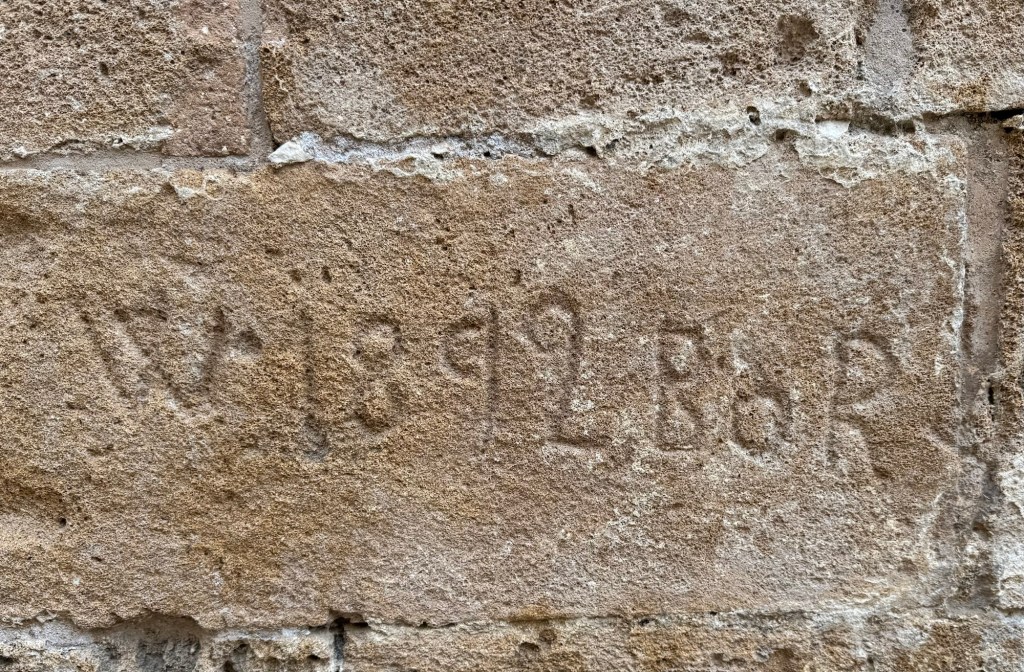
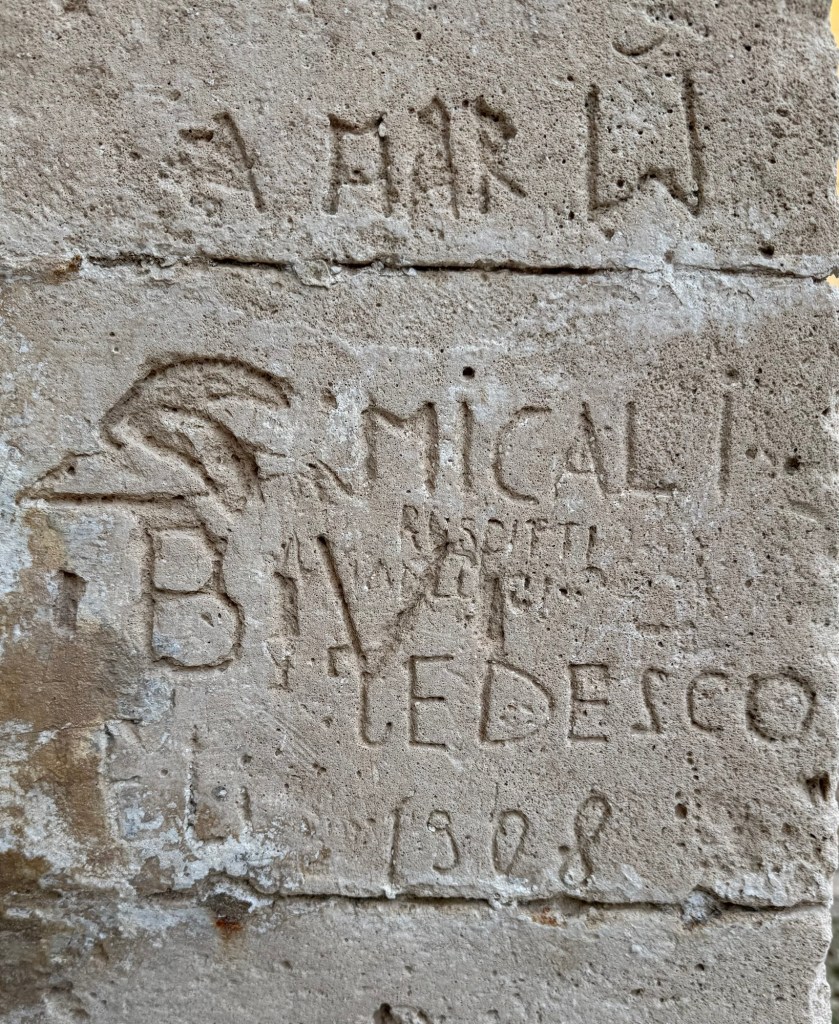
You also see signs of abuse by people over the centuries. We were fascinated by some of the graffiti stretching back well over a hundred years.
Most of the castle was dedicated to defenses.
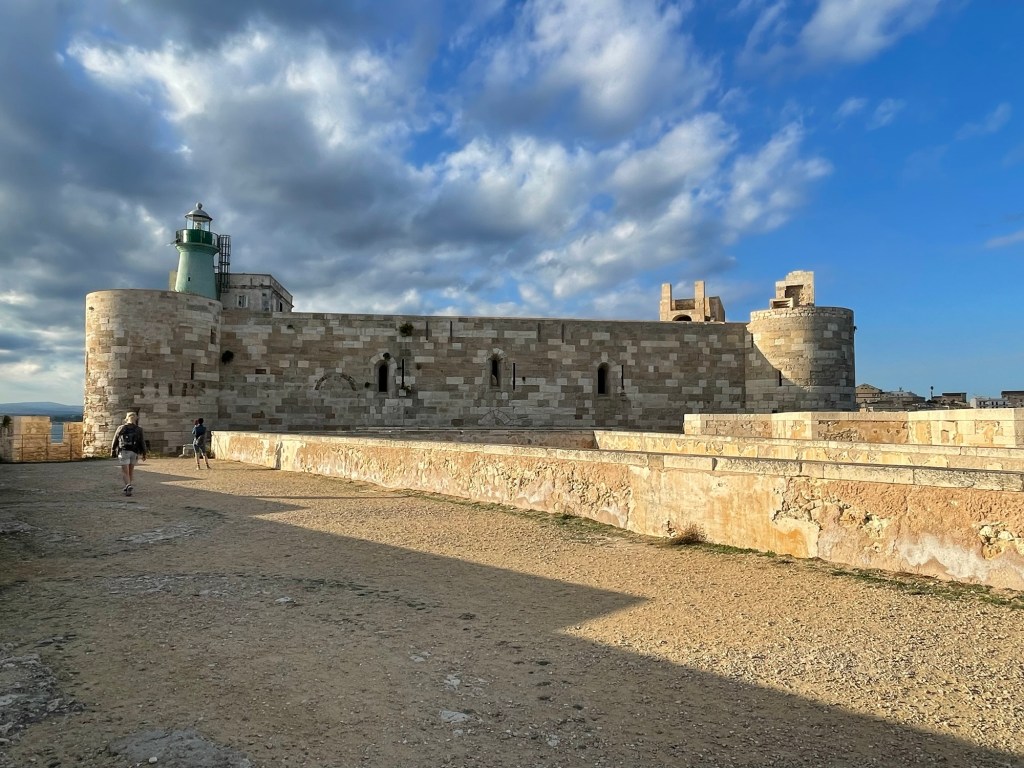
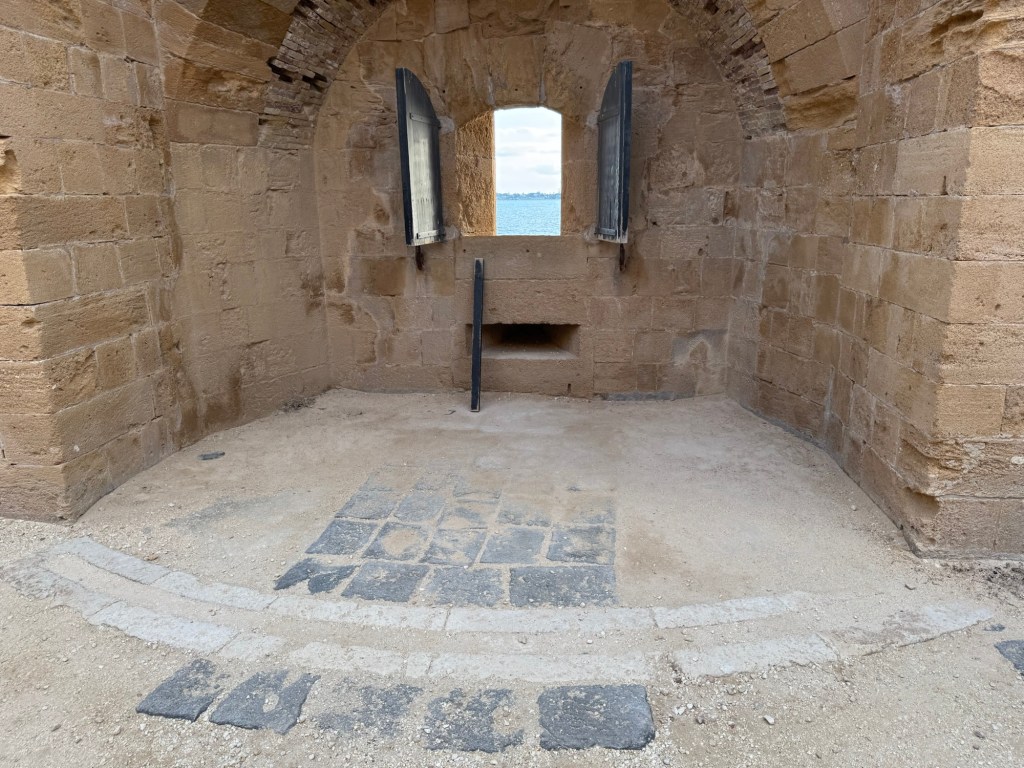
The original fort was built before gunpowder, but an explosion in 1704 damaged the fort and when it was repaired, it was modified to support cannons. This area included many vaulted rooms for cannons and the supplies to support them. Here is one of many.
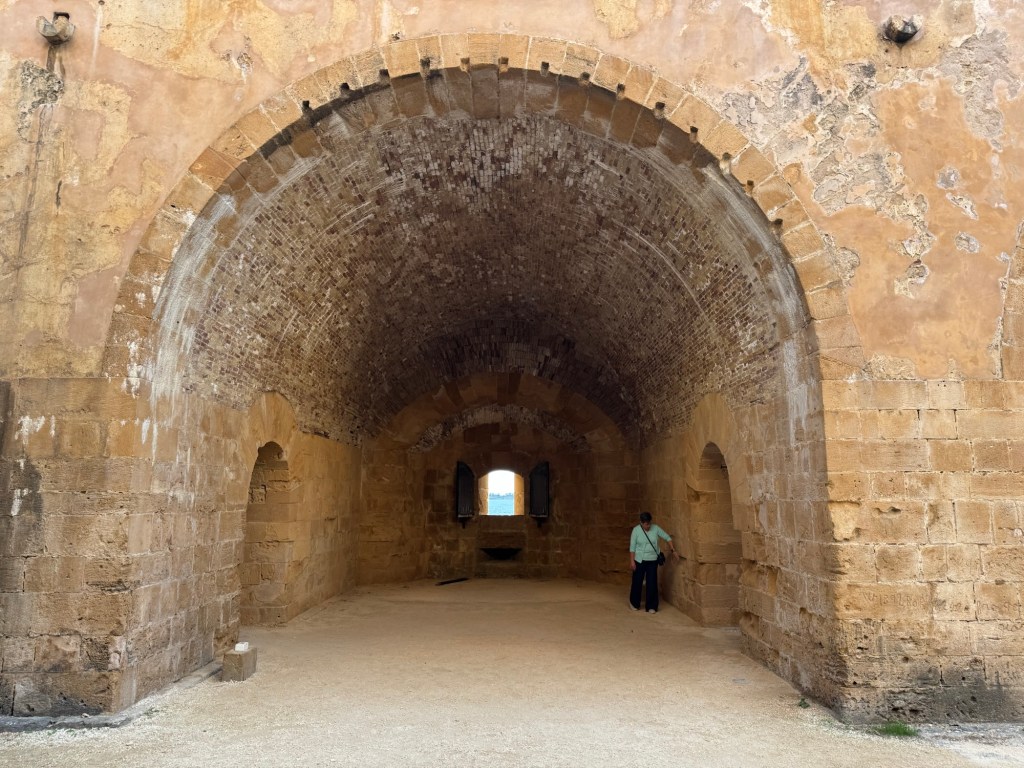
And you can clearly see the tracks that supported the cannons and allowed them to be aimed.
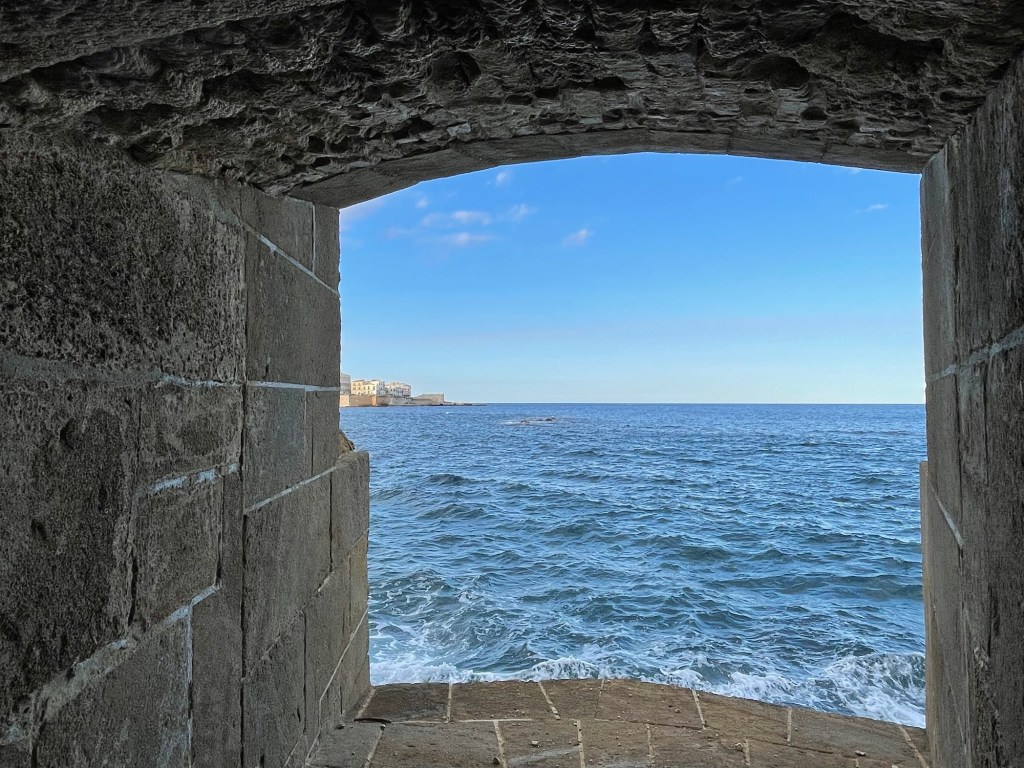
Here is the view from one of the ports, where you can see the edge of Ortygia Island, where we walked yesterday.
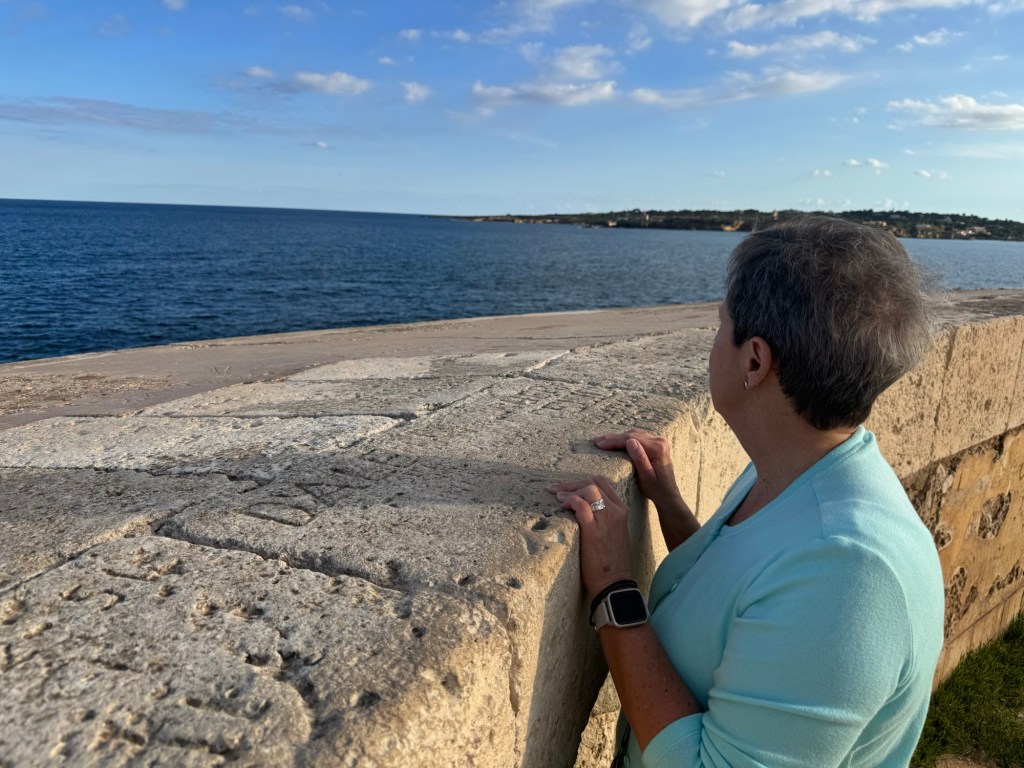
We looked over the edge to see just how thick the walls were. The answer … very thick.
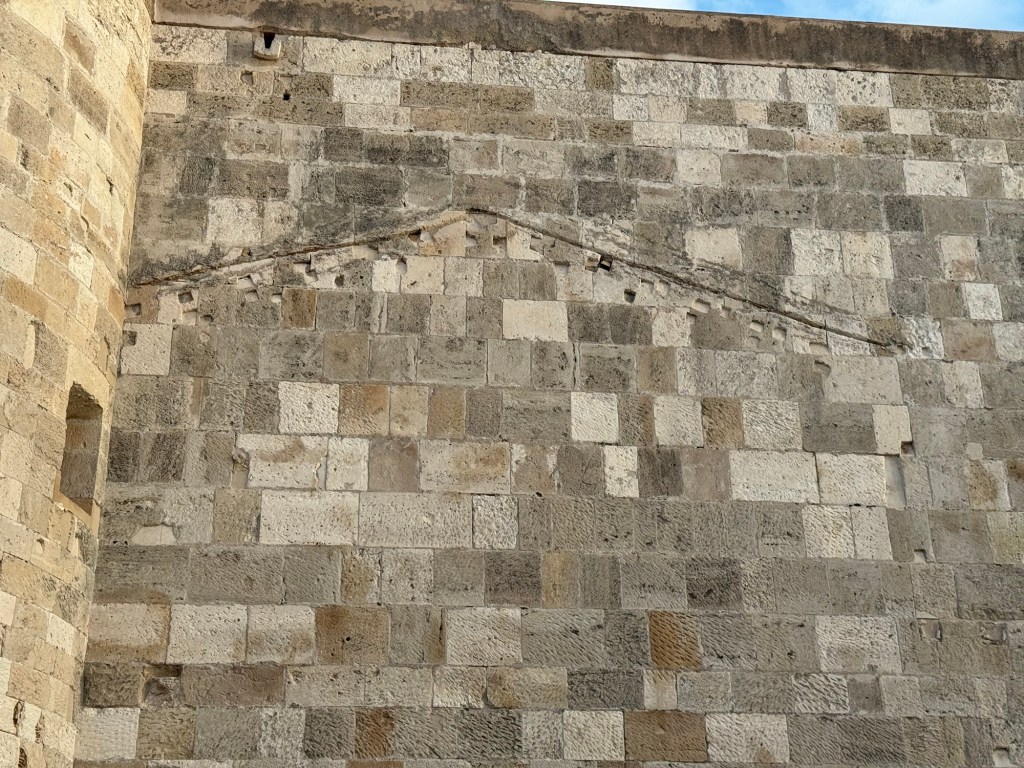
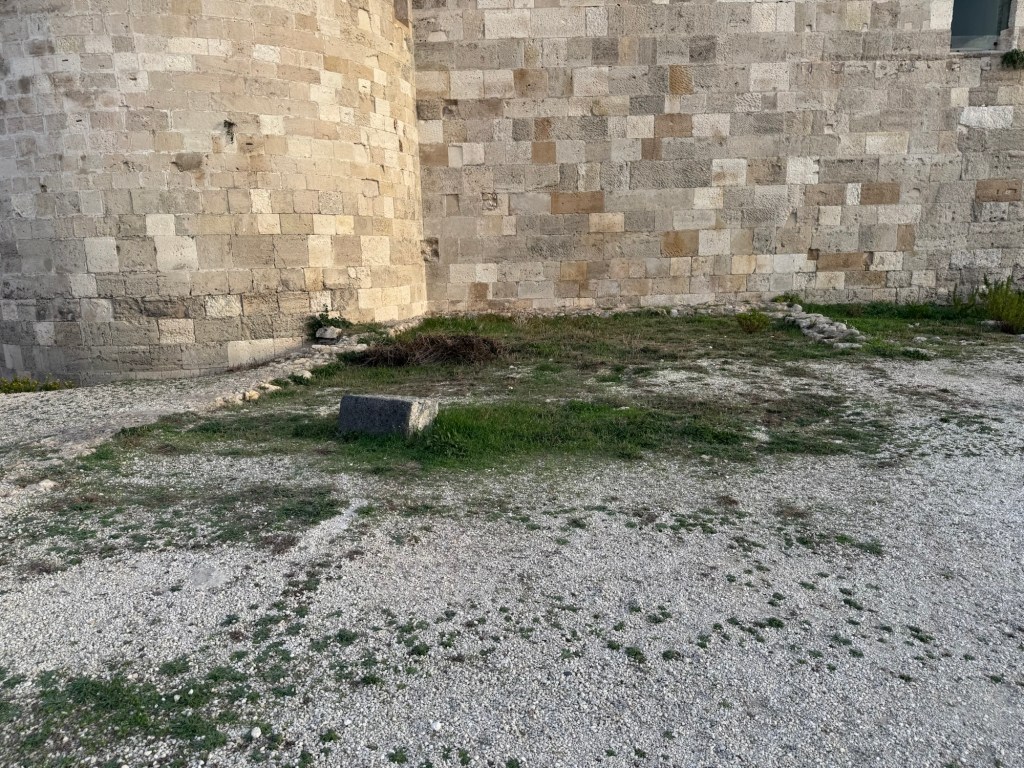
One of the things that fascinates me is how these buildings are modified over the centuries. In this next gallery you can see the signs of an old roof line, and down below it, the remains of the old foundation.
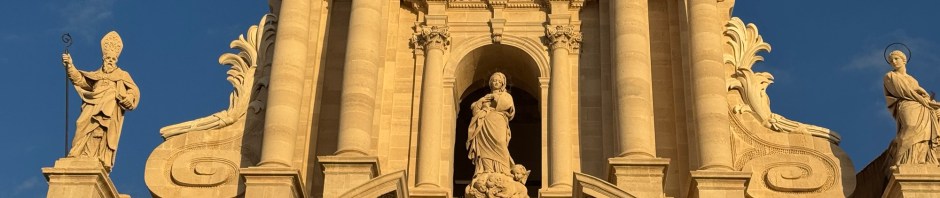
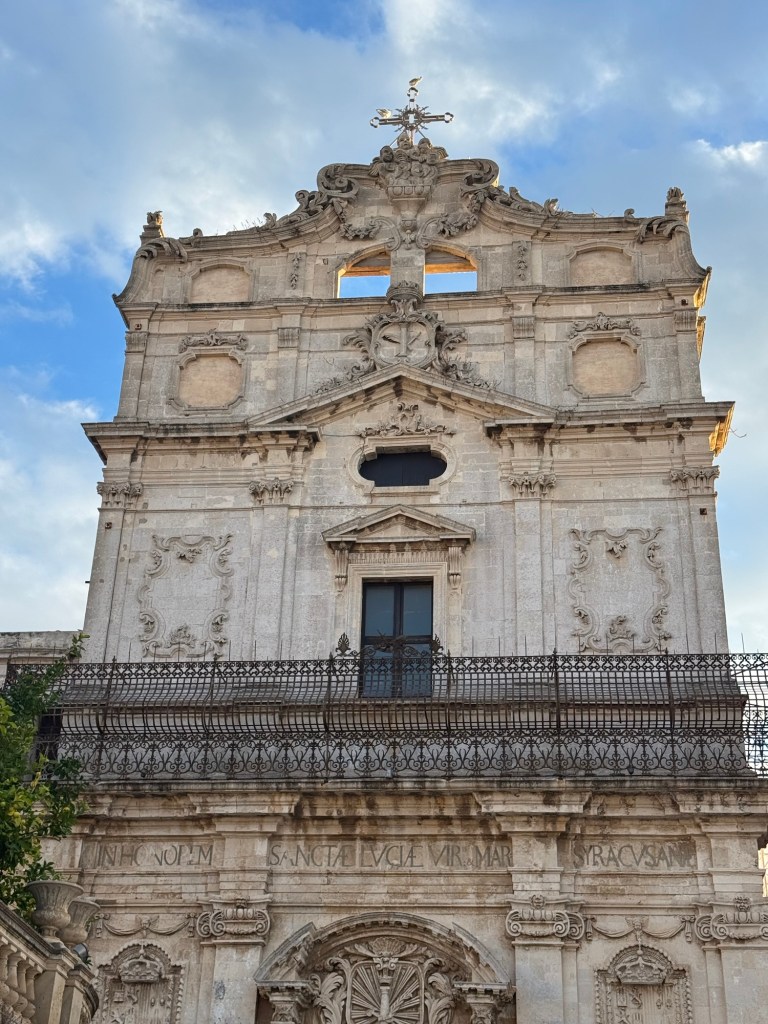
Then it was time to head back, walking through the center of Ortygia Island. Of course, it had many churches. This one was dedicated to the city’s patron saint.
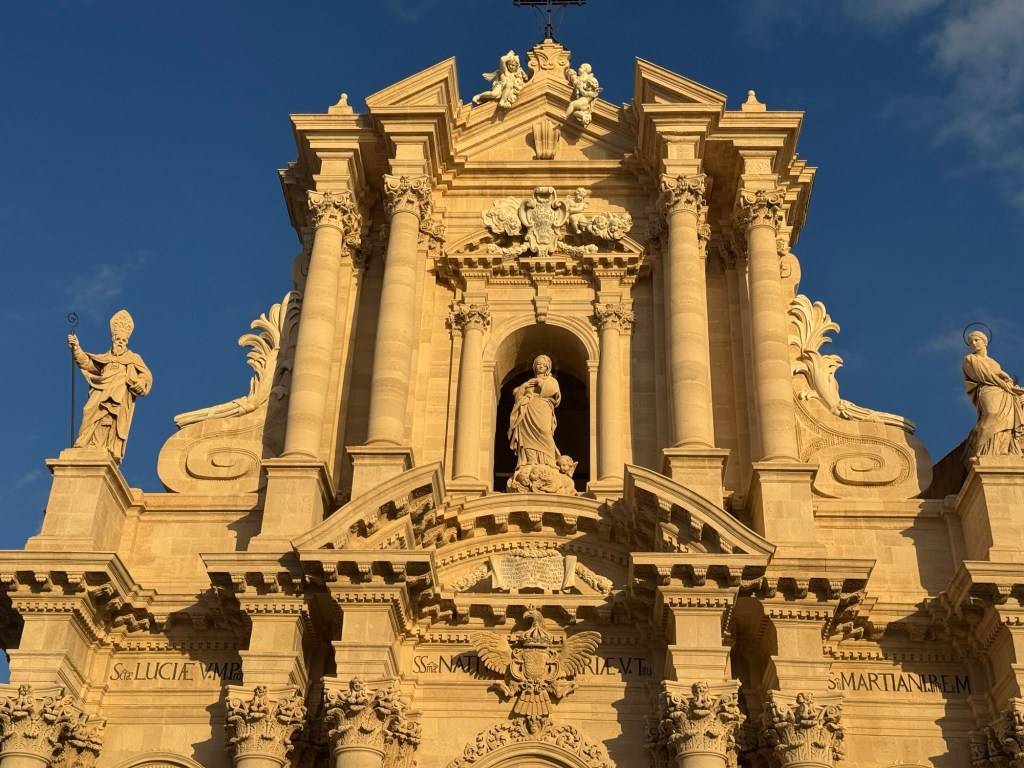
And this next cathedral was illuminated by the setting sun. Apparently the remains of the main Doric temple in Syracuse, dedicated to Athena, have been incorporated into the cathedral.
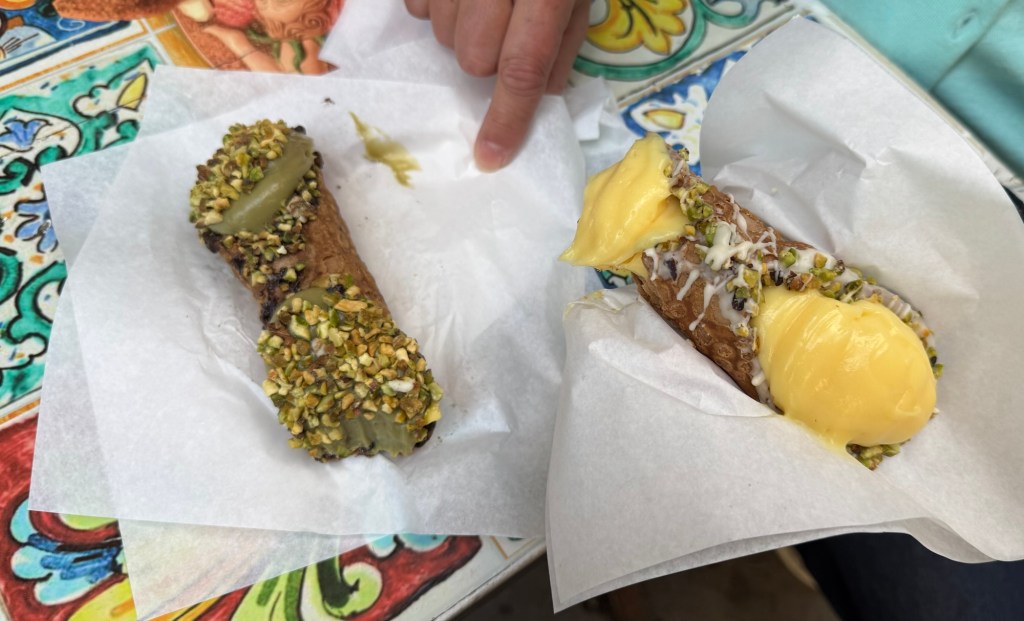
After all that hard touring, we needed a little snack, so we stopped for cannoli with the filling freshly added while we watched.
Tomorrow we head back to Catania for the night and then off to Rome.


