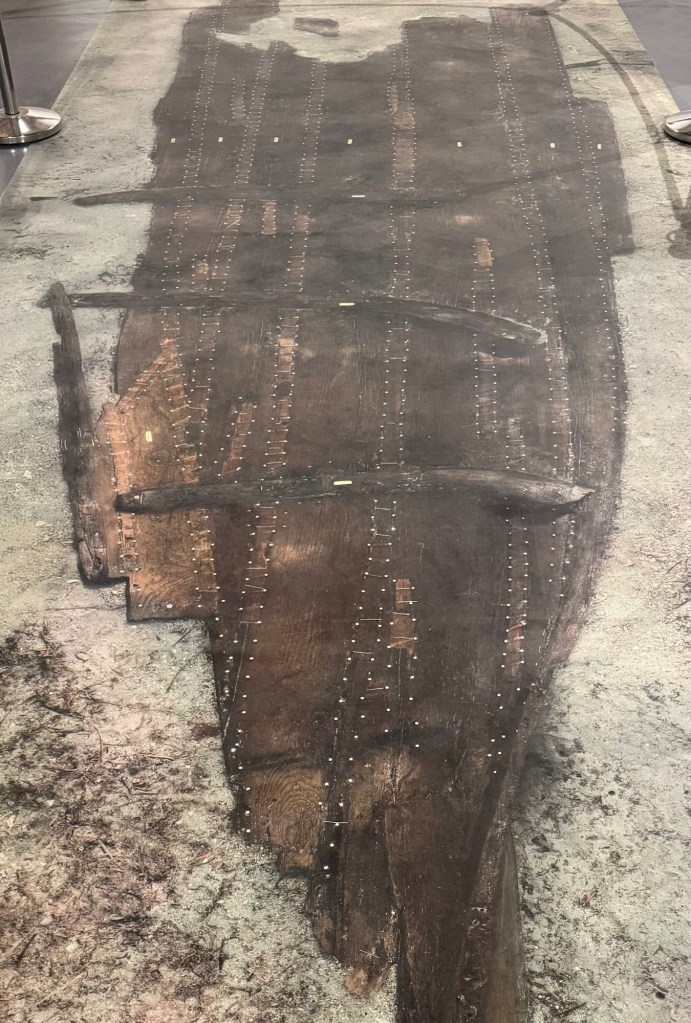
There were two things that interested us about Marsala. One was that it’s the source of Marsala wine. The other was that it has Carthaginian ruins dating back to the First Punic War. The local wineries were closed on the weekend, which ruled out a wine tasting tour. But there was an archaeological museum just a ten-minute walk from our apartment. And best of all, in addition to Carthaginian artifacts, it also included Greek and Bronze Age artifacts. Fun fact – the Greeks and Carthaginians both colonized Sicily well before the Romans were of any significance. The most impressive display was a Carthaginian ship that dates to the First Punic War, and may have been sunk during that Rome-Carthage war.
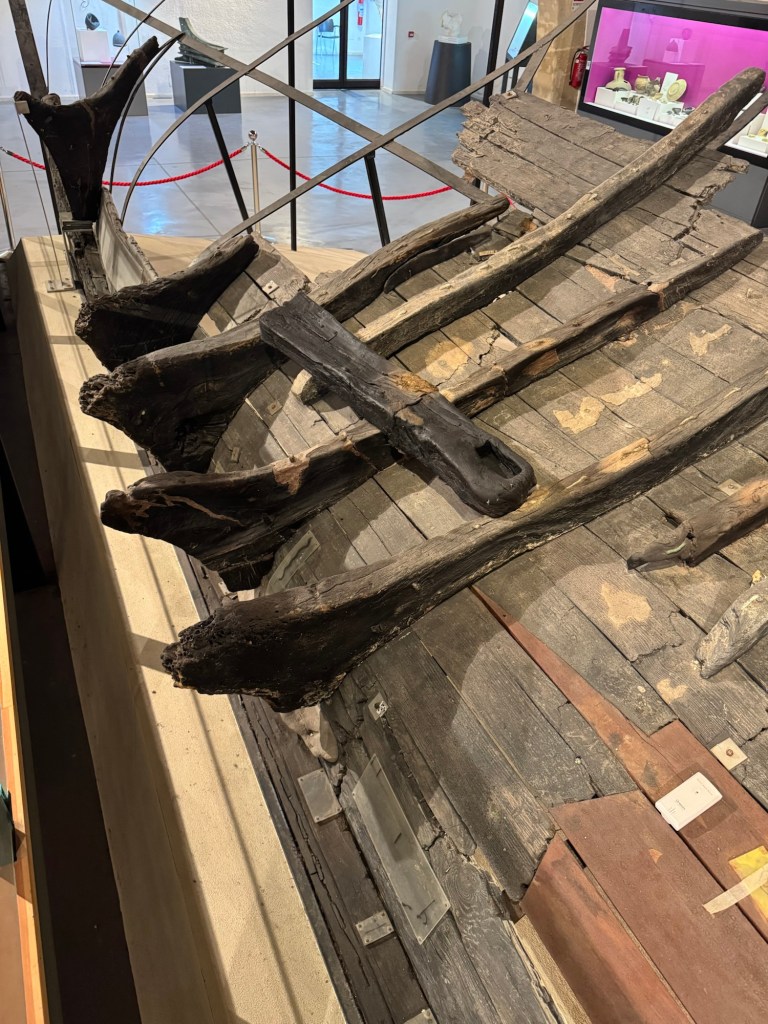
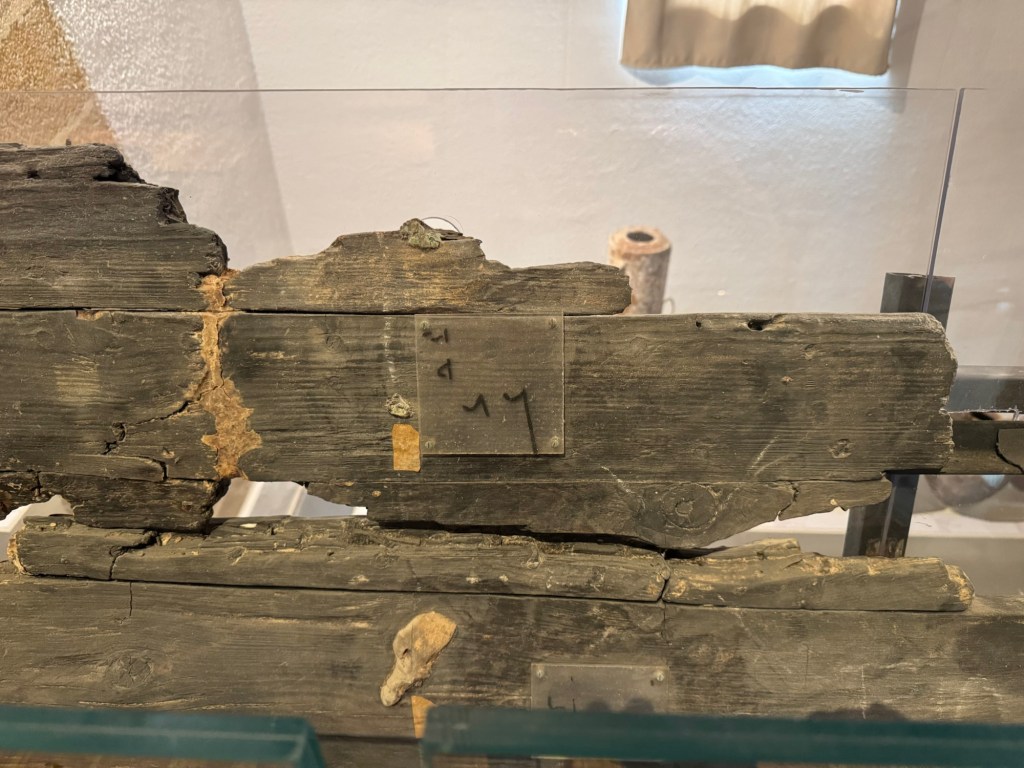
The wreck provided valuable information on the design of Carthaginian ships and the materials and types of wood used. It also offered insights into the construction process. It appears that the individual pieces were independently built based on a standard template, labeled, then transported to the shipyard to be quickly assembled. Some of the planks still had labels in Phonetician script. Kind of like an early Ikea flat-pack design.
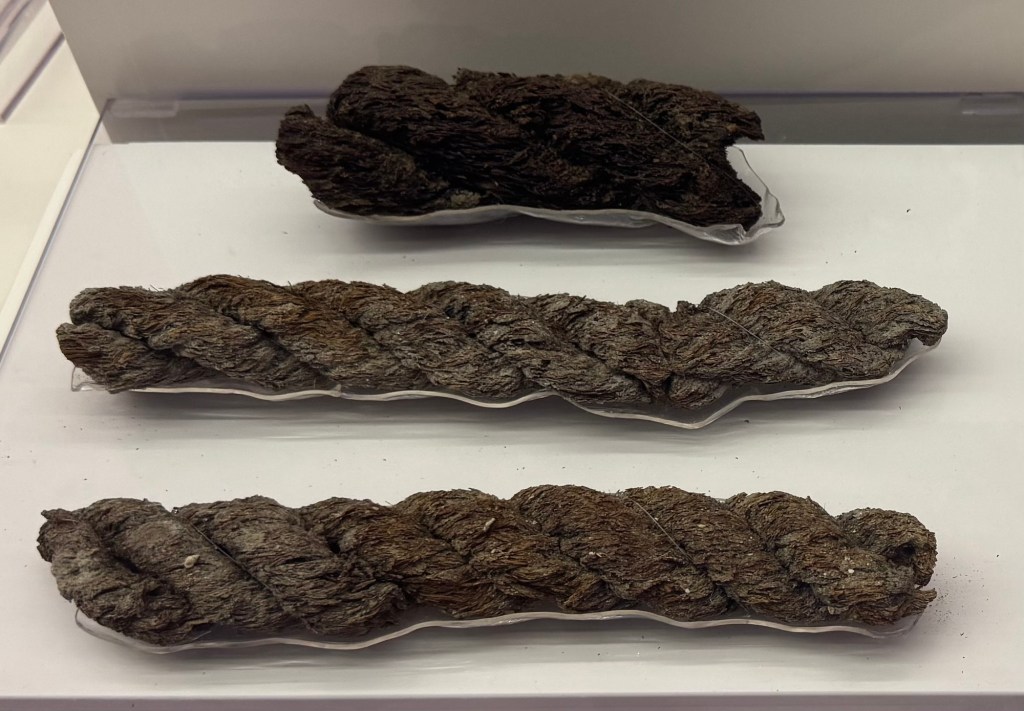
Some of the original rope was also preserved.
This wreck was over two thousand years old, which was impressive until we saw the next one, which was over three thousand years old, dating from the Bronze Age. Even more interesting was how it was put together. The boat was sewn together. That’s right – a sewn boat. Apparently it was a thing. Some of you people who enjoy sewing might want to give it a try … or not.
And of course, there were hundreds of recovered artifacts from the wrecks, including many clay vessels.
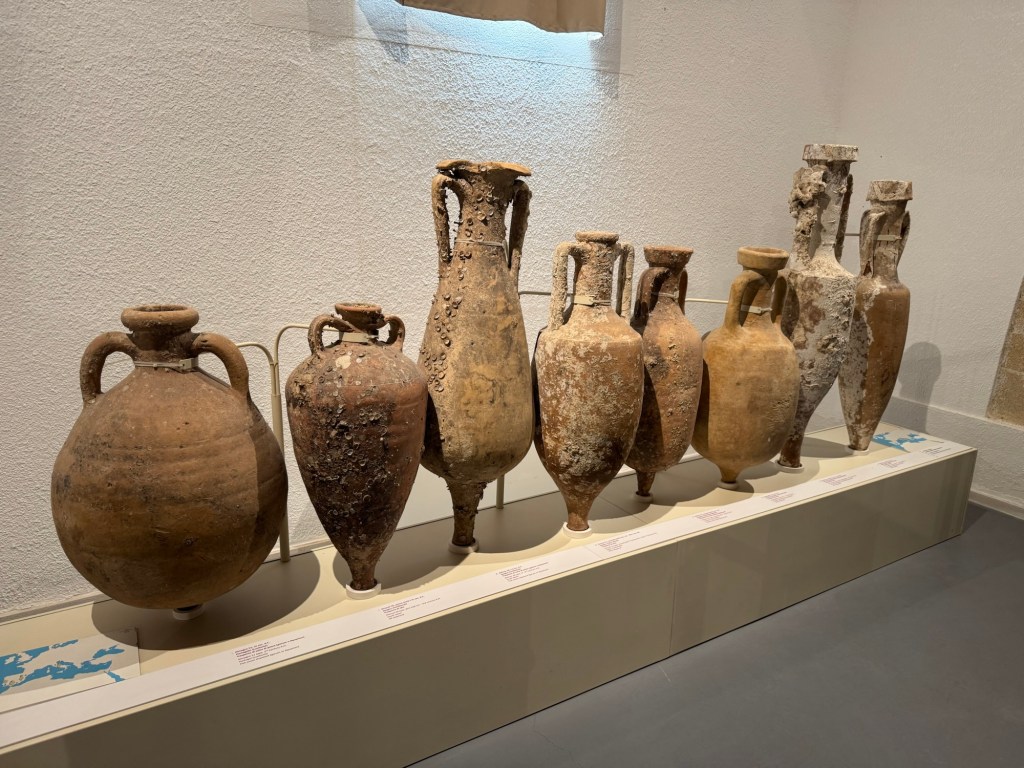
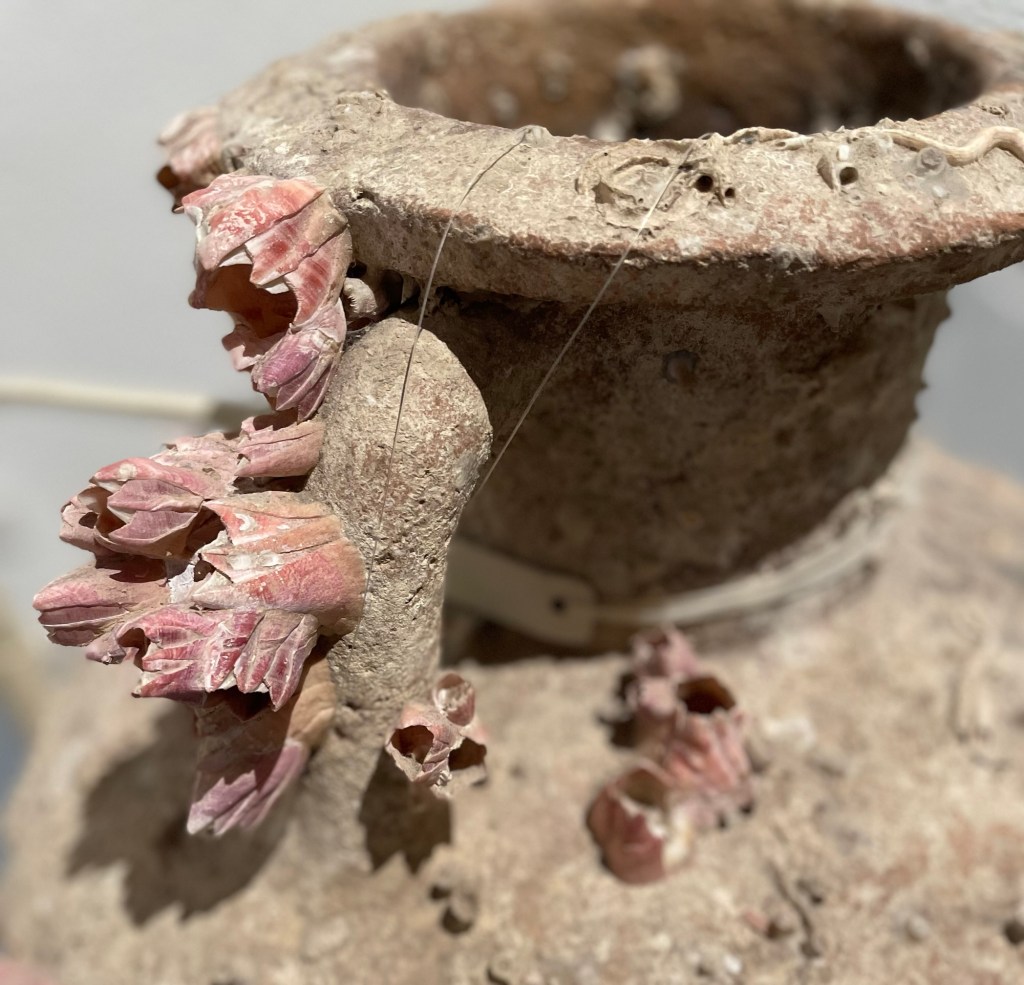
After two thousand years under the water, they had been colonized by a variety of sea shells.
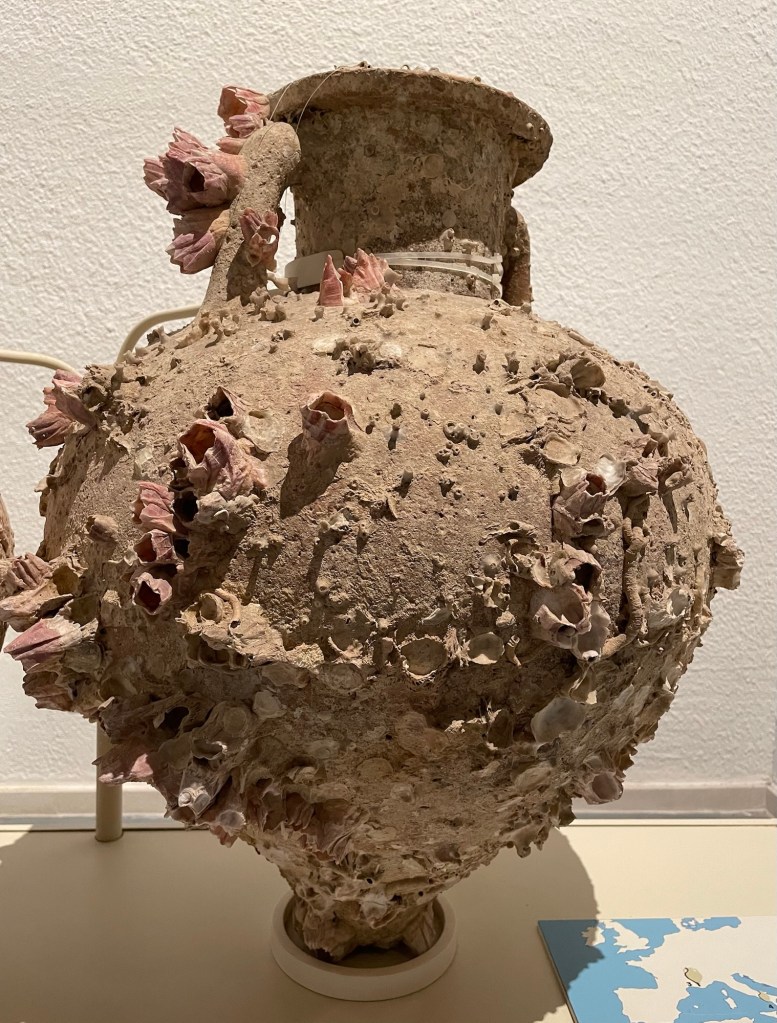
Here is a closeup.
Many of the clay vessels were used for shipping wine and olive oil, but some were used on the ships. This next picture is a brazier, used for cooking while on ships. Fire and wooden ships – not a great combination. There was also a millstone used to grind the grain right on the ship, which makes sense to prevent spoilage.
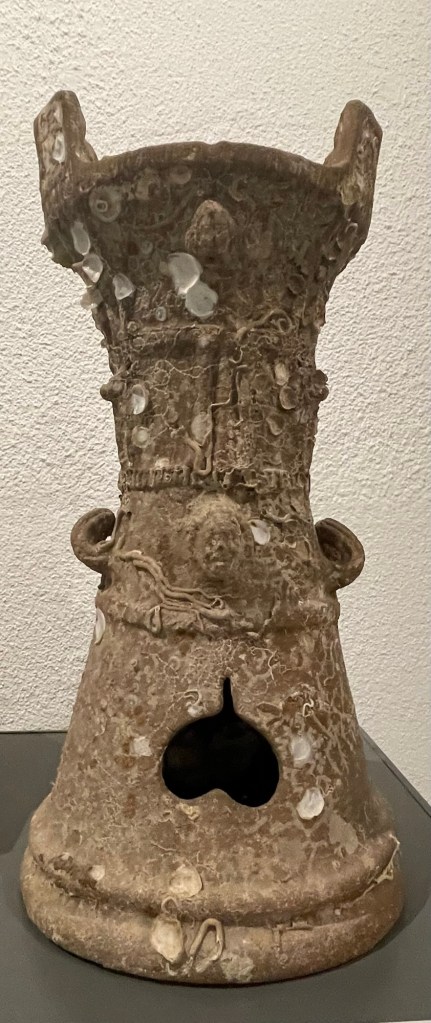
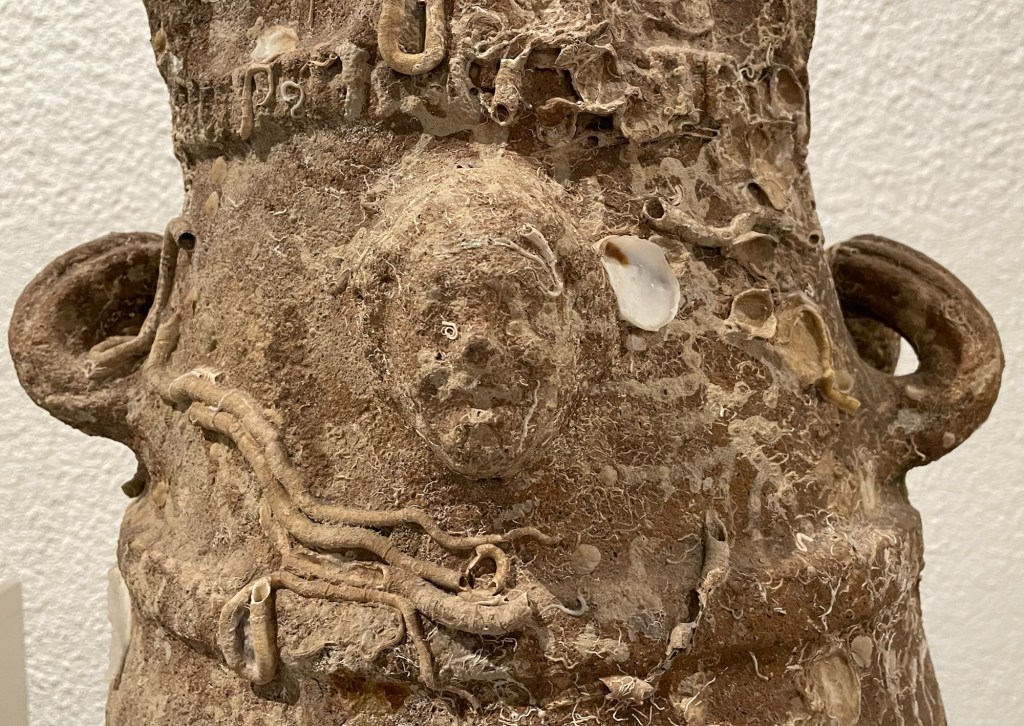
These were functional devices but they were also elaborately decorated. Here is a closeup.
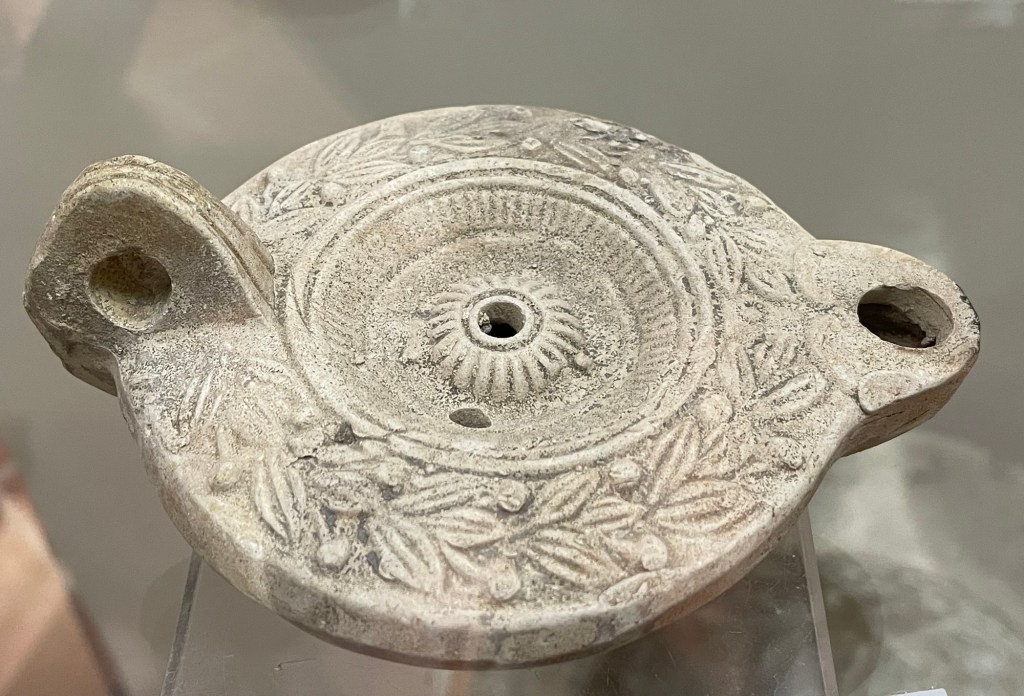
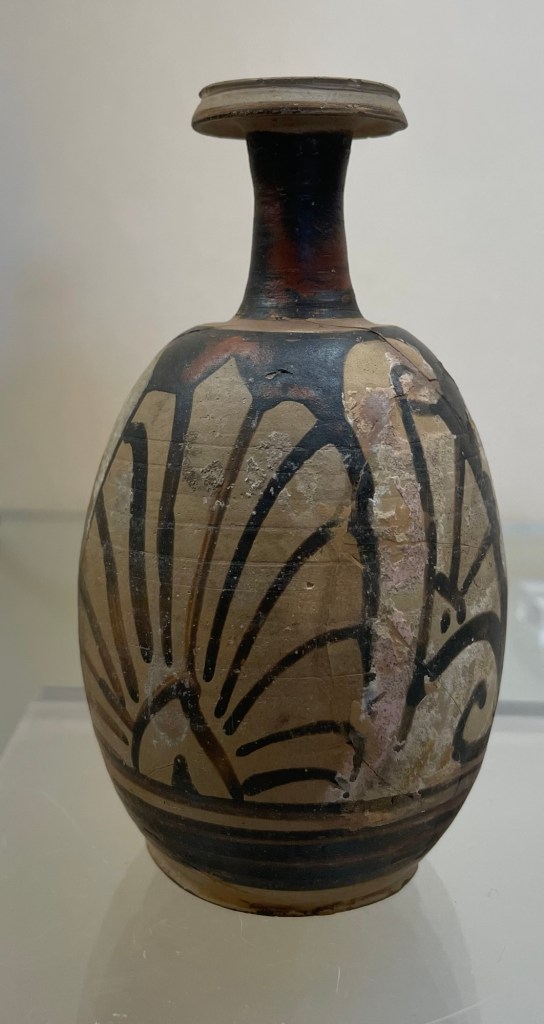
Sicily was at the crossroads of the ancient world, and as a result there were artifacts from all over the Mediterranean. Here are some of my favourites, from Africa about 200 AD and another from Greece from 500 BC.
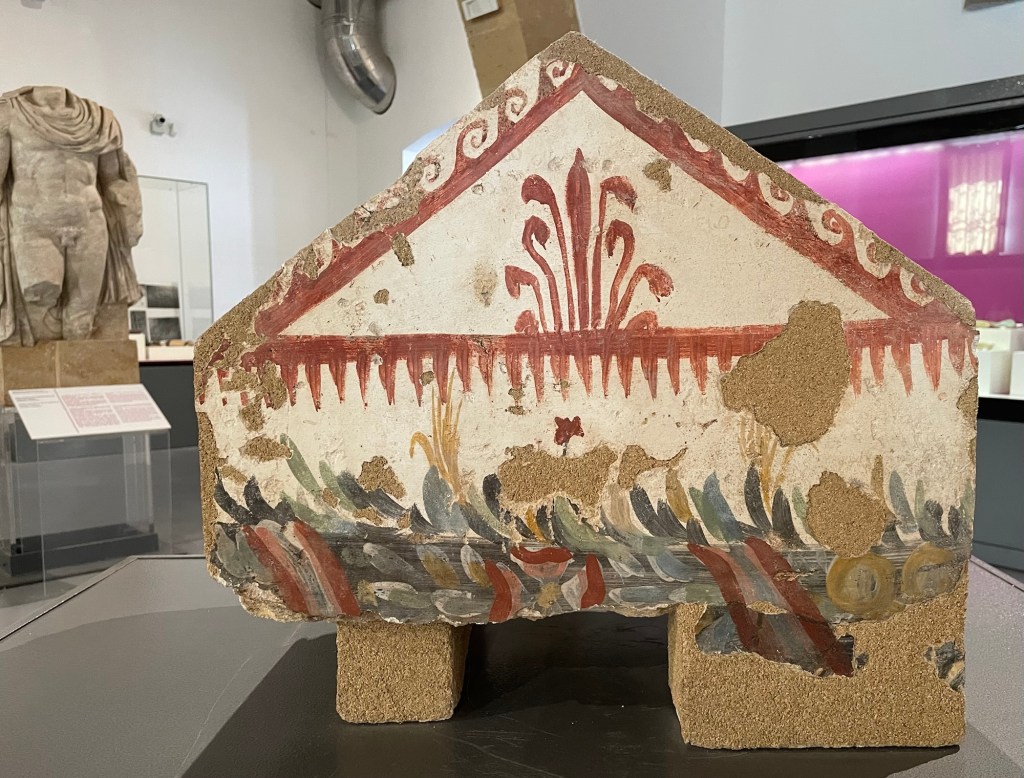
There was an entire section on funerary artifacts. Here is one to give you an idea.
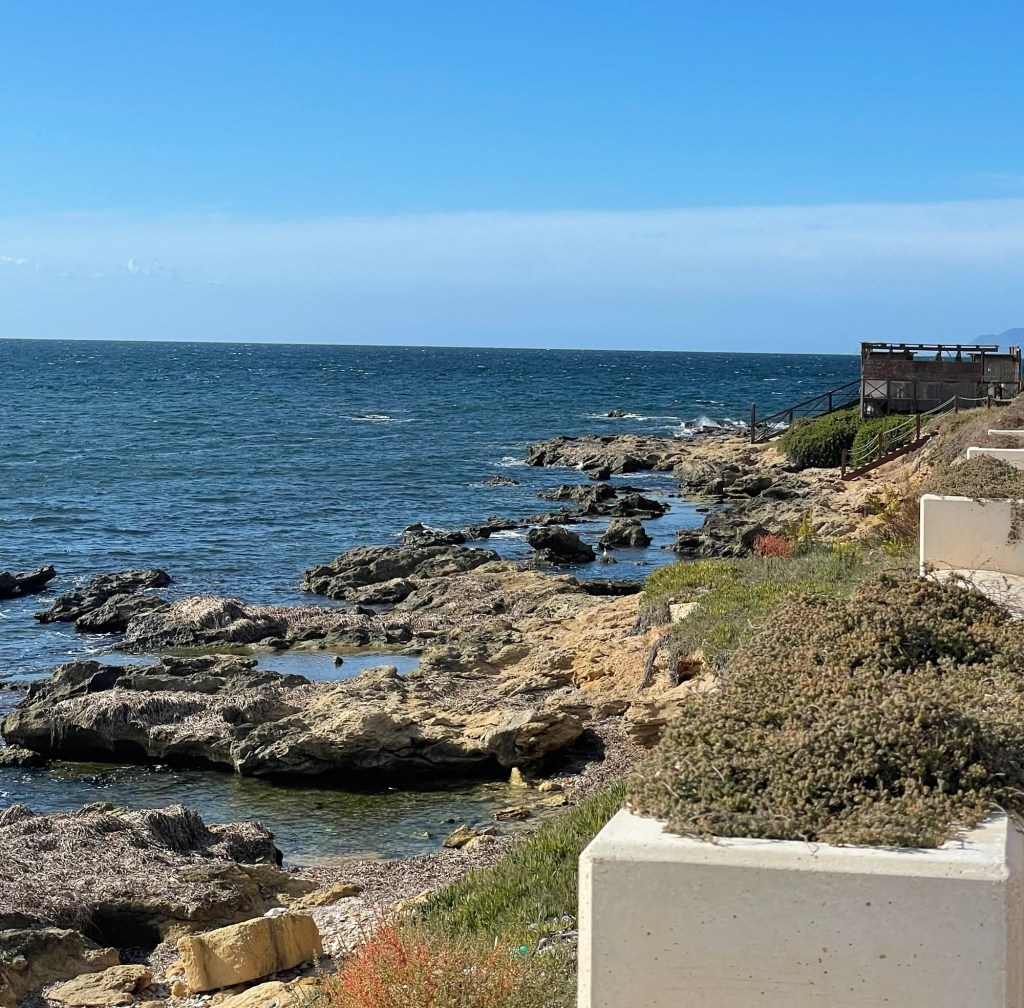
This museum was a wonderful find – just the kind of thing we love. And when we finished and were walking back to our apartment, we were treated to this view.
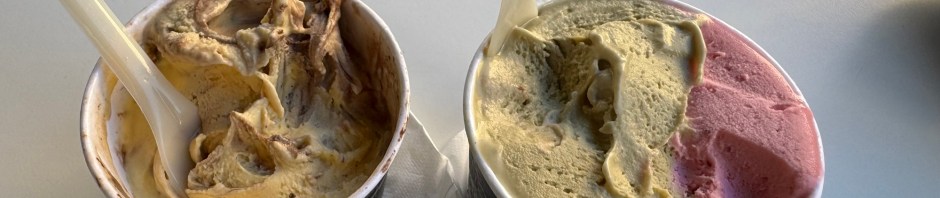
Before heading to the museum we had a light lunch with cappuccino, cornetto with ricotto, and arancini with prosciutto. By the time we finished our visit, we were ready for gelato. Fortunately, that isn’t difficult to find here.
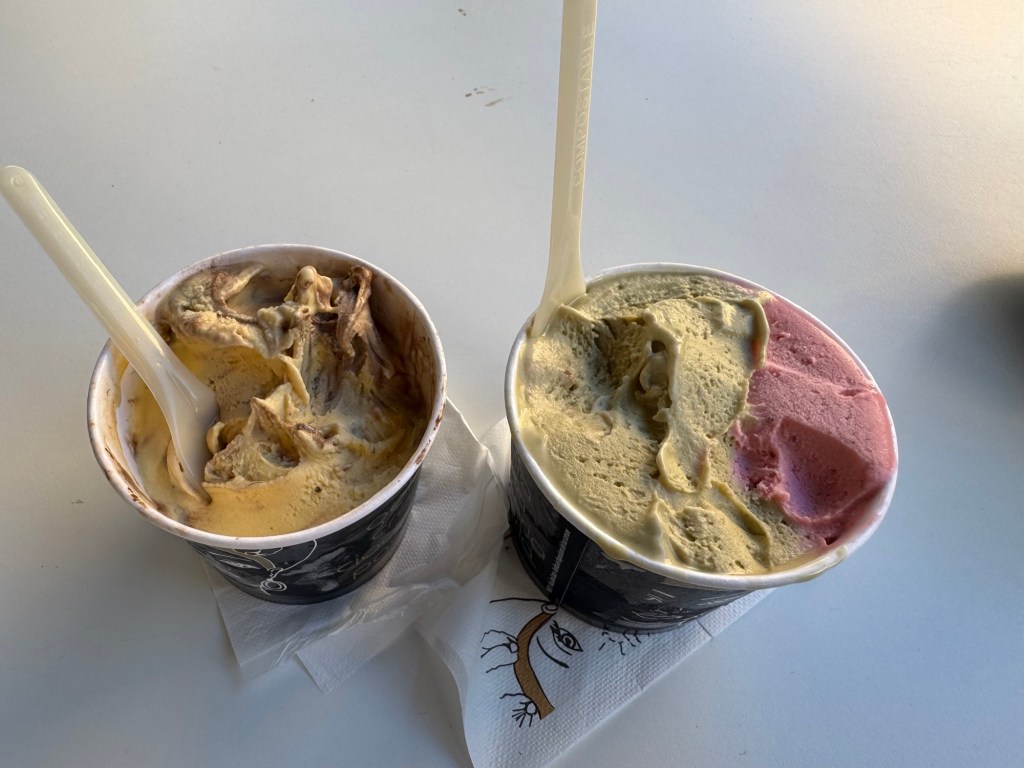
Jan had tiramisu and Jim had pistachio and strawberry.


