When we travel, we generally prefer to stay in places with things to see without having to drive. Once we arrive in a town, we like to park the car and walk. We’ve generally managed to do that on this trip, but not this time. In Whangarei we are going to have to drive. So today we decided to drive about an hour to the award winning Kauri Museum. It was a pleasant drive through rolling hills and pastures. It would have been positively relaxing, except for the narrow roads and the many single-track bridges along the way. But hey, it’s part of New Zealand’s charm!
We had a long chat with the B&B host over breakfast, which added to our typical slow start in the morning. By the time we reached the Kauri Museum we were ready for lunch. They had an interesting menu, but the item that caught our eye were the “loaded kumara wedges”.
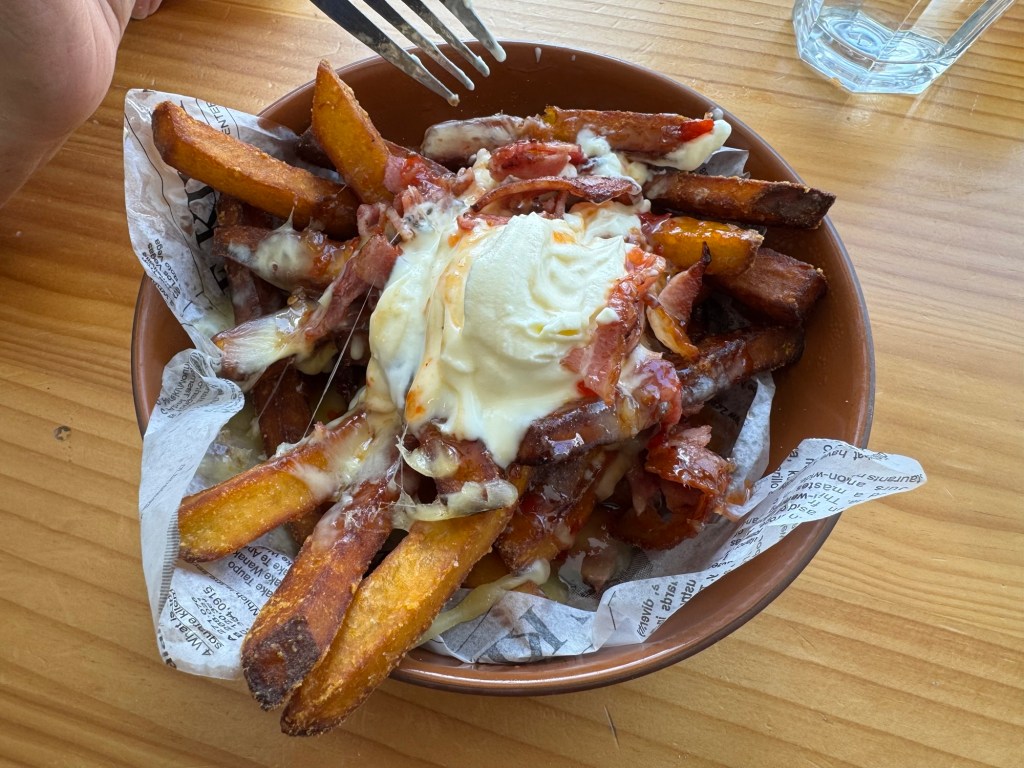
This turned out to be New Zealand’s answer to poutine. Kumara fries (sweet potato) with sweet chili oil, cheese, bacon, and crème fresh. Jan found it a bit rich, but I just found it yummy.
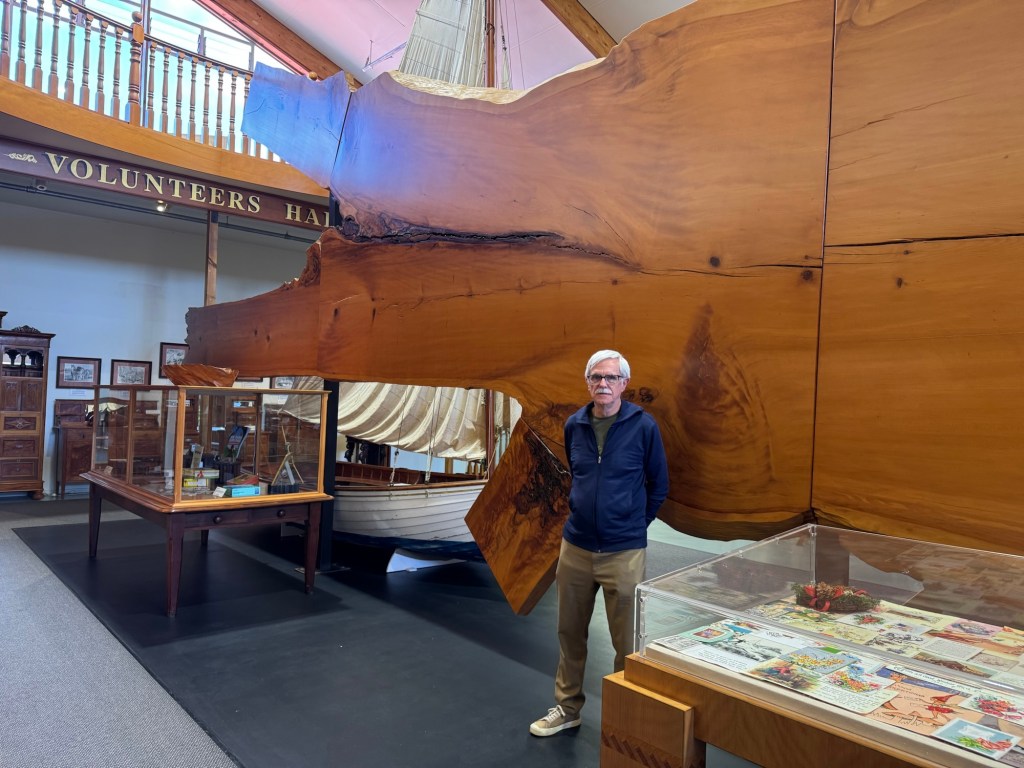
Then it was time for the actual museum, which provides an amazing amount of information about the kauri forests that once covered much of New Zealand. Kauri trees are protected now, but when the Europeans arrived, the massive trees were logged extensively. The centerpiece of one room in the museum was a plank from a kauri tree that died about fifty years ago after a lightning strike. The next picture shows me standing beside the plank to give you a sense of scale. This was near the top of the trunk, where it branched out.
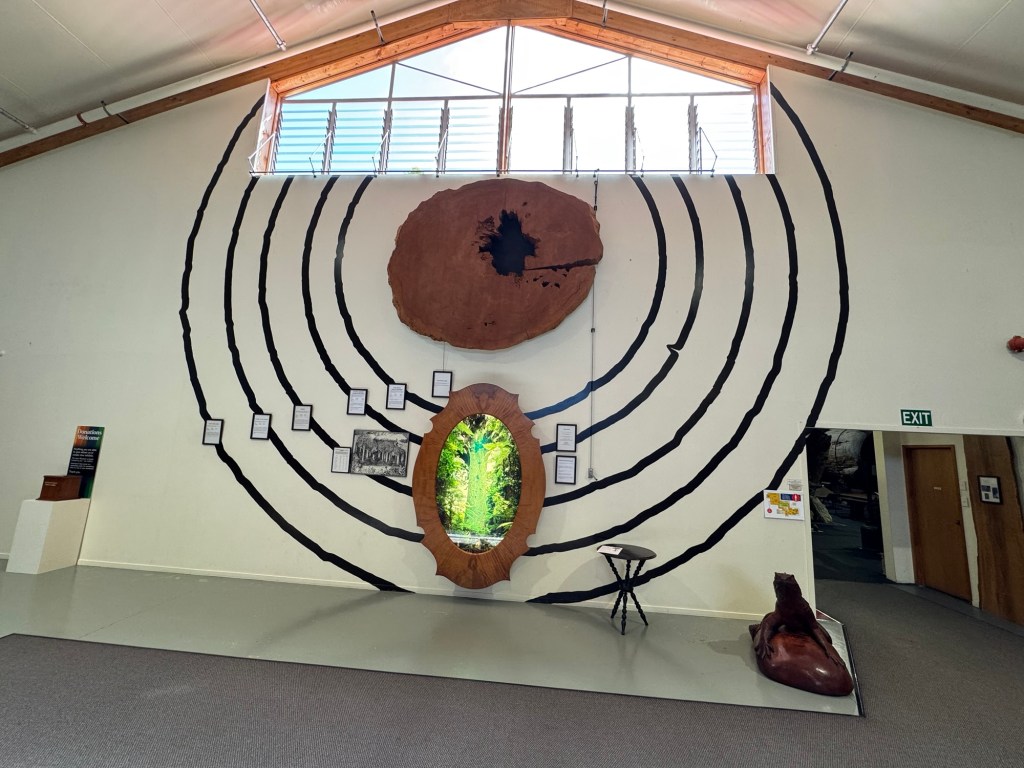
This tree was over 600 years old, but some other trees were 2000 – 3000 years old. To give you an idea of how large these much older trees were, the museum included this display. The disk in the center is from the tree I was standing beside earlier. The other rings show the diameter of other notable kauri trees.
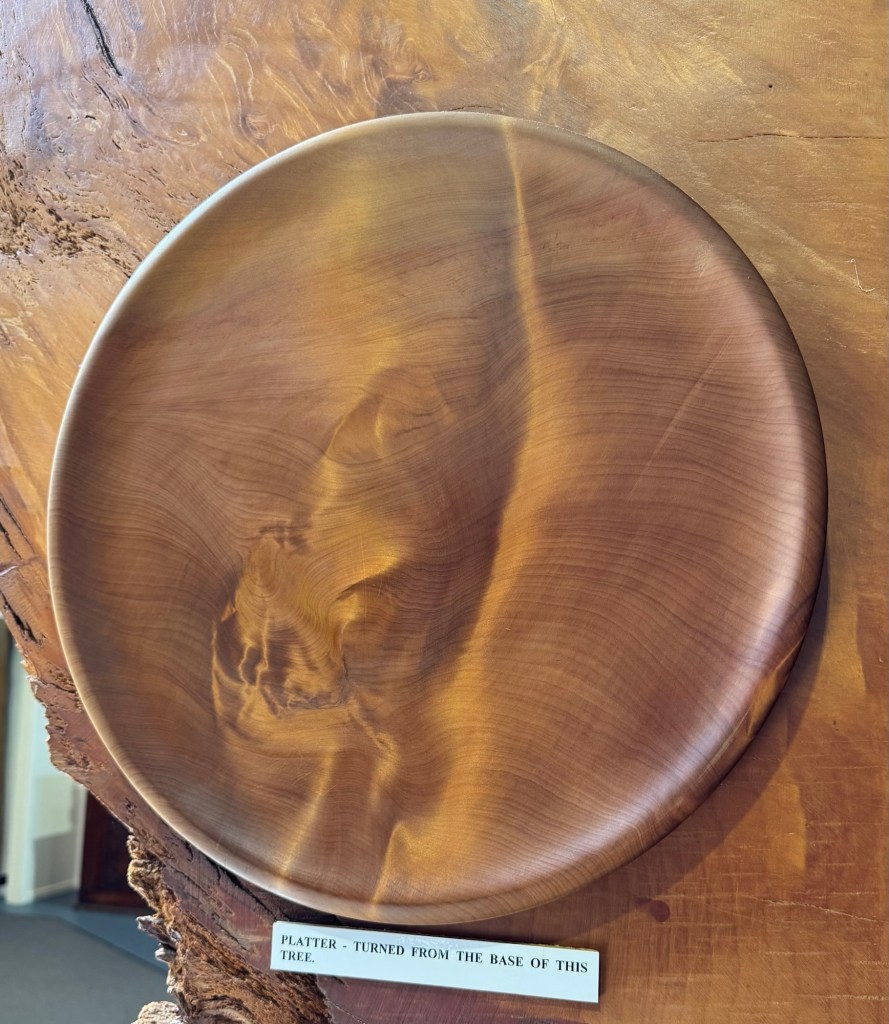
Kauri wood can have wonderful patterns, as shown on this platter from the same tree.
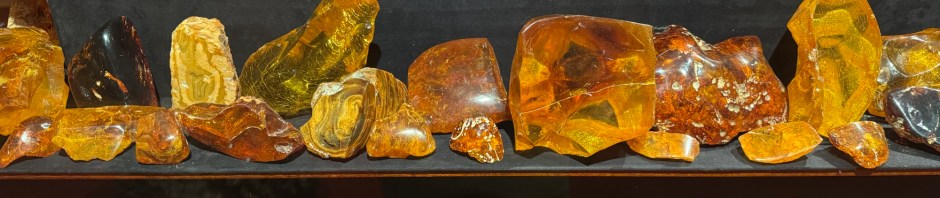
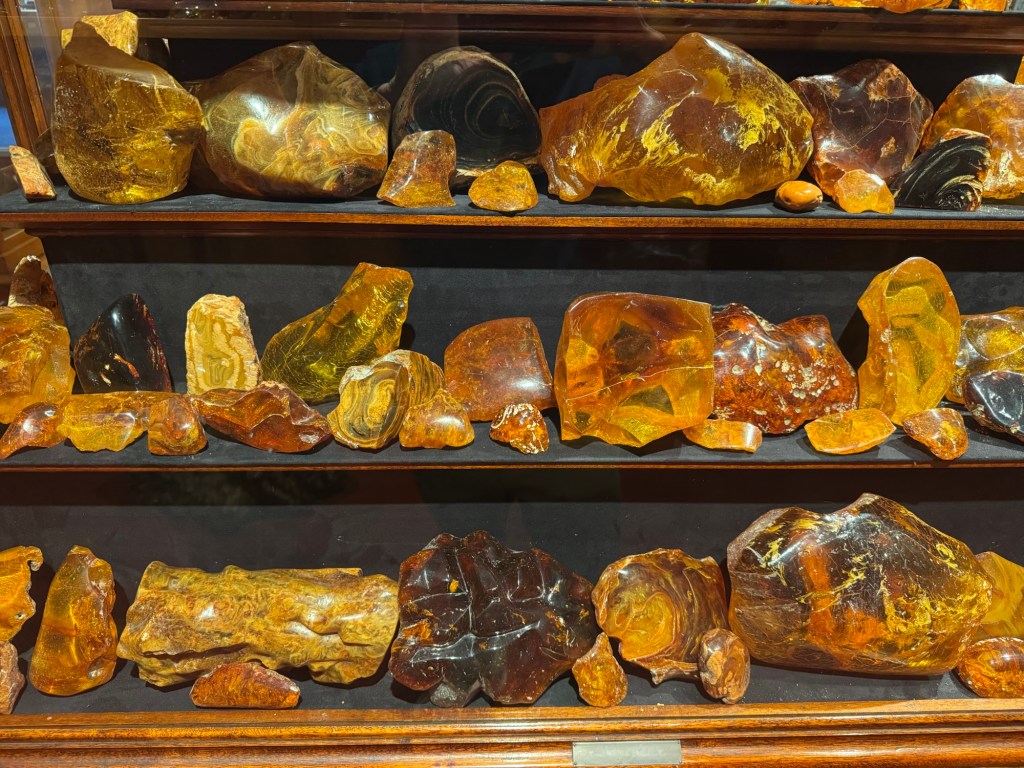
When kauri trees are damaged, they oozed sap to protect the wound. This sap hardens and is called kauri gum – essentially a form of amber. Over the centuries, this kauri gum accumulated in the soil in the forests, and a whole industry developed to dig the gum. We ate lunch in the Gumdigger Cafe, named after this trade. Kauri gum is also protected now, but the museum had many pieces from earlier collections. Here is one example of a display case.
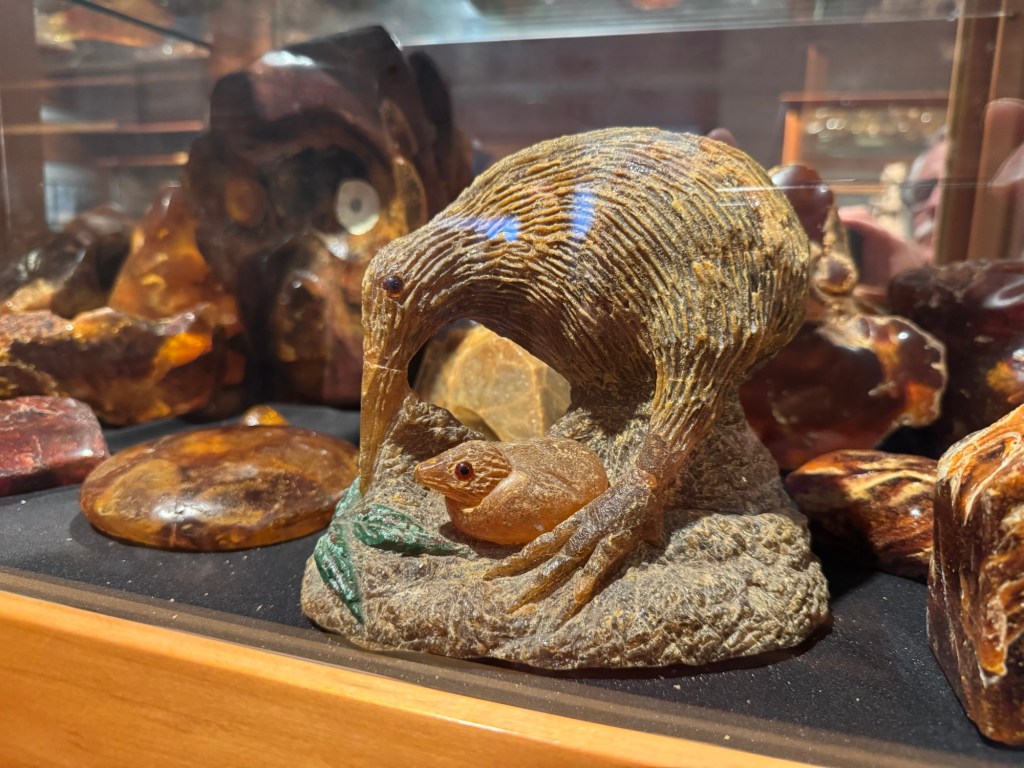
Many of the pieces were polished like amber, but some were carved into sculptures, such as this one.
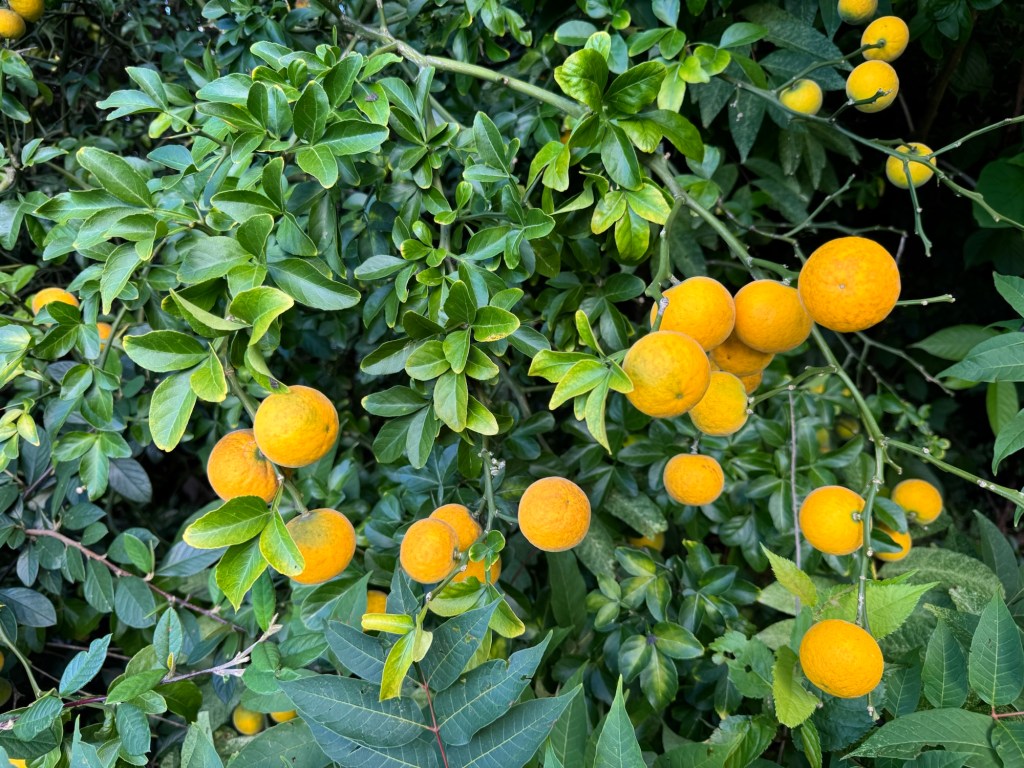
At breakfast this morning, a large bowl of feijoa fruit was on the table for our enjoyment. Very tasty. We learned the fruit was from the hedge just outside the house. Not fair. When we came back from our museum tour I took this picture of the fruit trees just outside the B&B. Also not fair. Especially when I think about the weather we will return to!


 If It Was Today...
a great day!
It was indeed a great day. We’ve had a lot of those over the past five weeks.
Thanks for stopping by to comment.
Those Kumara Wedges look delicious. We can’t wait to go to NZ next year.
Those Kauri trees look amazing. The size, age, and well defined rings suggest that it would be great for dendrochronology, and a quick look shows that’s correct. Those trees have been used to understand climate over the past several thousands of years!