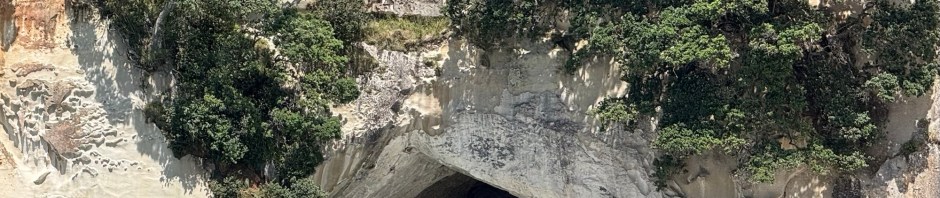
One of the things we really wanted to do on this visit to Whitianga was to take a boat tour to Cathedral Cove. Fortunately we didn’t book the tour for yesterday – it would have been very wet. Today was a much better day.
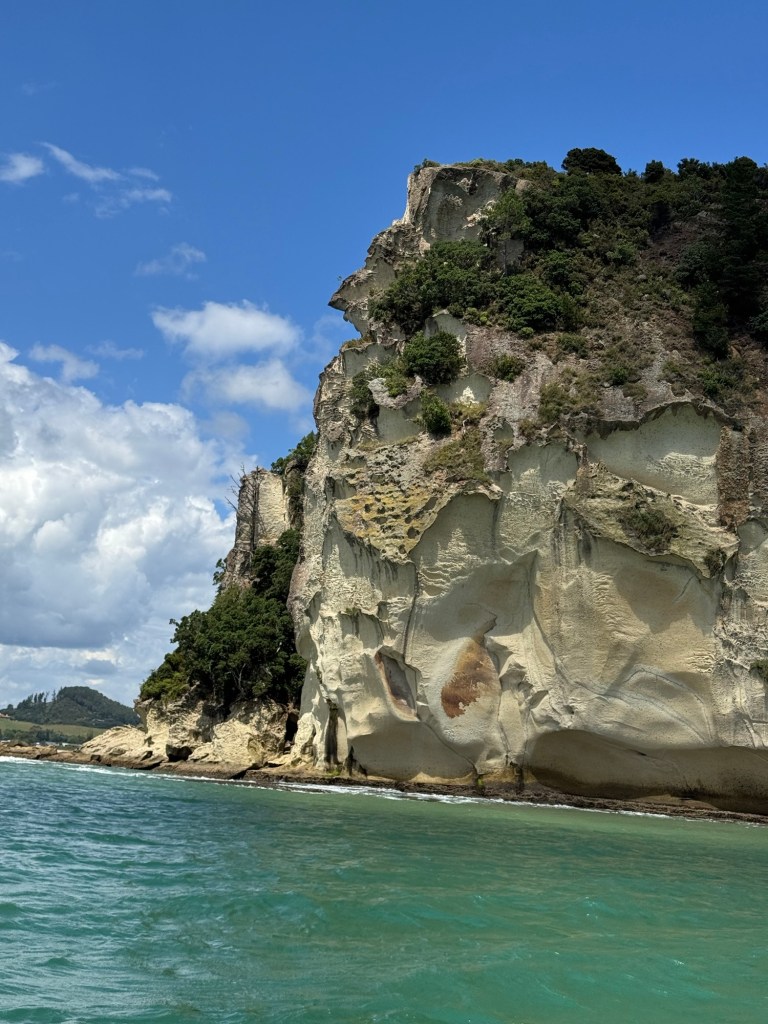
The Coromandel coast is loaded with stunning views, so I had a very difficult job whittling down the pictures today. Probably still too many, but it was the best I could do. I’ll open with a picture of Shakespeare Cliff. This area was one of the first places Captain Cook visited in New Zealand, and he apparently thought that this cliff looked like Shakespeare. Look for a nose, mouth, and full beard. Until recently, there was also a “hat” jutting out at the top. See if you can spot the resemblance. (Our guide thought that Captain Cook may have had a bit too much rum that day, but you can decide for yourself.)
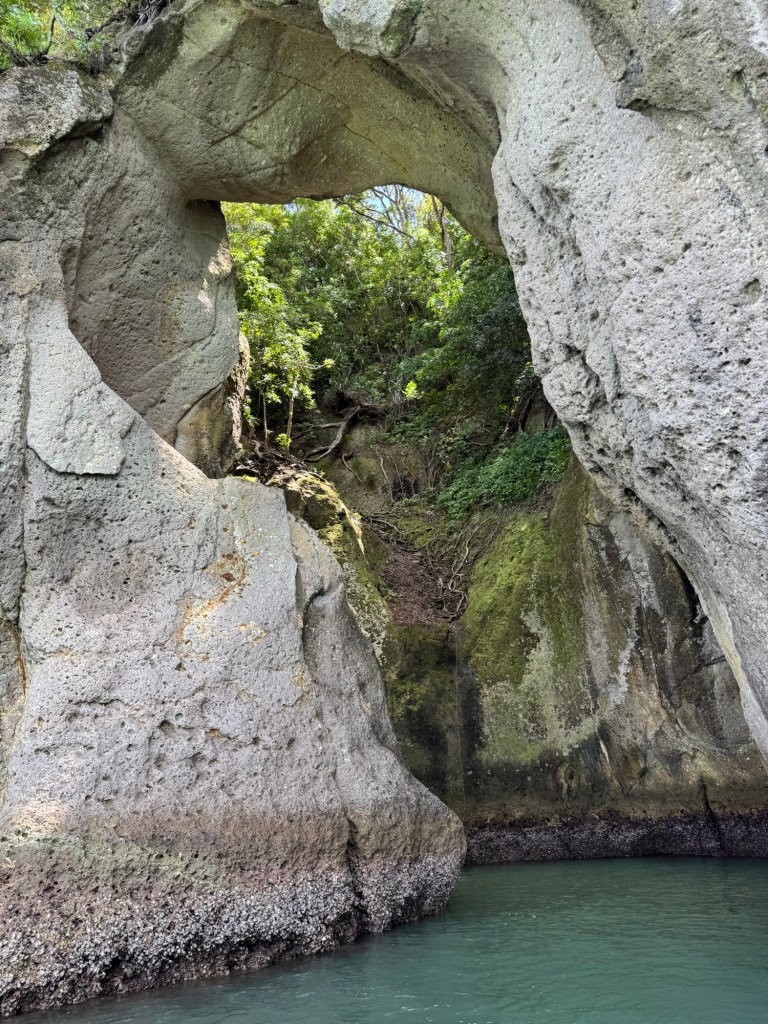
This next formation is technically a blowhole, though it is so large that it would need a tsunami to actually create a water spout. Still, it is interesting.
Next up, Cathedral Cove. I’ll let the picture speak for itself.
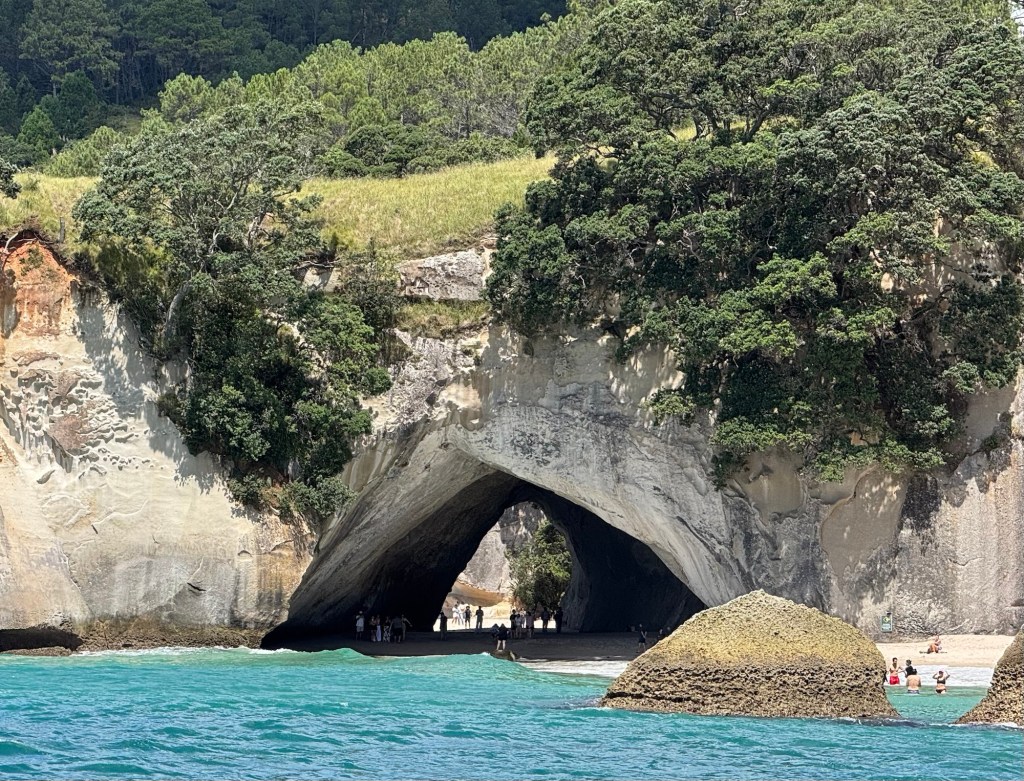
And right beside Cathedral Cove, we have the sleeping dragon. The dragon’s eye is just to the left of the green patch, and the nostrils are near the sea. Can you see it? Maybe everyone around here likes rum?
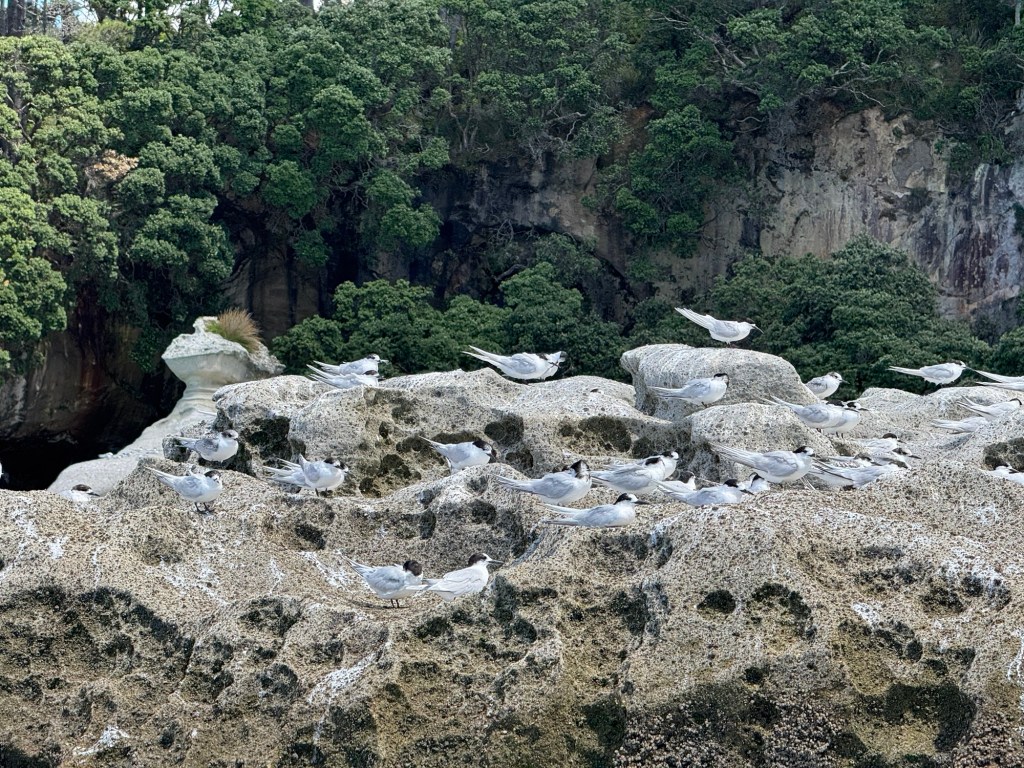
We didn’t see a lot of wildlife on the tour, but we did see a large grouping of White Chested Terns on a rock near Cathedral Cove.
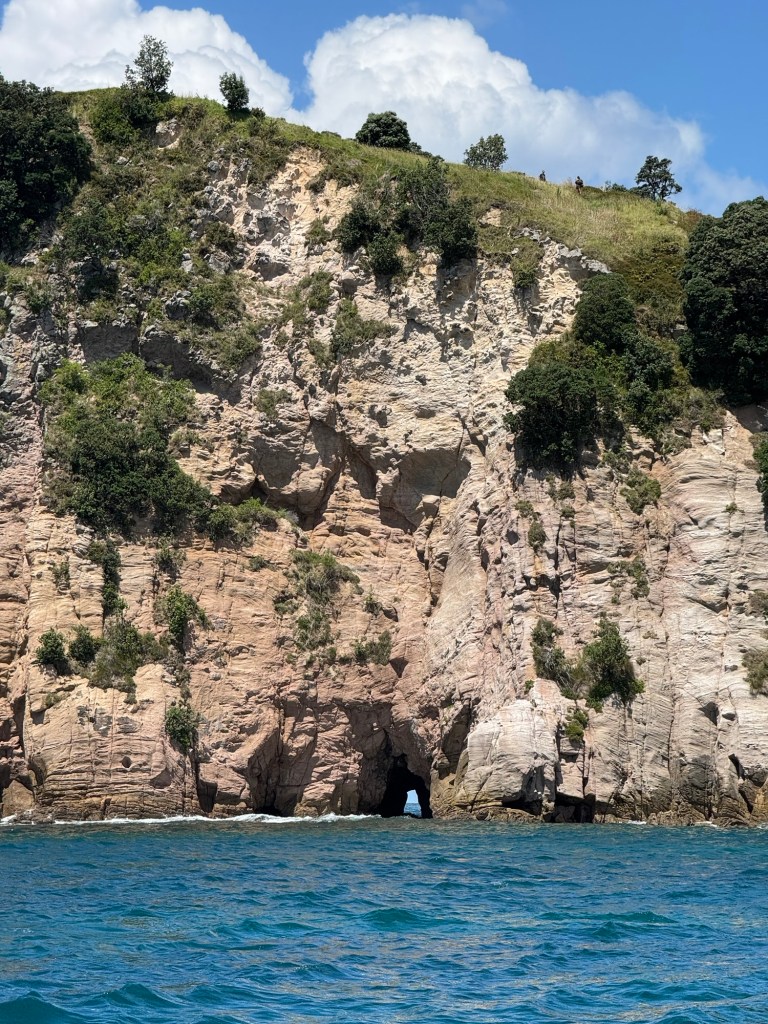
We saw several sea caves on the tour, including this one that is in the early stage of development. Over time this will grow until it will create another cathedral. Look for the spot where you can see the sea on the other side.
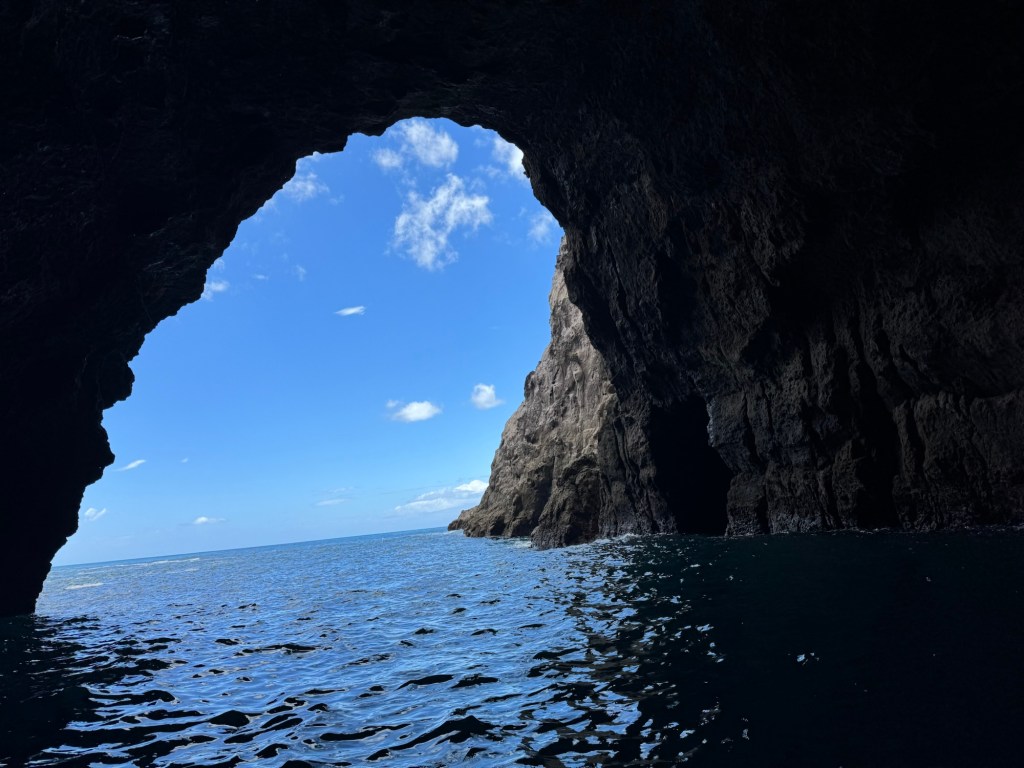
Next we visited a much larger sea cave. This one was so large that the boat could go completely inside.
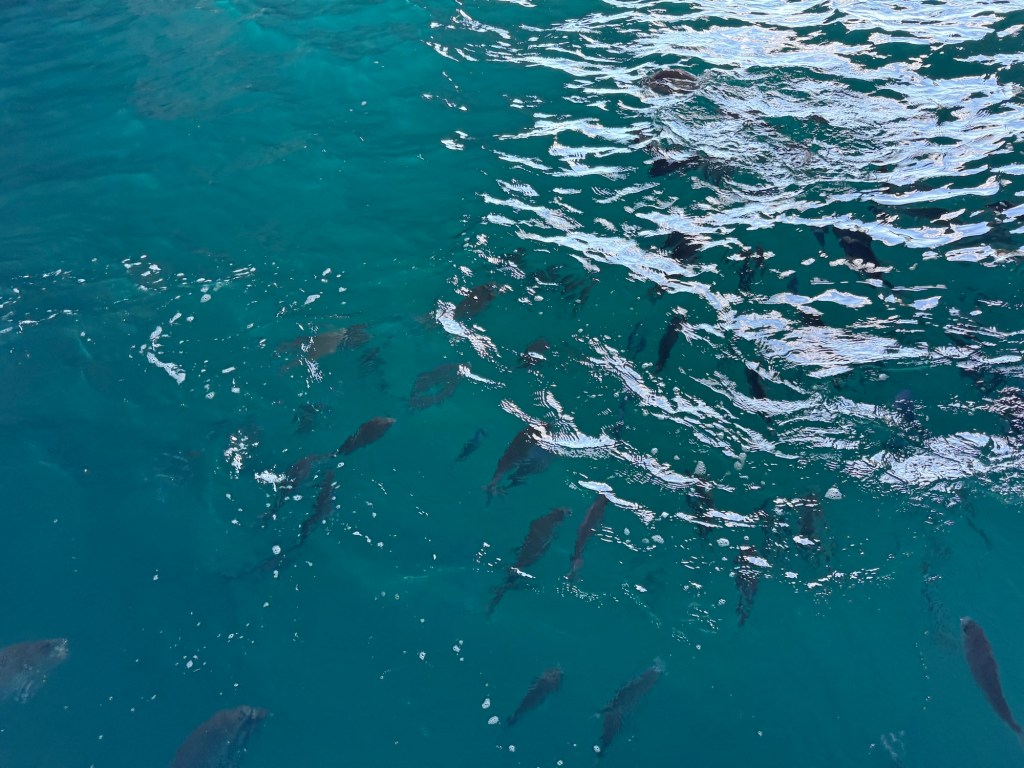
Surprisingly, there were schools of fish inside the cave. We think they were snapper.
While we were in the cave, some of us were wondering (and by “some of us” I mean “Jan”) why these caves form. After we were safely out of the cave, our guide told us that these caves are on a fault line that creates a weak point. Over time this is eroded by the sea until a cave forms. Sure enough, when we looked at the cave from the outside, it was obvious. So we had just been inside an inherently unstable structure. Yikes!
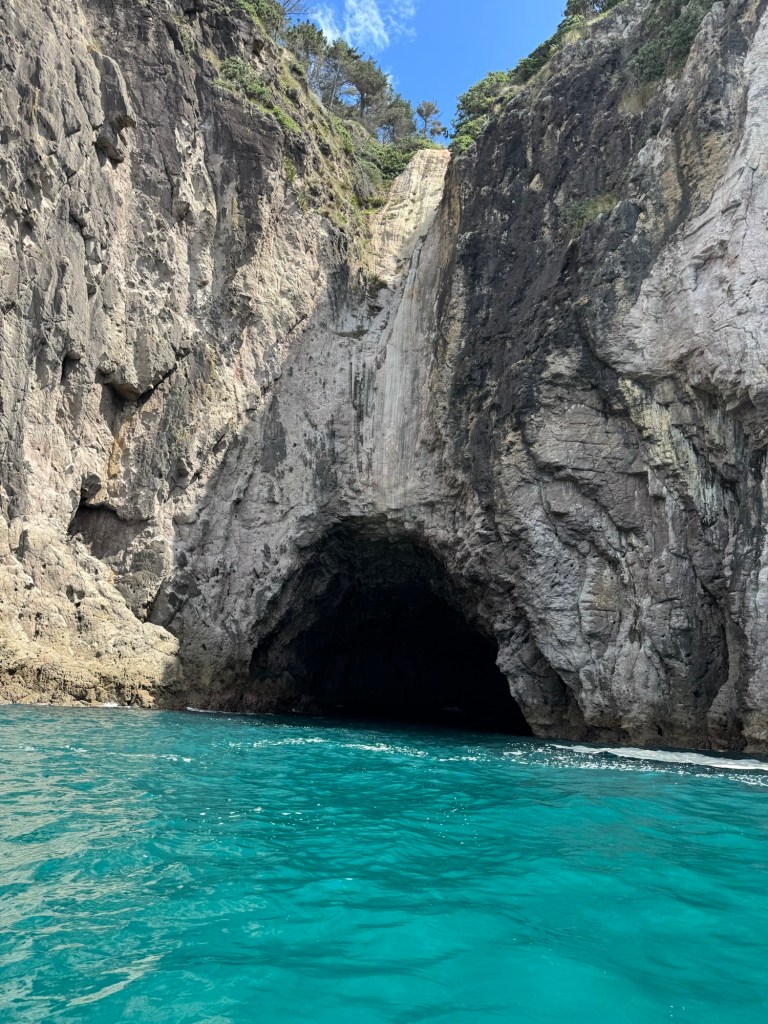
There were many other interesting caves carved into the cliffs along the sea, such as this one.
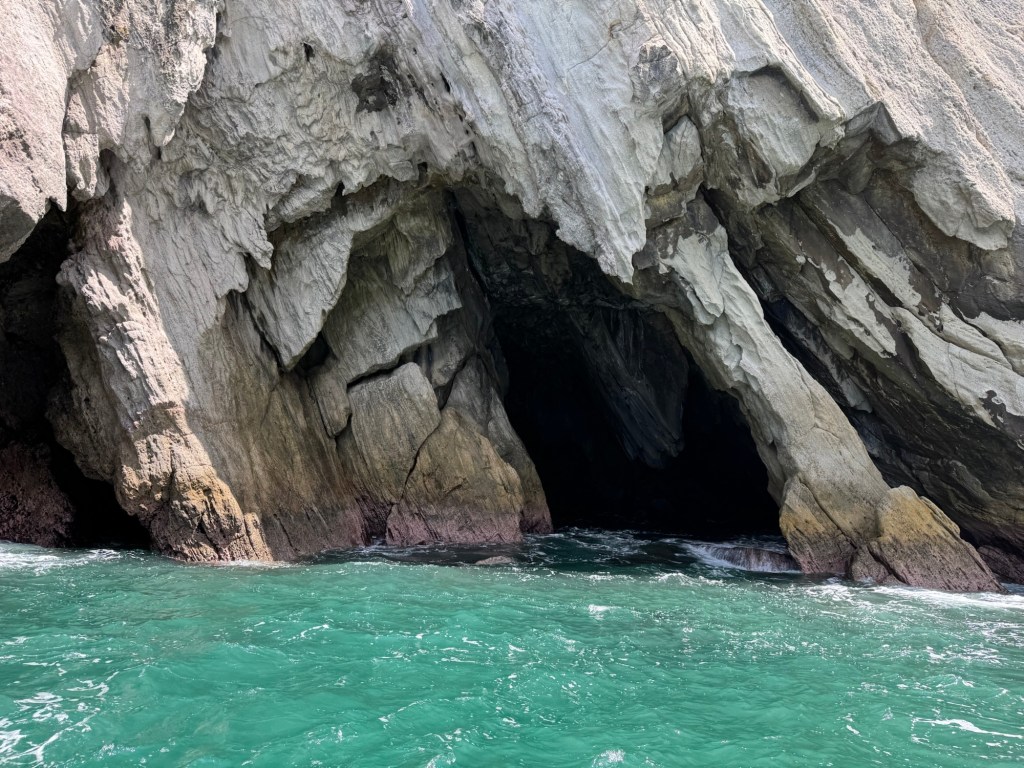
It’s hard to see in the first photo, but if you zoom in, you can see an interesting rock formation inside the cave, called “the snake’s head”. You can probably see why. Much easier to see than Shakespeare.
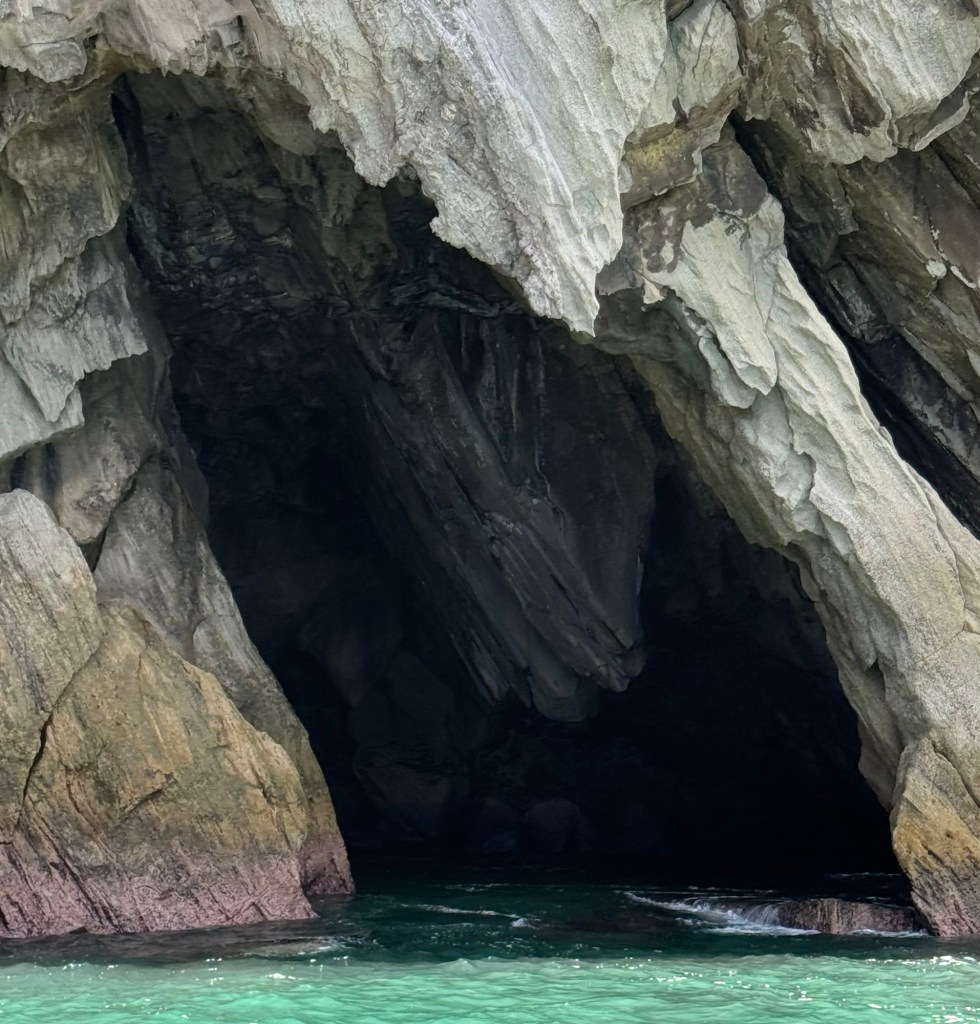
Most of the cliffs along the coast were ash and pumice from a volcanic eruption (long ago) about ten miles inland. But later, we saw areas with lava from later eruptions. It created interesting rock formations like these. If you look closely, you can see folds in the rock.
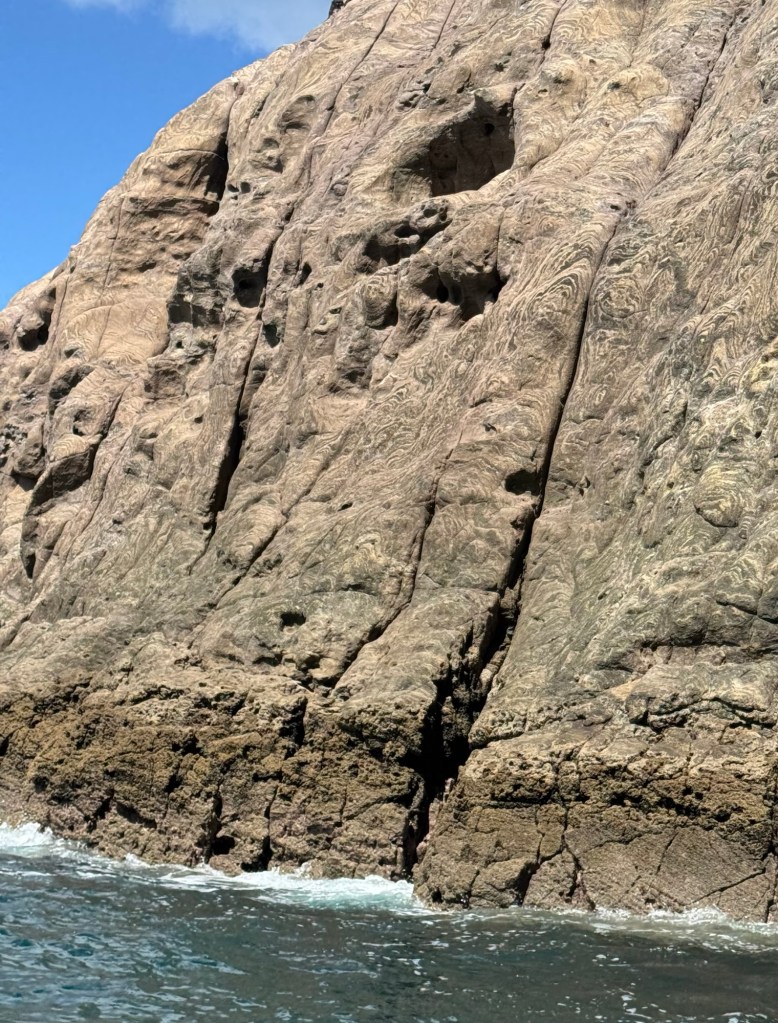
Further along there was a lava tube, where the lava on the outside hardened, but the lava inside was still soft enough to flow, creating a hollow tube. You can see it on the left half of this next picture. The right half was a giant blow hole until quite recently. In the past, tour boats would go inside and suddenly see the sky. Unfortunately the arch has since collapsed.
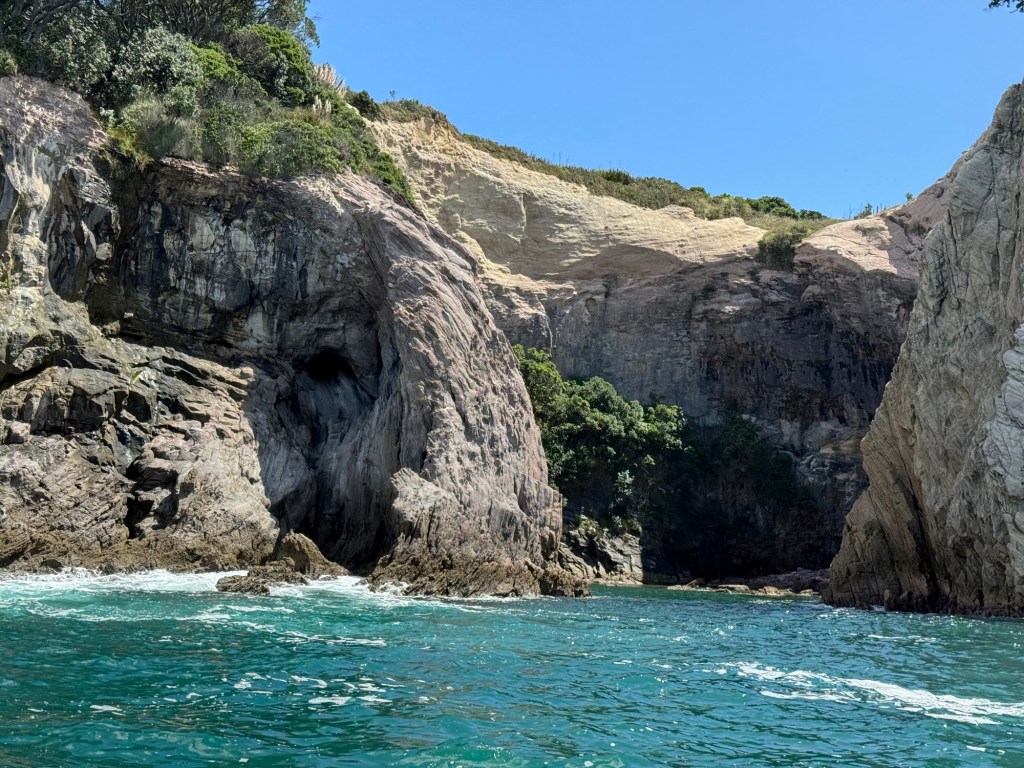
The tour is definitely worth a trip. I highly recommend it.
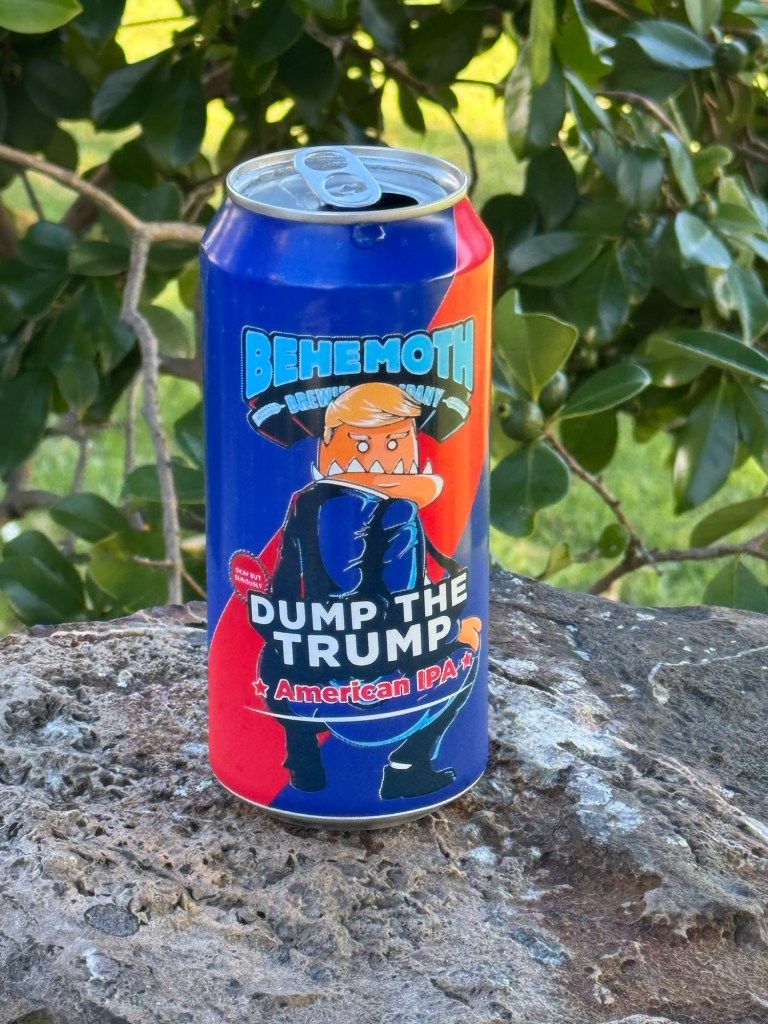
On our way back to our room, I stopped by the local grocery store, looking for another interesting New Zealand beer, and I came across this one. I’ve been trying to avoid thinking about world politics on this trip, but sometimes it’s impossible to miss what the locals are thinking.


 If It Was Today...
Gorgeous photos of Cathedral Cove. That beer can is fabulous!
Amazing Geology!