After seeing the crowds on our trial run to Pompeii, we were thinking that perhaps seeing Herculaneum plus the wonderful exhibits in the Archaeological Museum would be enough. But Ian convinced us (or at least me) that it would be worth getting up early and catching the train to be at the gates to Pompeii when the site opened at 9:00 AM. There was already a lineup at 8:45, but Pompeii is a huge site and we quickly found ourselves ahead of the crowd. When we arrived in the forum, we literally had the place to ourselves.

When I asked Ian about the plan for the day, he said he just wanted to walk the streets of Pompeii. All of them. We didn’t achieve that objective, but we made a good start. One advantage of just walking the streets is that you see things that don’t make it into the guide books. For example, this street is something you rarely see in ancient Roman cities.
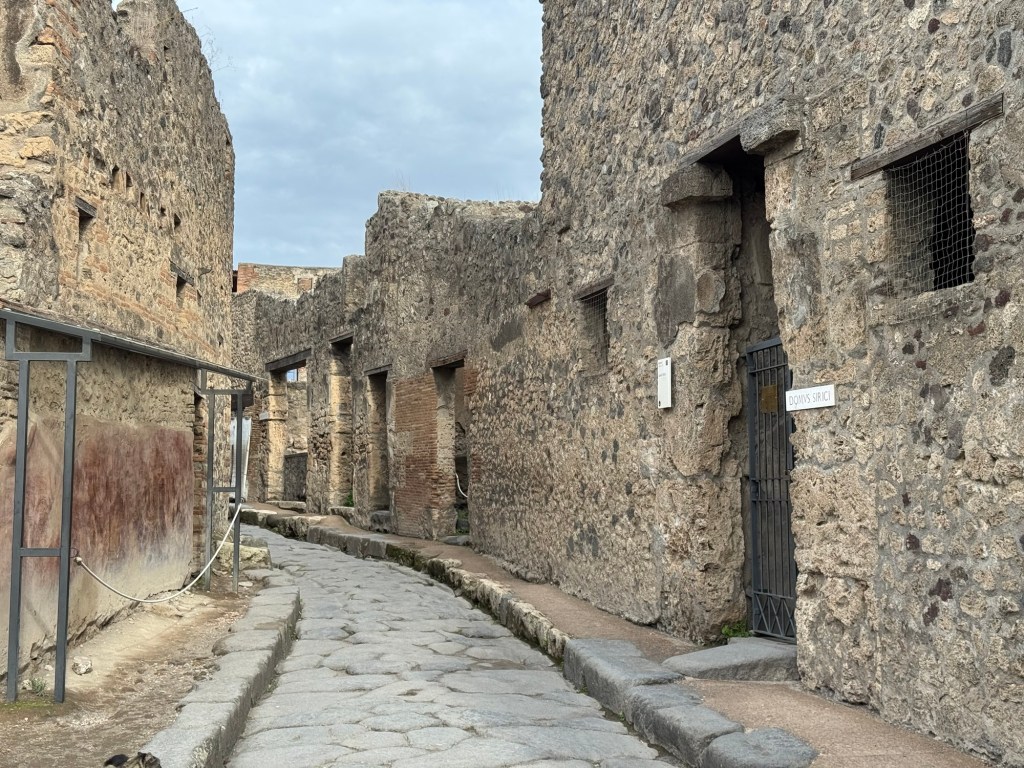
This is more typical of a Roman city – streets that are straight as an arrow.
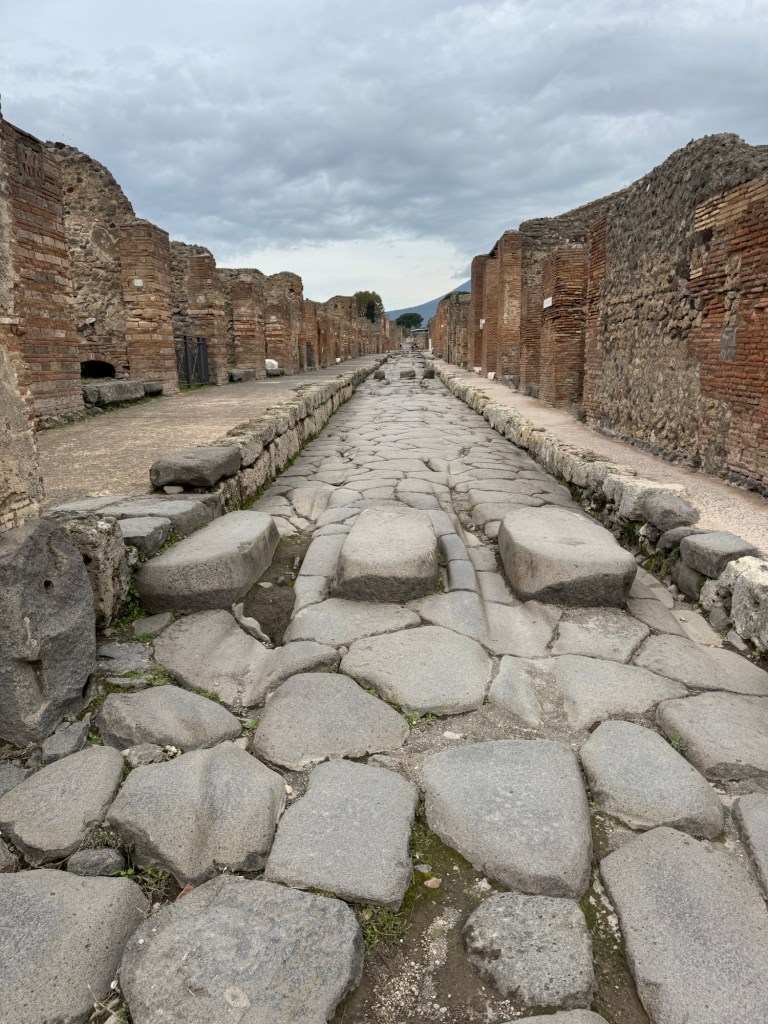
The three large blocks in the road are for a crosswalk. The gaps allowed carts to pass through, but the raised stones allowed pedestrians to cross without having to step in the water and animal dung that would have littered the streets. Cool idea.
In the early days of excavation at Pompeii, many of the best frescos and tiles were removed to preserve them. Most of these are now housed in the Archaeological Museum in Naples, which we visited on Monday. But eventually they decided that wasn’t the best idea, and for a long time now they have been trying to preserve the best items in their original context. There are so many amazing things to see – far too many to show here, but I will try to give you a flavor of what you can see in the buildings in Pompeii.
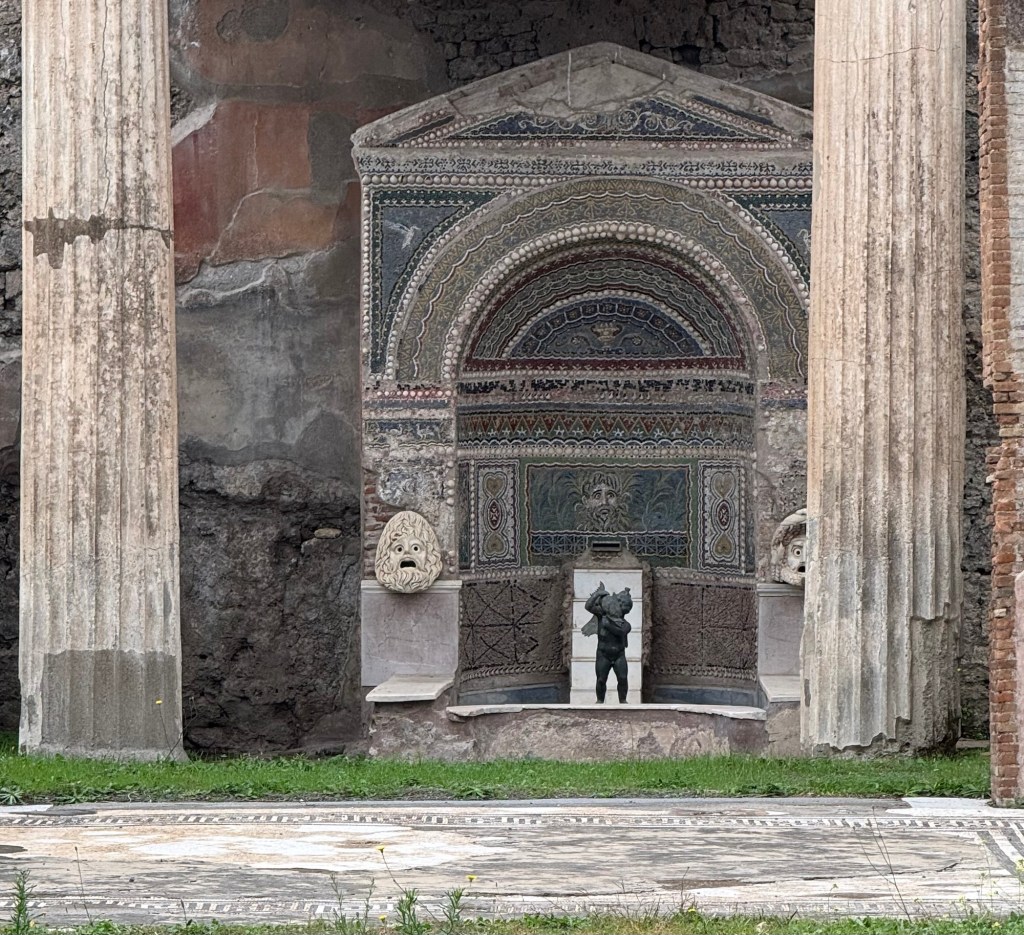
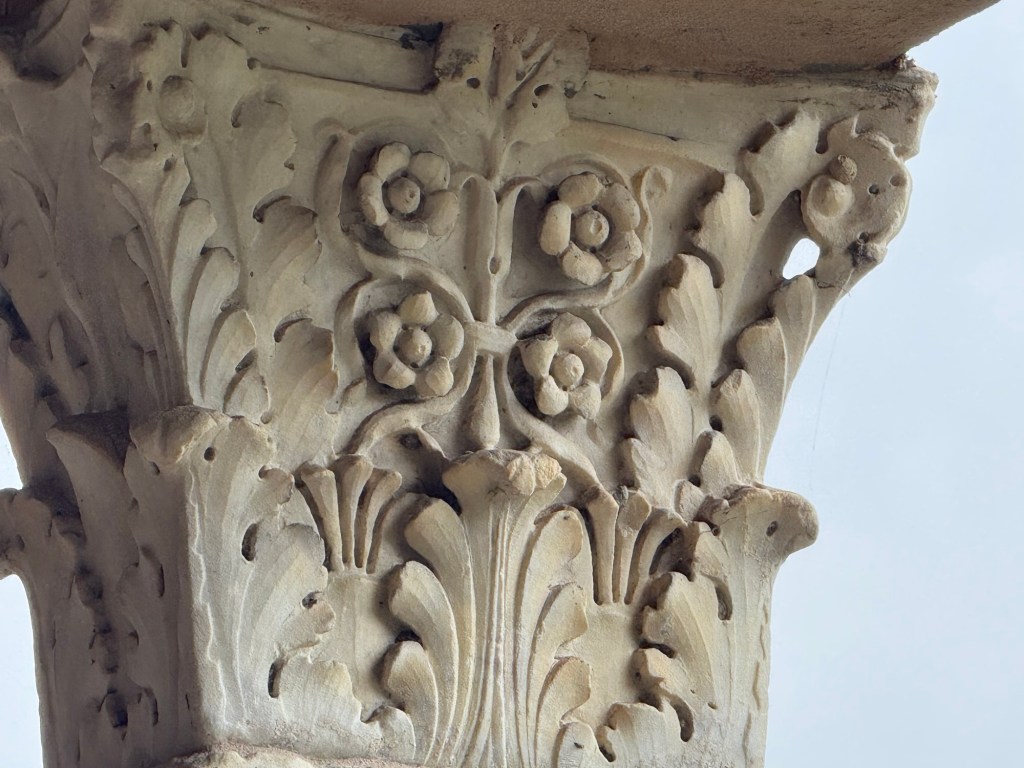
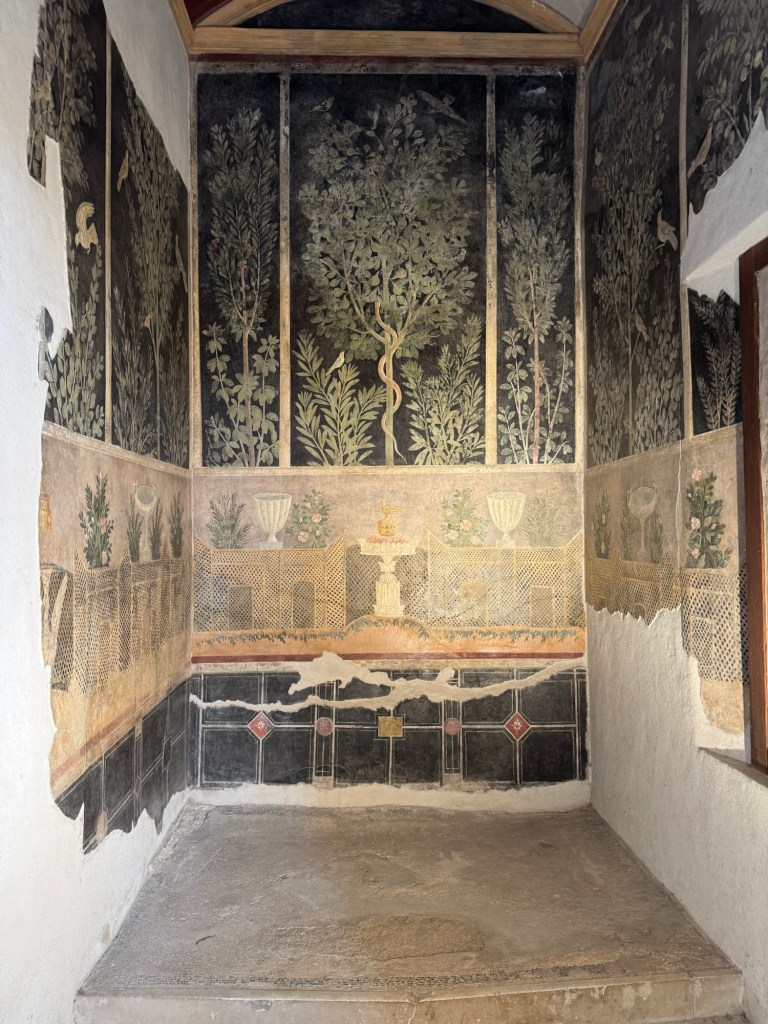
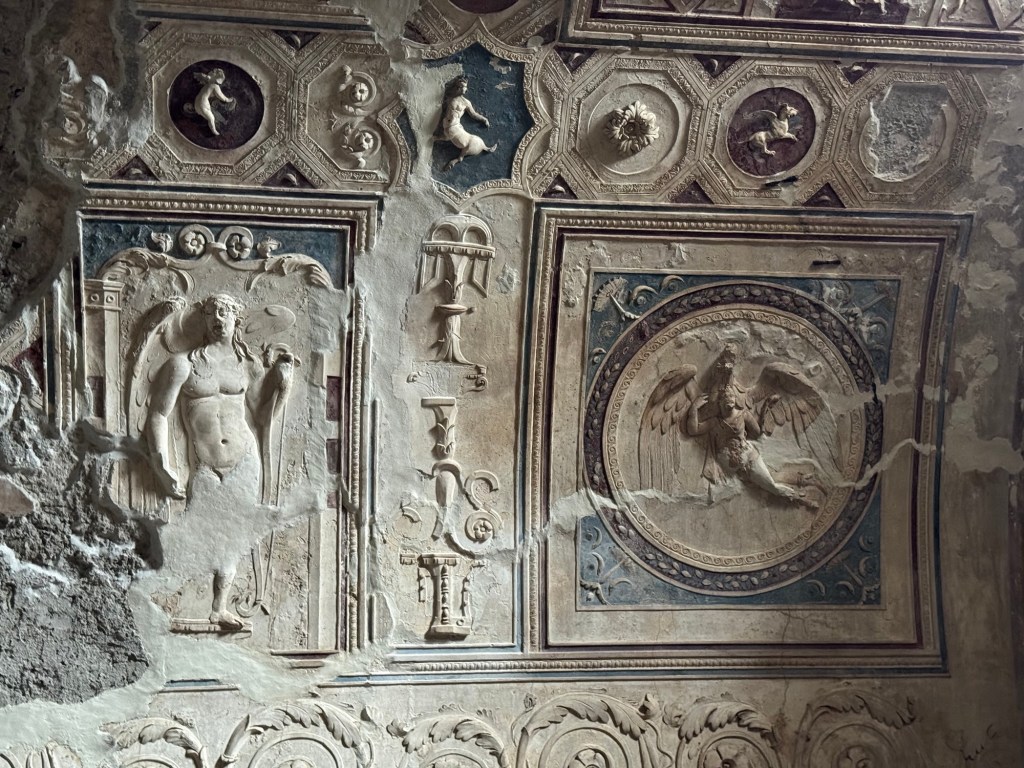
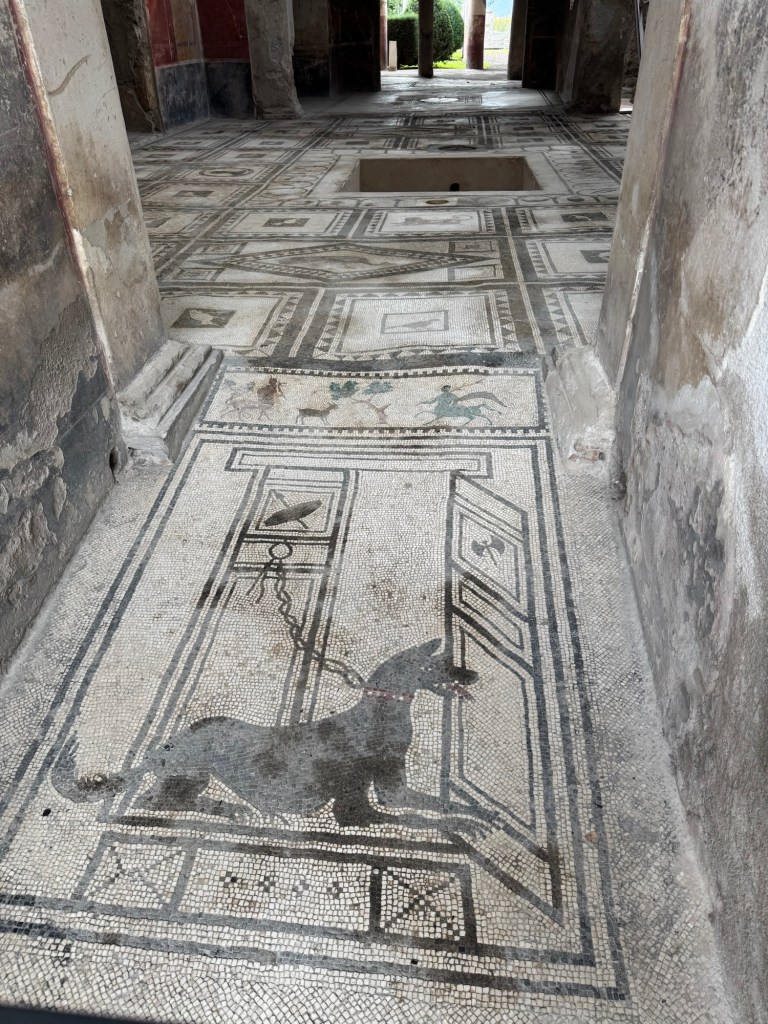
You get the idea. They are stunning, but what we enjoy doing most is looking at the artifacts and trying to imagine what it would have been like to live and work in Pompeii. For example, this sidewalk had us wondering why it was so narrow.

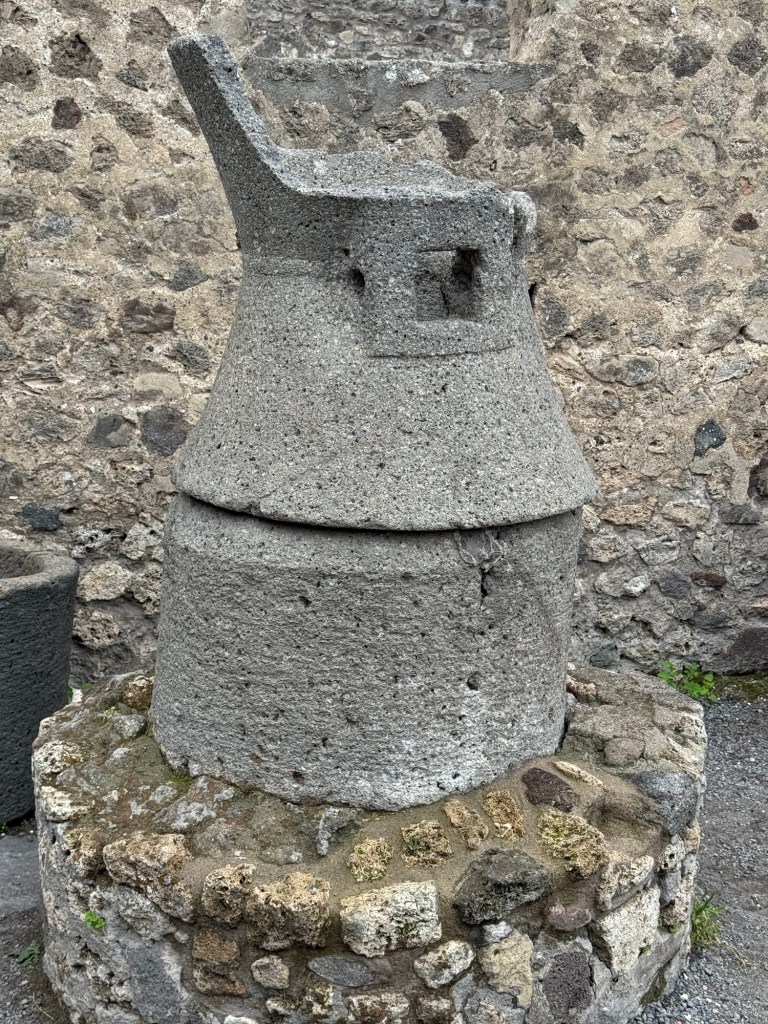
One of the buildings was a bakery that handled all aspects of bread production from grinding the wheat into flour, mixing the dough, baking the loaves, and then selling them. The first picture shows the millstone, which would have had a small donkey walking in circles to rotate it.
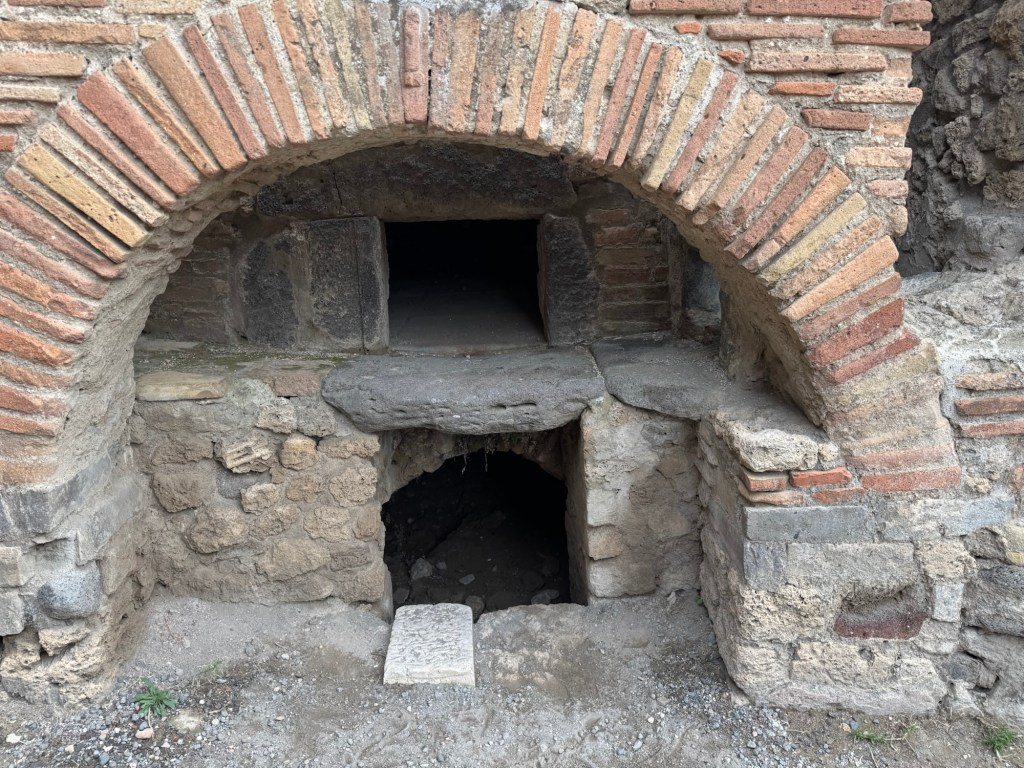
Then the flour was mixed into dough in a small room to the left of the oven and formed into loaves which were passed through a slot to the left of the oven, where they would have been baked. It looks a lot like a modern wood-fired pizza oven.
And then the finished loaves were sold to the public at the front of the building. You can see the millstones in the back of this next picture.
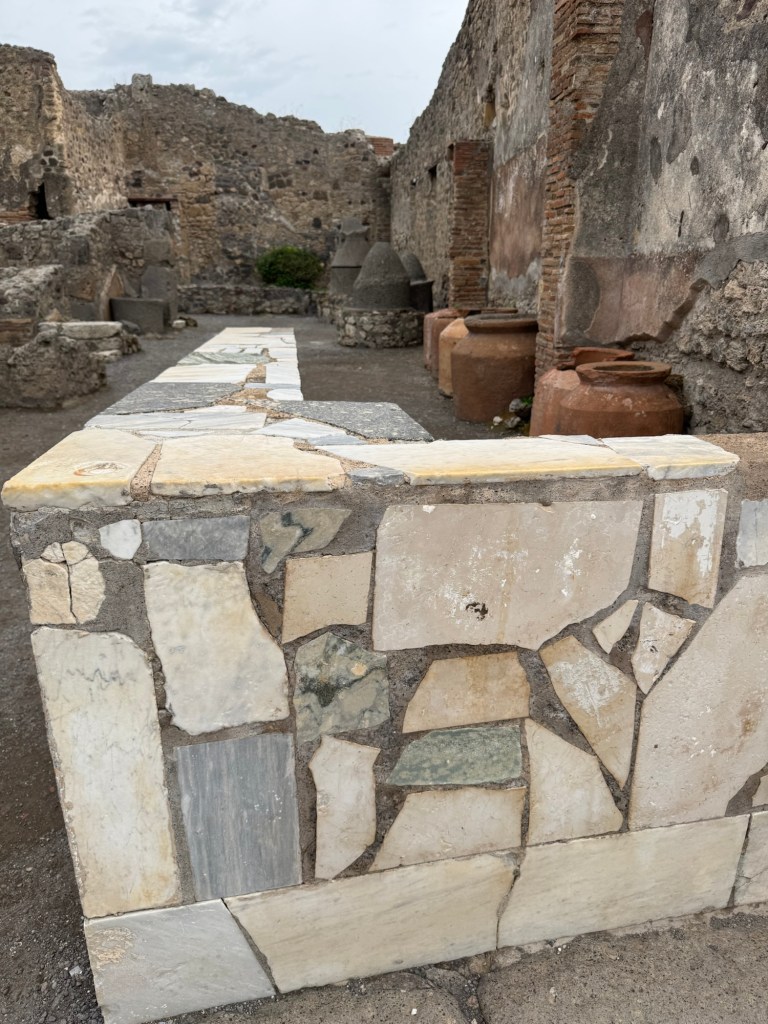
There were many of these counters around Pompeii. Some were far more elaborate than the one in the bakery and included clay pots to hold cooked food.

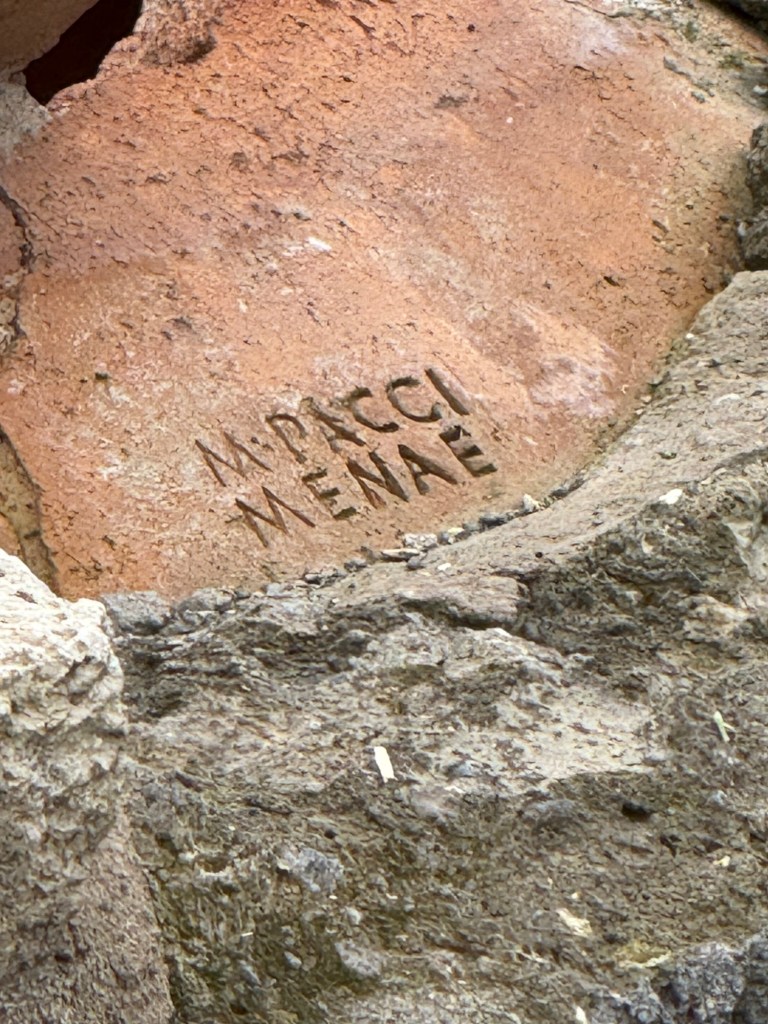
One of the counters was partially broken and you could see the side of the clay pot that was set into the counter. It had writing on it – I’m guessing it was where it was made. Menae is a town in Sicily.
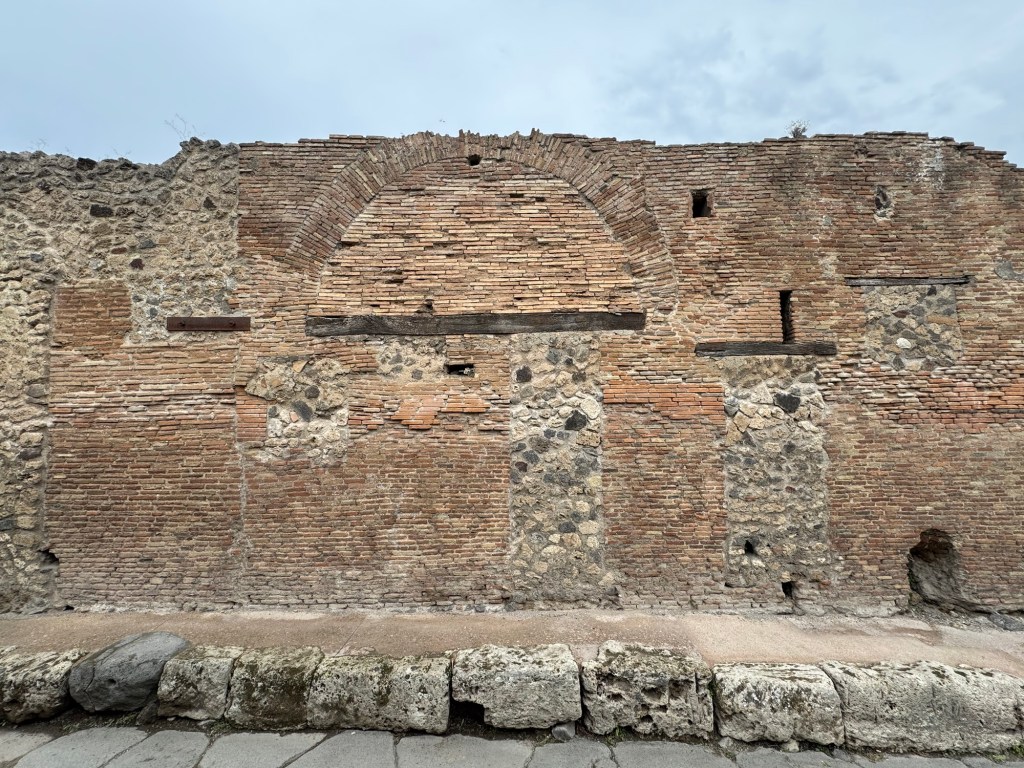
It was also interesting to see how the buildings had been repurposed over time. On this wall you can clearly see the outlines of arches, doors, and windows that had been filled in over time.
I mentioned in an earlier post about how the grooves at the entrance to the shops were used for sliding doors. We found one place that showed exactly how this worked. The next picture is a plaster cast of the remains of the doors found when they were excavating. It is a bit like vertical blinds with each of the vertical wooden slats being about six inches (15 cm) wide. When the door was open they would stack neatly against the wall. When the slats were closed, a bar on the inside would provide security.

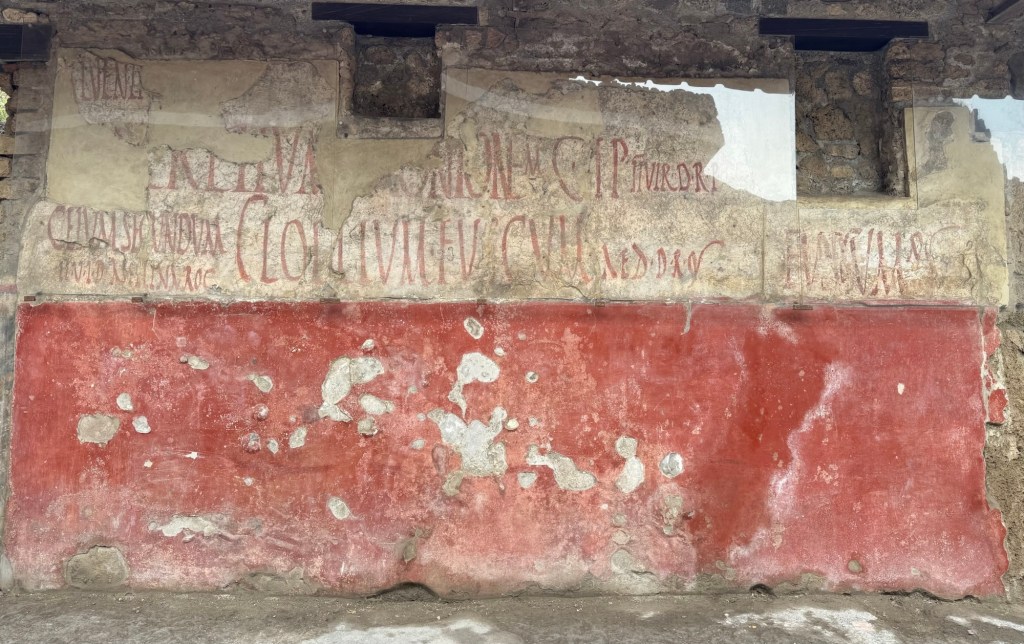
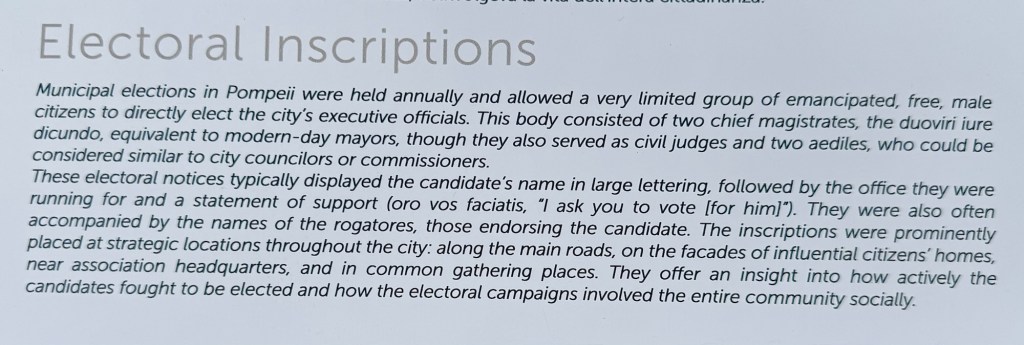
We also learned that Pompeii had local elections, and we saw many political ads on the walls.
We didn’t have to work that one out by ourselves – there was a very helpful information stand.
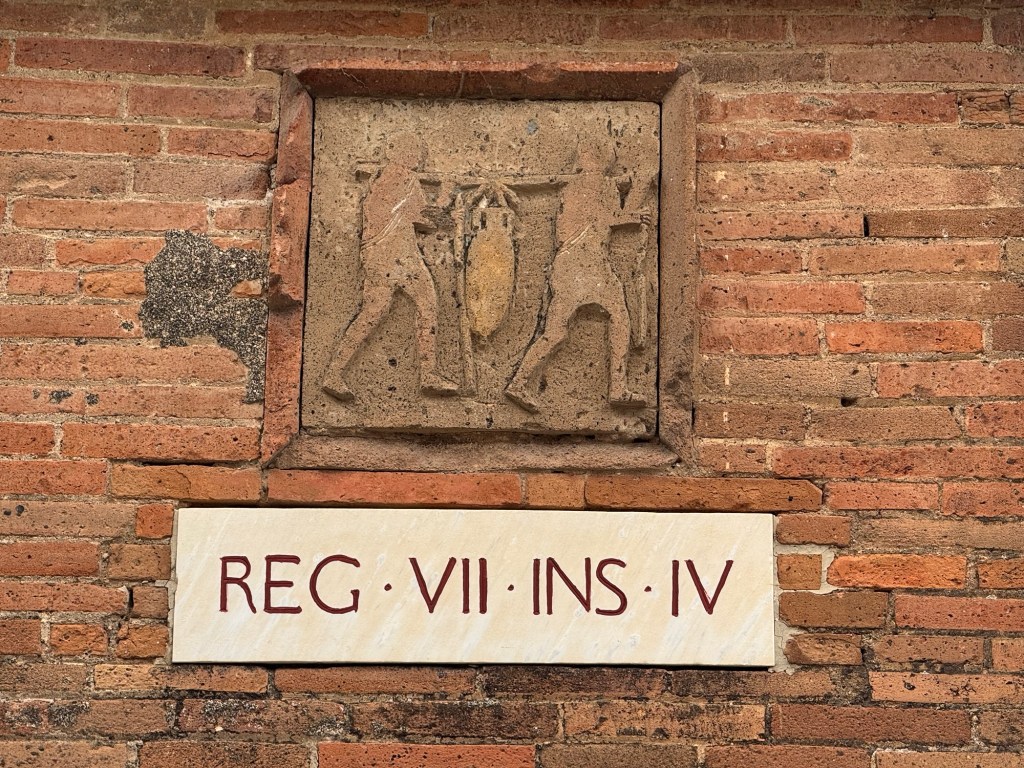
You could also see sculptures inset into the walls, like this sign showing how amphorae of olive oil were carried.
And then we had this rather rude one…

Pompeii has an arena and two theaters that are beautifully preserved. This is the medium sized one, which is still used for live performances.

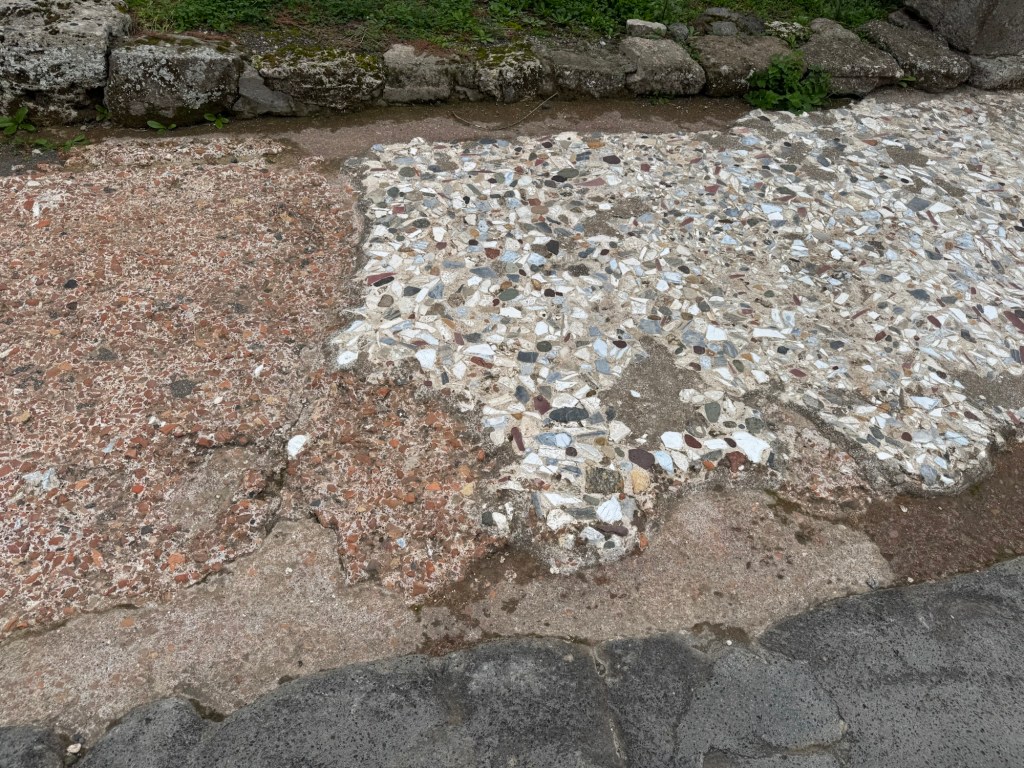
The stones on the streets of Pompeii are clearly original, but the sidewalks look like a recent addition. We were trying to figure out what the original ones looked like, and then we saw this. Looks like they were concrete with stones set into it.
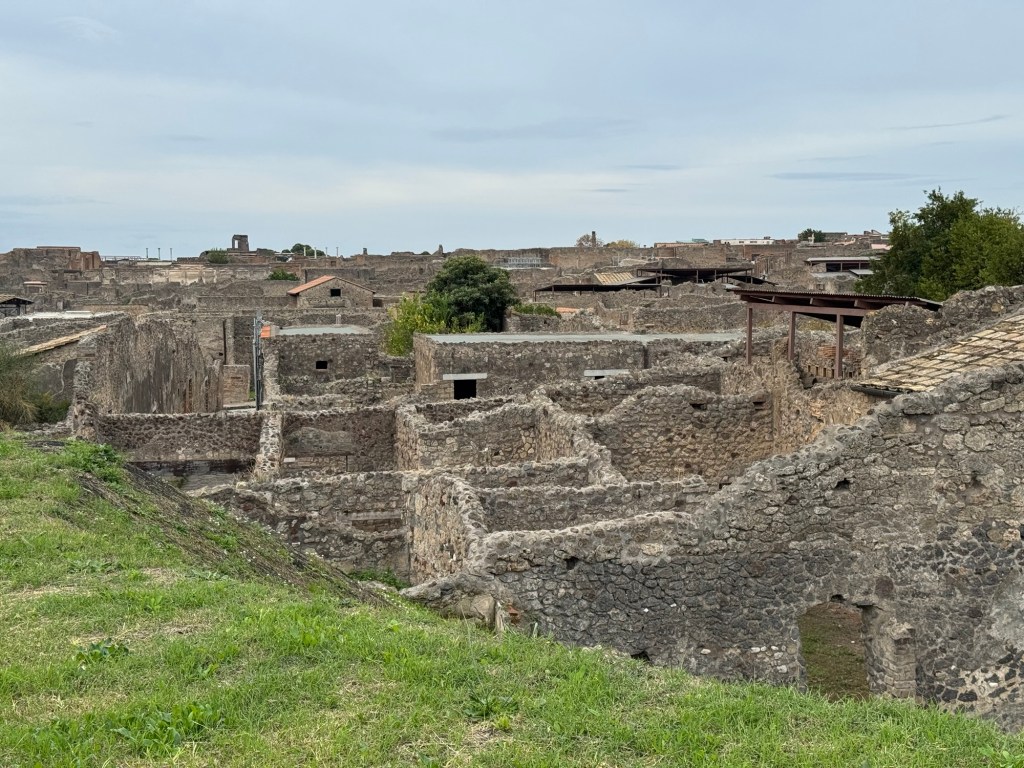
Near the end of the day we were on a rise and were treated to a view that gives a hint of just how much there was to explore, if we truly wanted to walk every street.
At the end of the day we got together with Lisa and Dale, who are also in Italy and were with us at The Amazing Abruzzo. We ordered a lovely Napoli pizza on the outdoor patio … though shortly after this picture was taken it started to sprinkle rain and we moved inside.

Jan decided to have a quiet day in Naples, checking out a few sights and an art museum. Wise choice – I was walking for six hours straight.
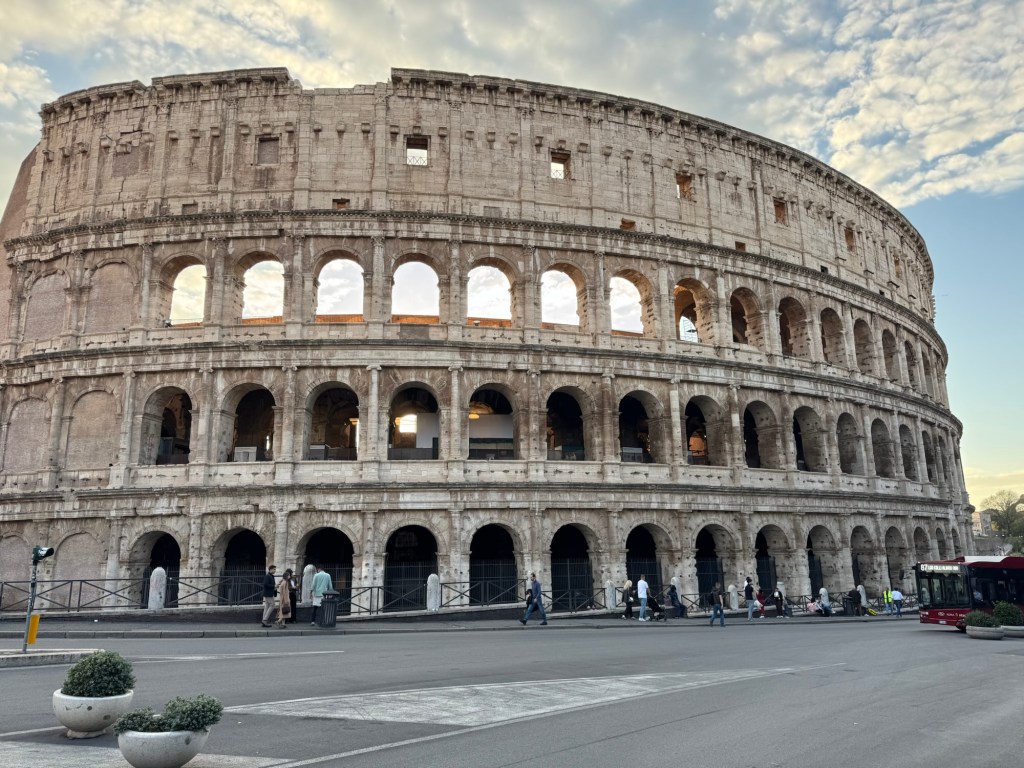
Today was a travel day. We took the train to Rome. On our walk to the grocery store to get food for breakfast, we passed this. More Roman ruins.


 If It Was Today...