
We took the train to Pompeii yesterday to get a feel for how crowded it would be, and as a result … we decided to go to Herculaneum today. The crowd on the train was similar to yesterday, but not many people got off at Herculaneum so there wasn’t a queue to buy tickets. Here was our first view of the ruins.
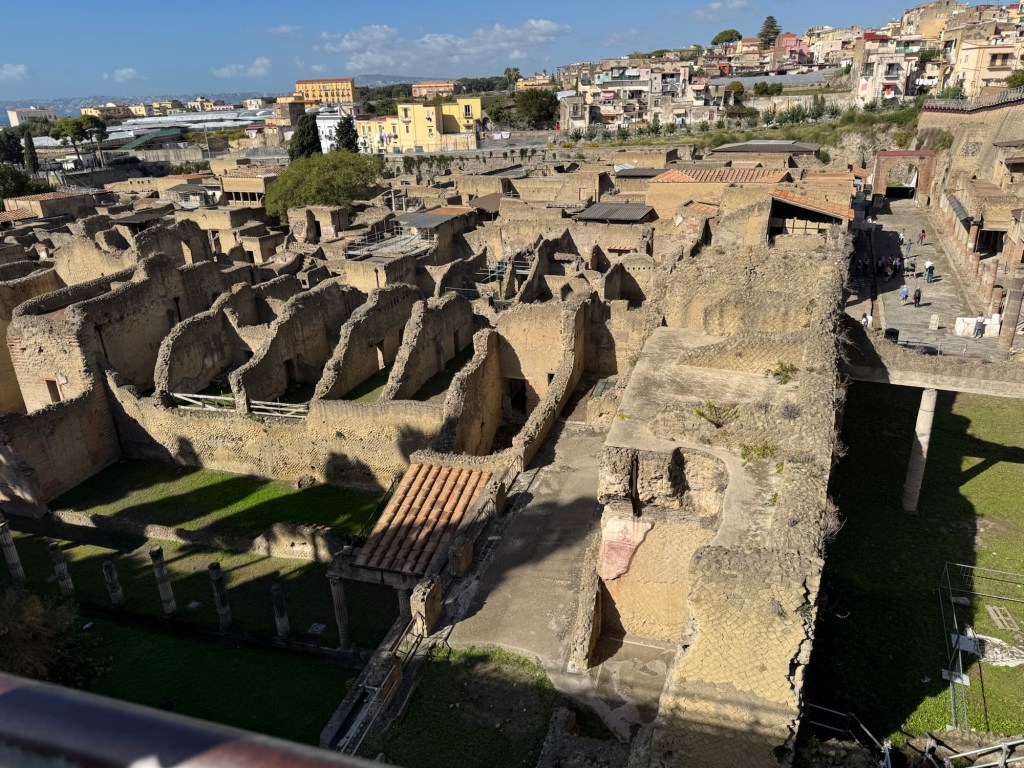
You can wander through the city streets and go into most of the buildings as you explore. This gives you a rough idea of what the typical street looks like. The high building at the end of the street is the modern city, fifty feet above the level of the ancient city.
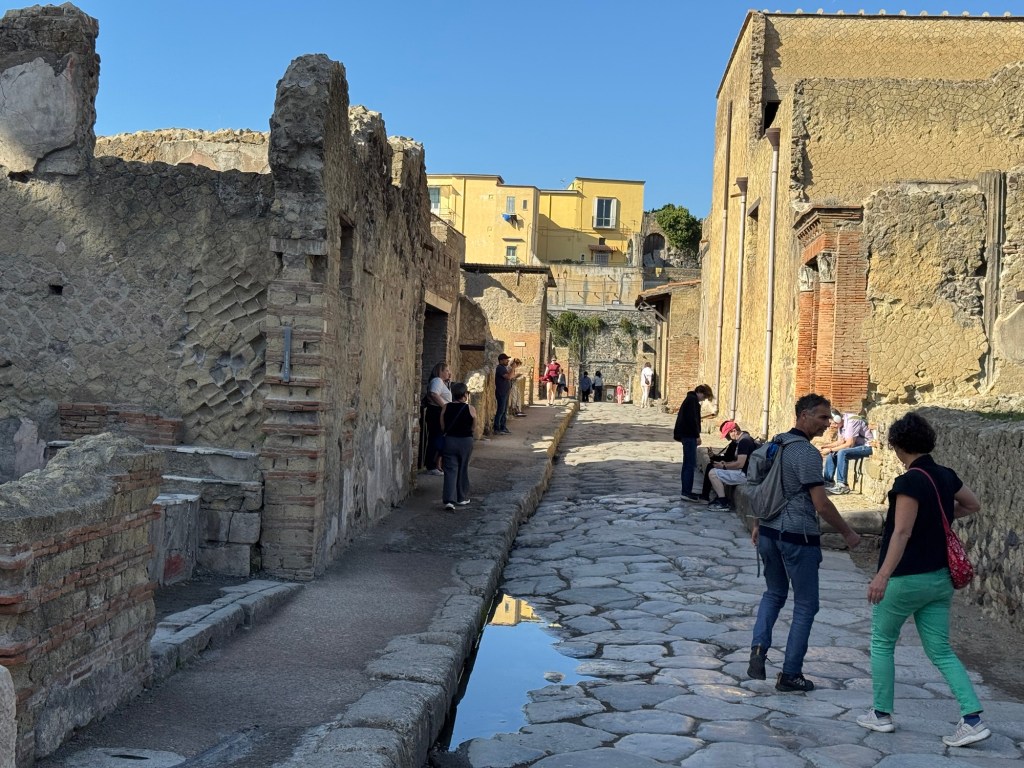
It was interesting to see the construction techniques in the city. Many walls were built with stones arranged in a diamond shape, rather than the brick-like walls we think of today. Apparently this was because the technique didn’t require much expertise, so they could use unskilled labor rather than (expensive) artisans. Some things never change. Then they would cover the stone with stucco and paint it with frescos. You can see that here. At the bare wall is at the bottom where the stucco burned away, while the stucco and and fresco are still visible at the top.

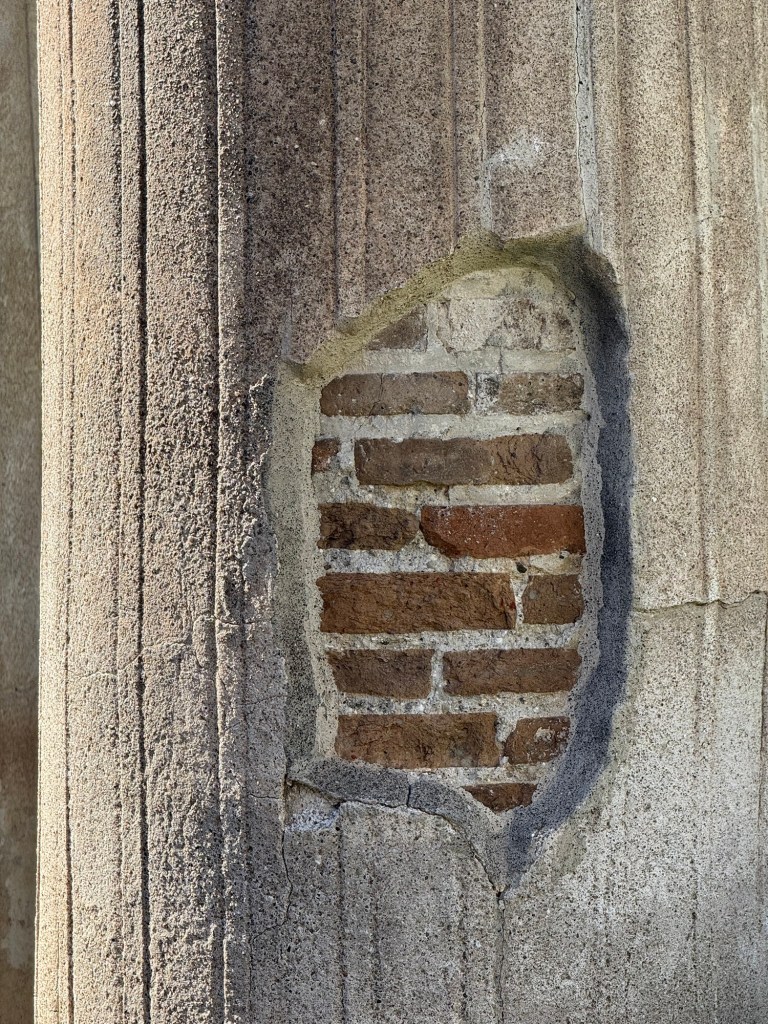
The wealthy could afford to have marble columns, but the middle class merchants settled for a brick core, and concrete coating around the outside to make it look like stone. Here you can see a column that looks like stone, but a piece of the coating has chipped away to reveal the brick underneath.
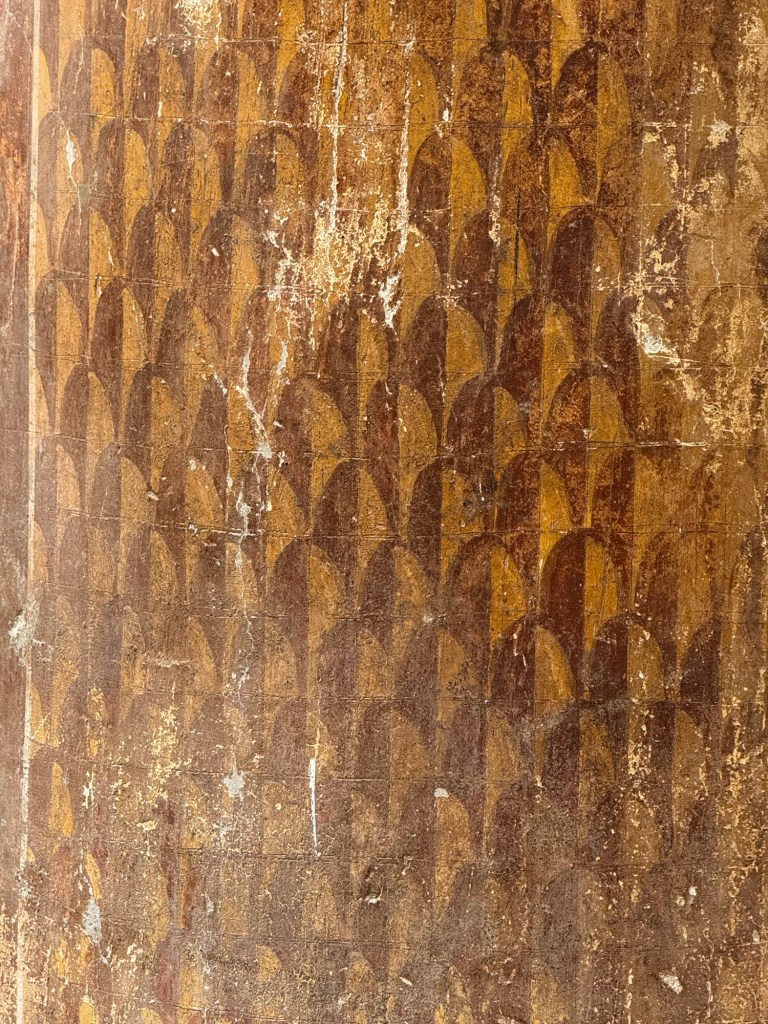
Some columns were made with ridges, like the previous picture, while others were smooth and decorated, like this one.
There were many frescos on the walls throughout the city. Many were faded, but you could still get a feel for what they would have looked like two thousand years ago. Many of these are exposed to the elements today.

The city was named Herculaneum because it was associated with Hercules. There were many temples and frescos highlighting the twelve labors of Hercules.
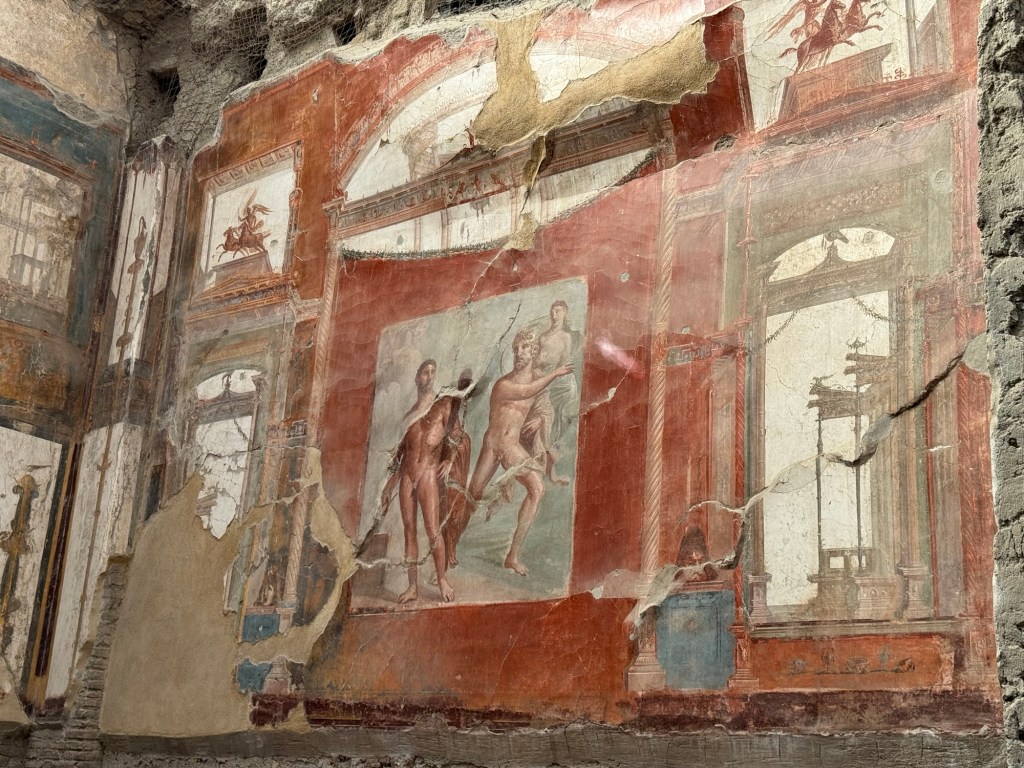
Here is another impressive fresco that Ian discovered just before the site closed (and in his words, they “kicked him out and locked the doors behind him”).
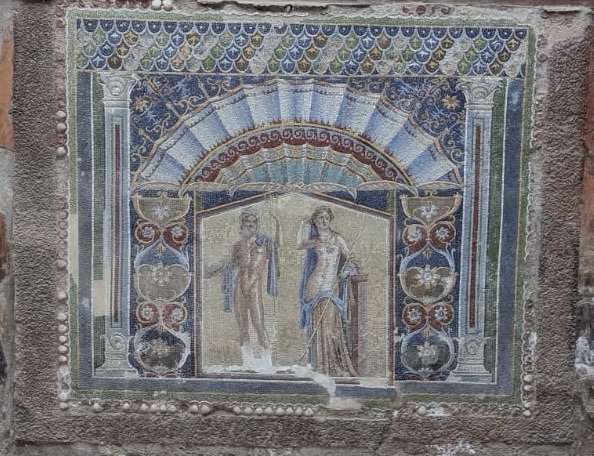
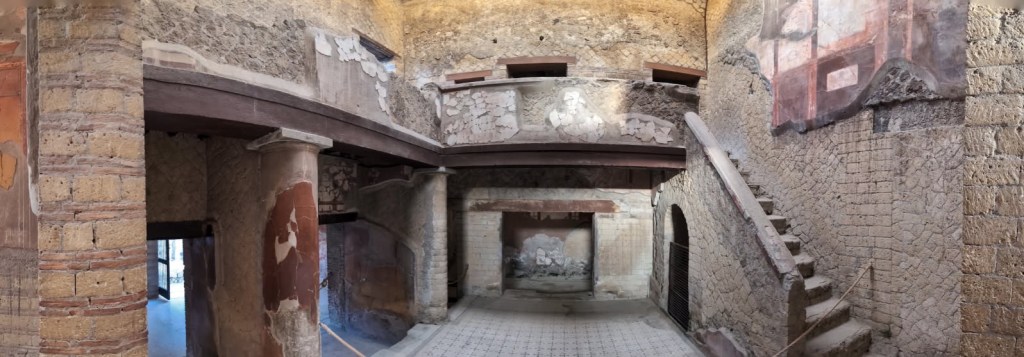
And here is a room that shows frescos and a stairway leading to the second floor (or the first floor, depending on where you are from).
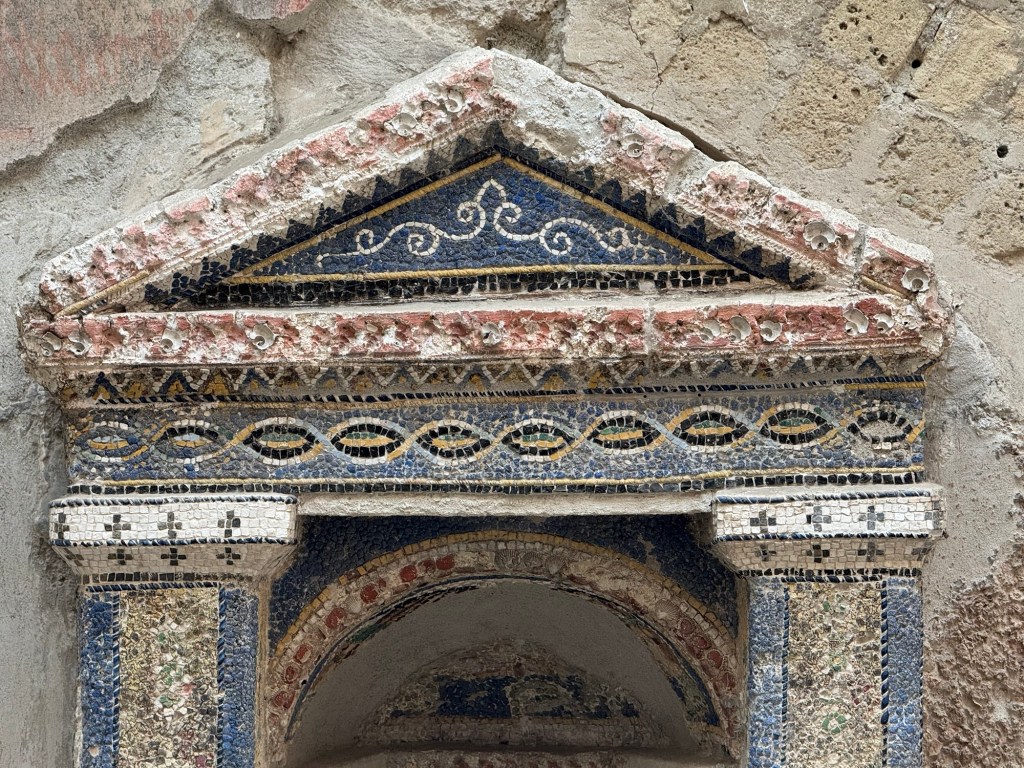
In addition to frescos, there was also lots of amazing decorations like this one, which looked like a shrine.
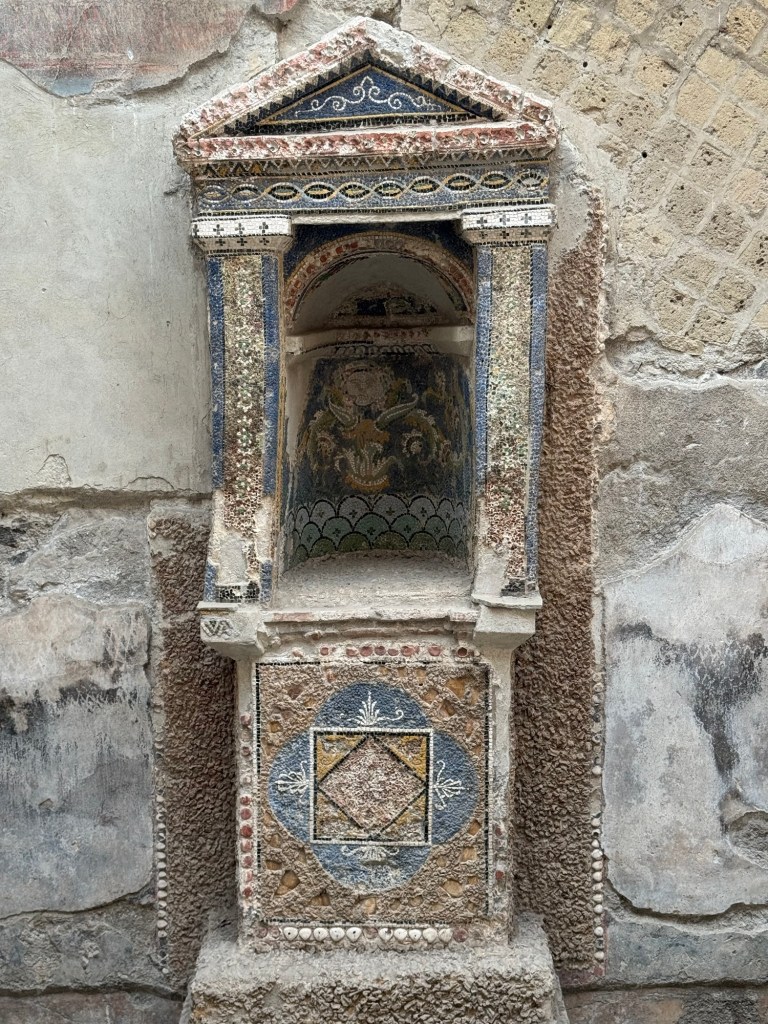
Here is a closeup of the detail at the top. Note the detail and the vivid colours.
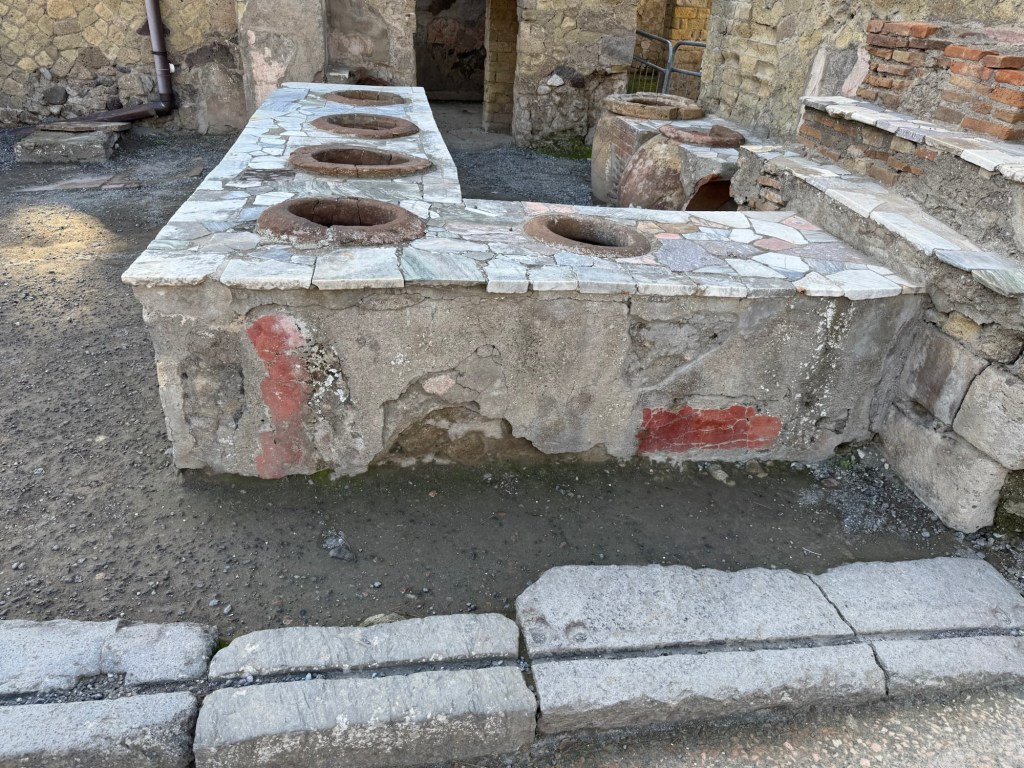
The site also featured a number of rooms showing the merchant shops. One was a bakery, while this next picture was a fast-food outlet and bar. The large pots in the counter contained ready-to-eat food – kind of an early take-away shop. The other interesting detail is the slot in the stone at the bottom, in front of the shop. This track was used for sliding bifold doors to close the shop at night.
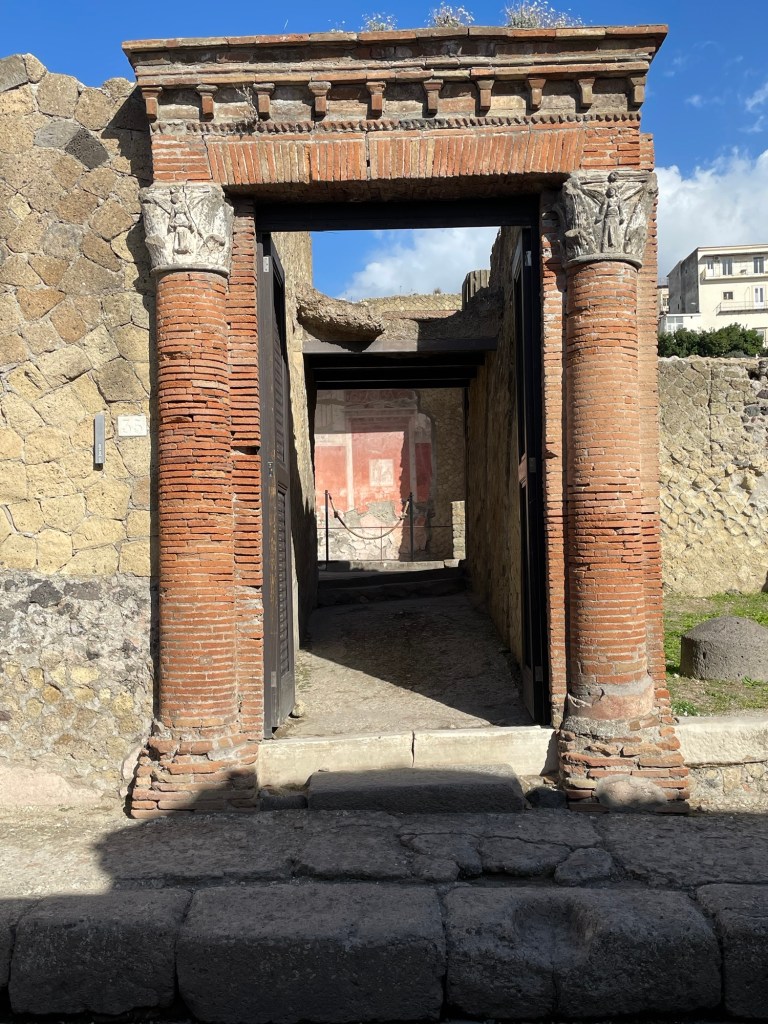
Some of the entrances were plain, but others were quite ornate, like this one.
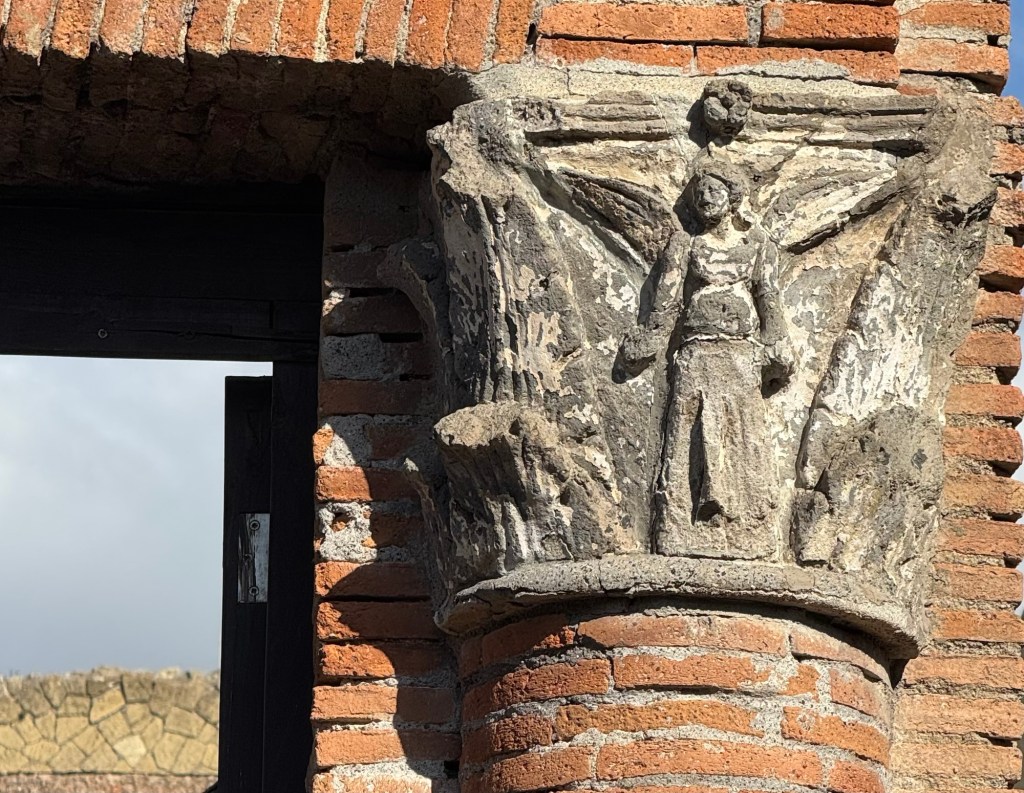
This next picture shows the detail on the top of the column, and gives you a sense of what it looked like when it was new.
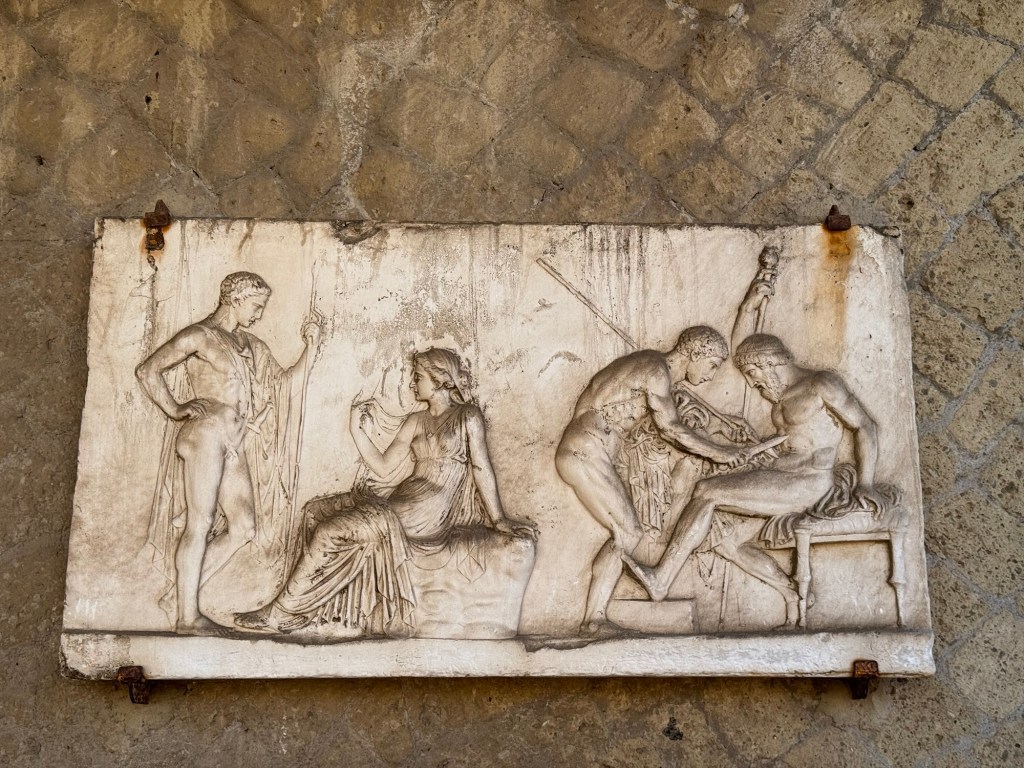
They have also discovered marble inserts in some of the walls, like this one. You can see the metal pieces that hold it in place, but originally these would have been covered by plaster and therefore invisible.
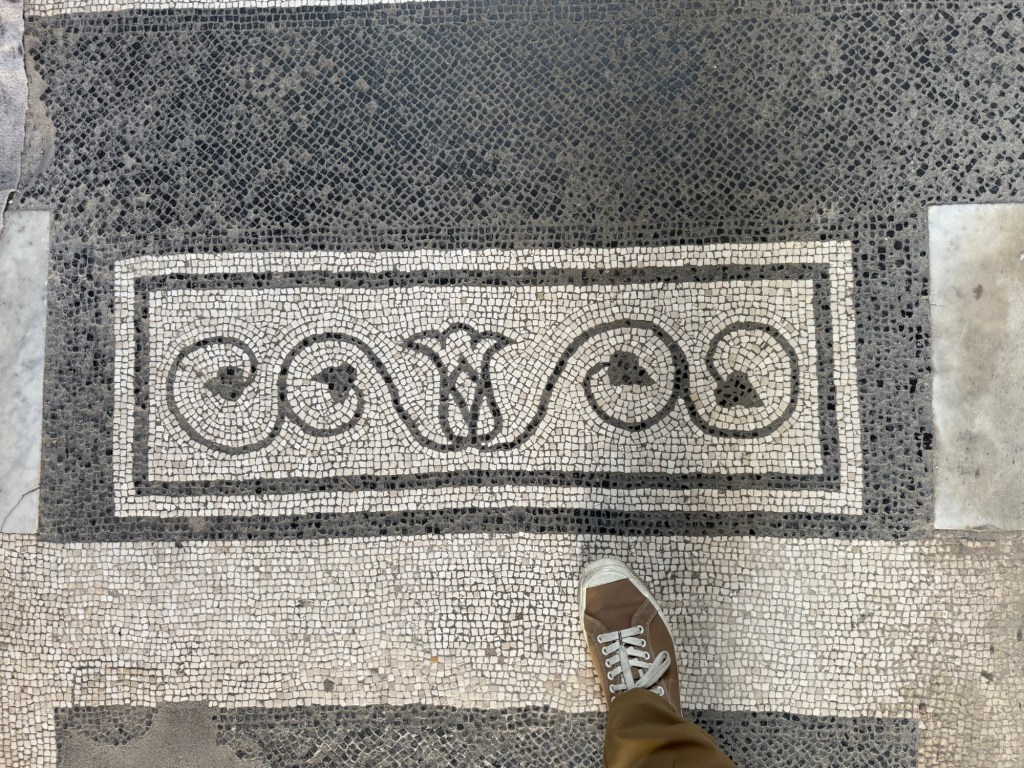
There were also many areas where the original floor tiles and mosaics were still used today. This next picture was taken in an open hallway … we were meant to walk on it, honest.
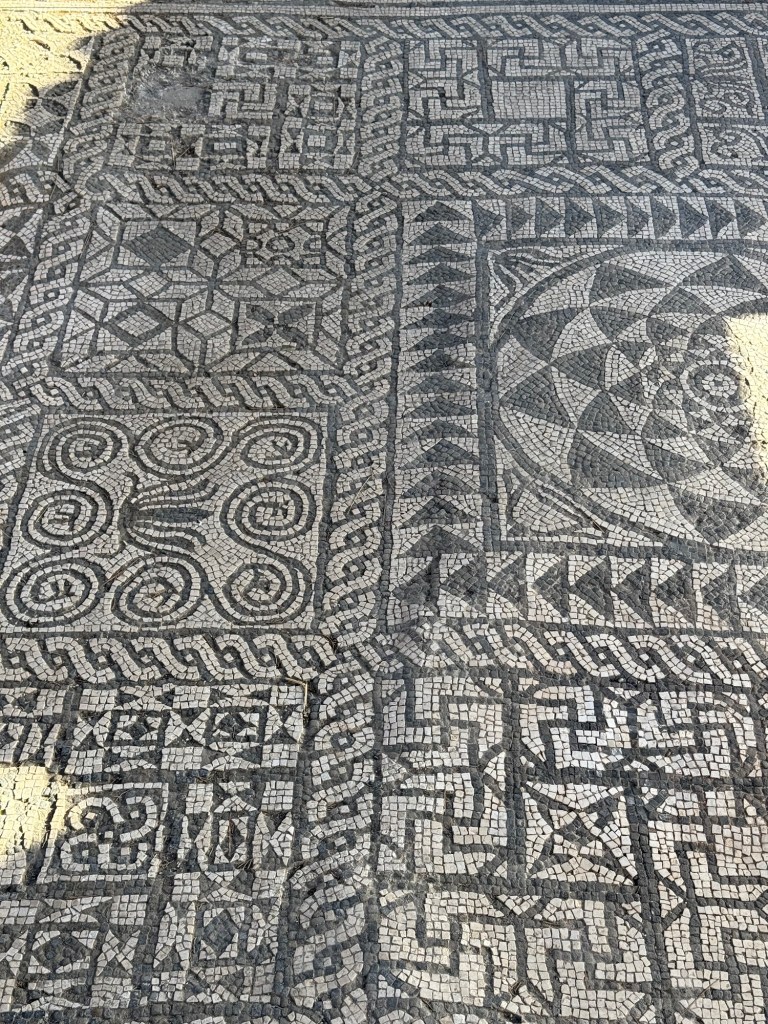
In other areas, the mosaics were roped off and we only looked at them. This one was in a large room and the mosaic was about the size of a large area rug.
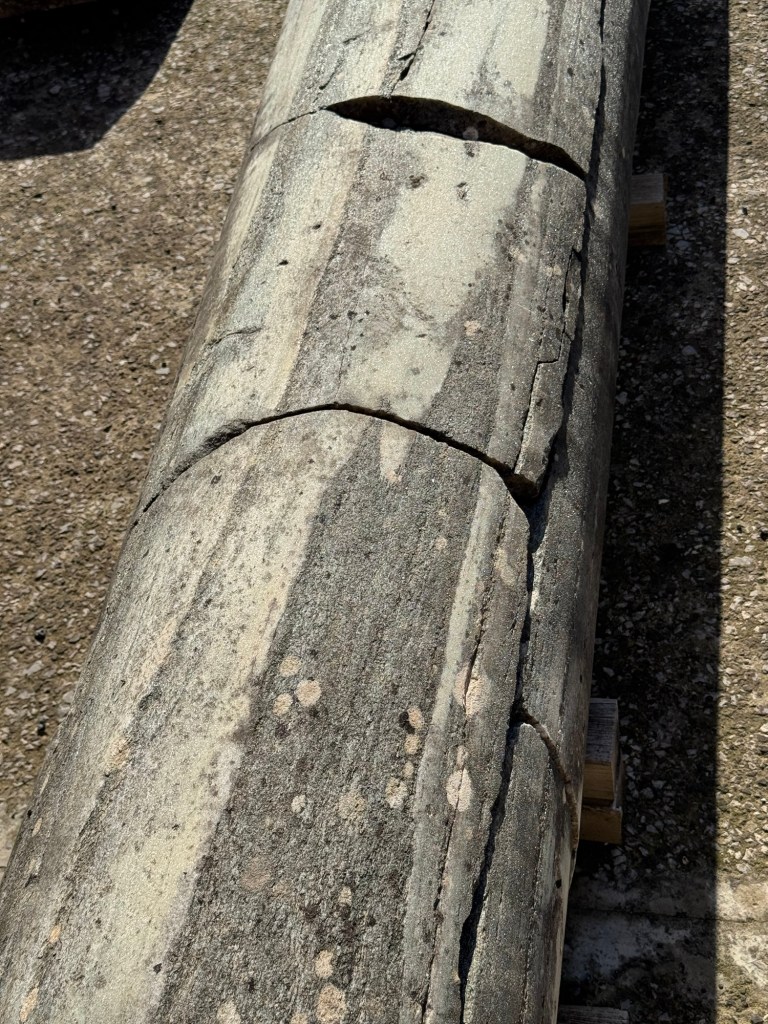
I mentioned earlier that the wealthy could afford to have real marble columns. Here is one that was destroyed in the eruption.
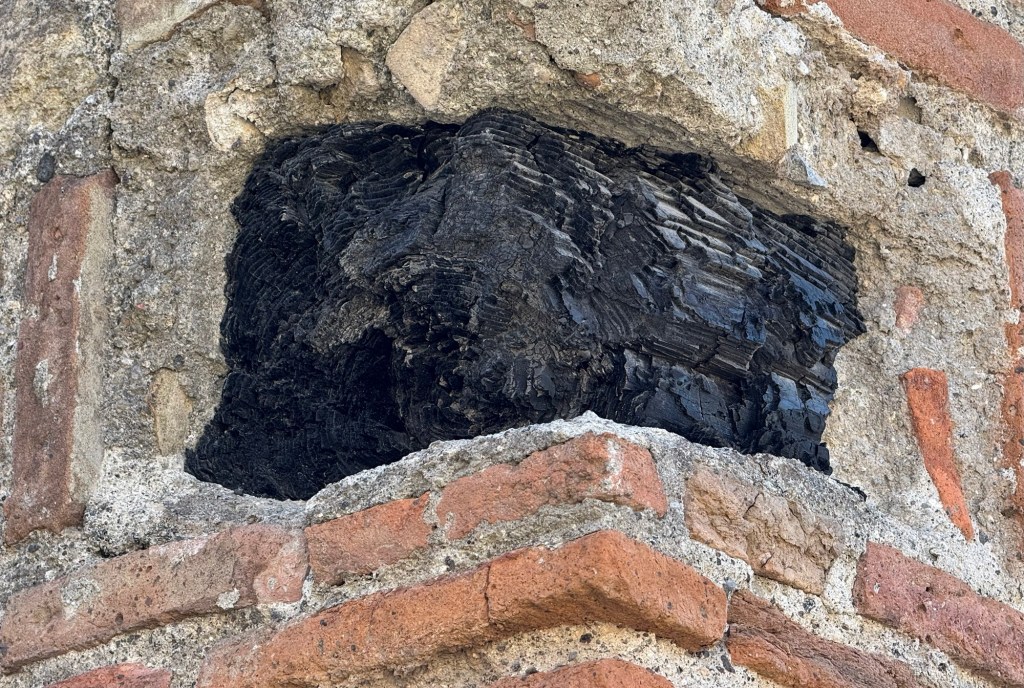
There were other signs of the destruction caused by the eruption. This had been a wooden beam inserted into the corner of a building. Now it is just charcoal. If you zoom in you can see the tree rings.
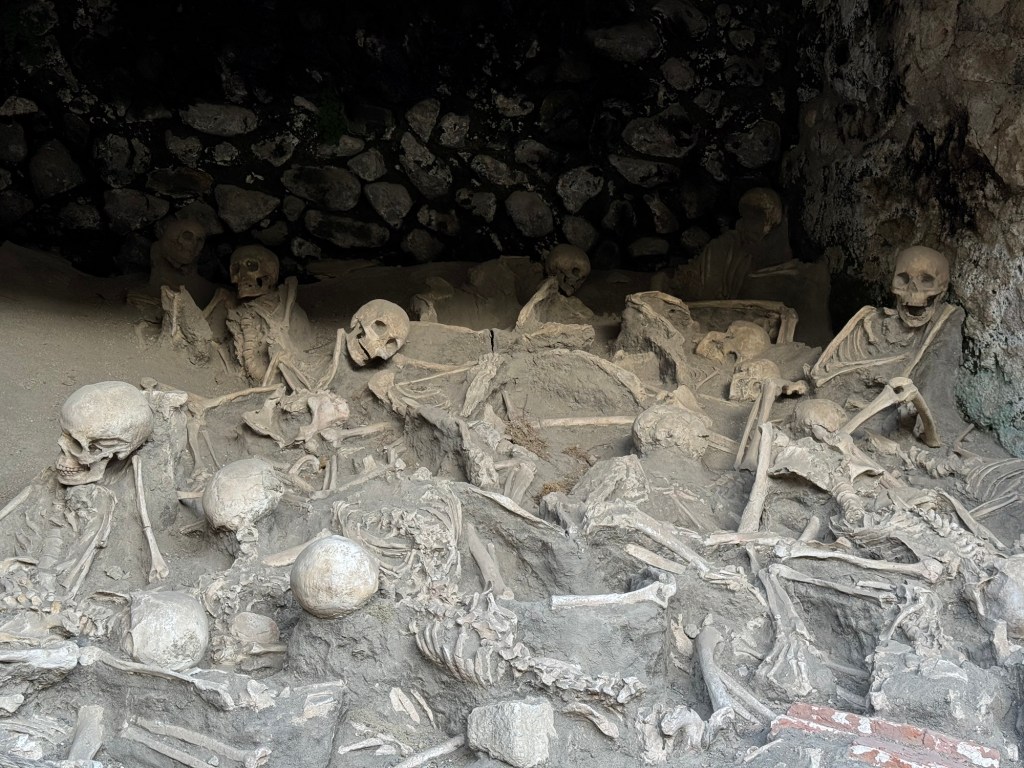
When Mt Vesuvius began to erupt, many inhabitants tried to flee. Hundreds were by the sea, waiting to be evacuated when the largest eruption occurred in the middle of the night. These plaster casts show what was found when Herculaneum was uncovered. It’s a little weird to see this just before Halloween.
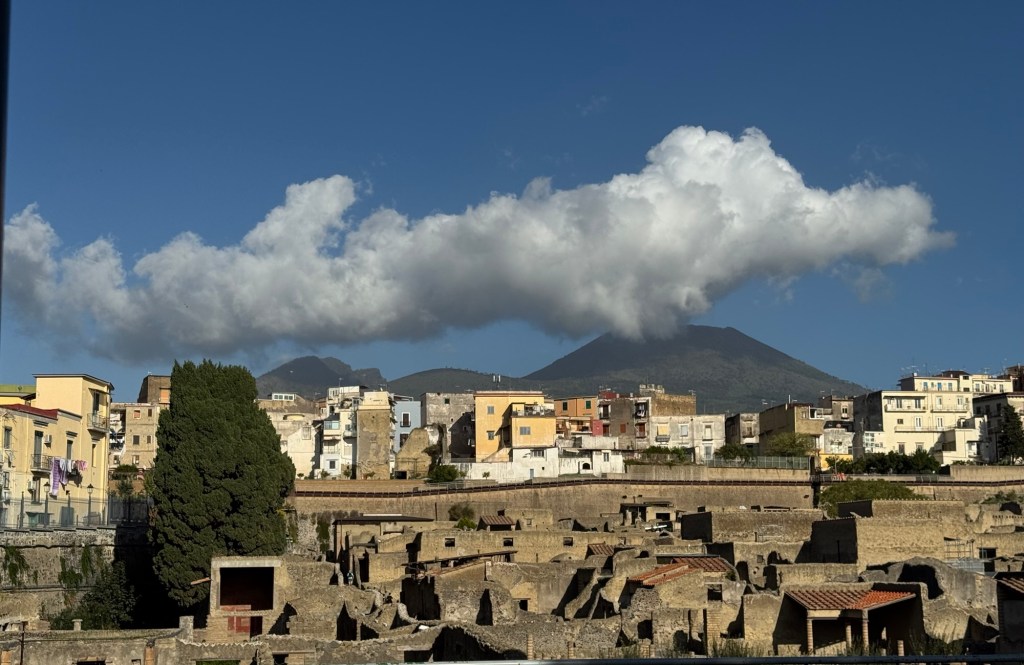
As we were leaving, I took this shot of ancient Herculaneum at the bottom, modern Herculaneum above it, and Mt Vesuvius in the background.
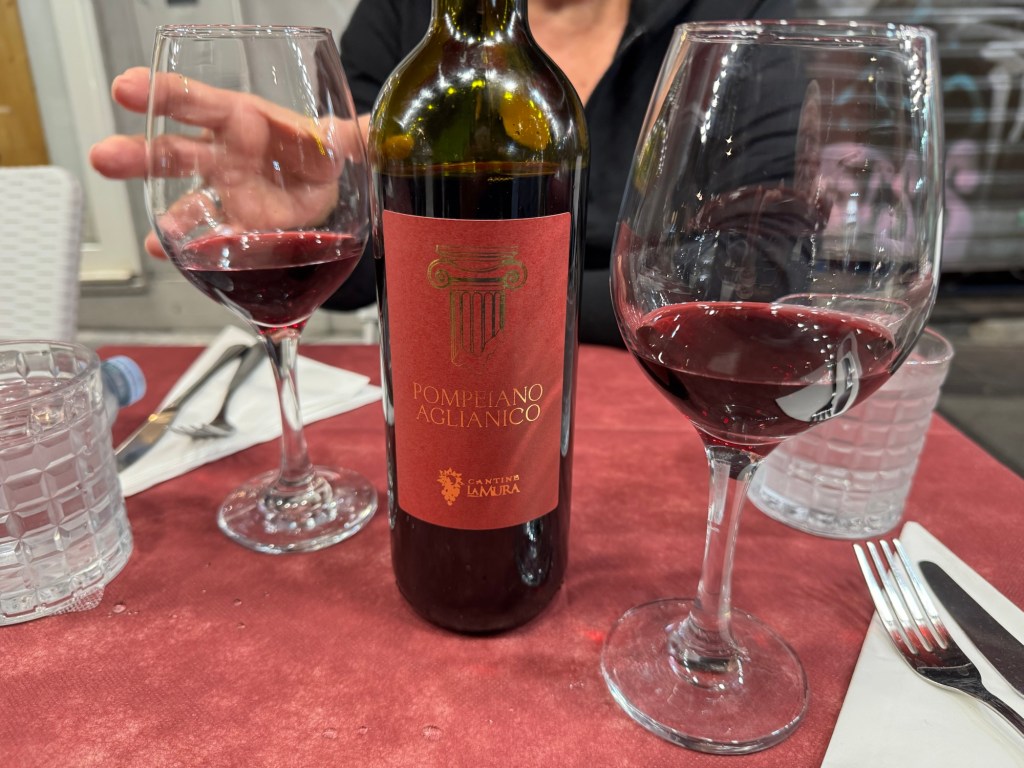
After heading back to our hotel and freshening up, we walked to a nearby restaurant on the edge of the old city and had a lovely meal with a bottle of house wine from grapes grown on the slopes of Mt Vesuvius. You can’t get much more local than that. It was quite tasty, and cost 12 euros for the bottle. Yum.


 If It Was Today...
so amazing! I really like the close up of textures you found – so good!
Regards, Linda xx
fascinating
⬻𓂀✧ 🔺 ✬ღ☆ 🔺 ∞ ♡ ∞ 🔺 ☆ღ✬ 🔺 ✧𓂀⤖
It is a fascinating place to see. I wasn’t sure it would be worth going to see Pompeii as well, after seeing Herculaneum, but it definitely is worth the time. A lot more people go to Pompeii, but it is a far larger site, so it is actually less crowded. So interesting to spend a day wandering the streets of an ancient Roman town.
Glad that you enjoyed it. I love taking close ups of the textures too, but I find you have to include the bigger picture too, or you lose the context. Of course, that means even more pictures in the blog…
The more the merrier! It reminds us all to pay attention! xx
Thanks for the amazing tour complete with narrative!
So glad you enjoyed it. I love seeing things like this, but I like writing about it almost as much. It’s great to know that others enjoy following as well.
Thanks for stopping by and commenting.