Today we split into two groups. One group went to Lanciano which is often described as the “lasagna city” because you can see layers of the city from pre-Roman, to Roman, to medieval, to renaissance to modern, all in the same small area. The other group went to the Adriatic and to the Ortona cemetery.
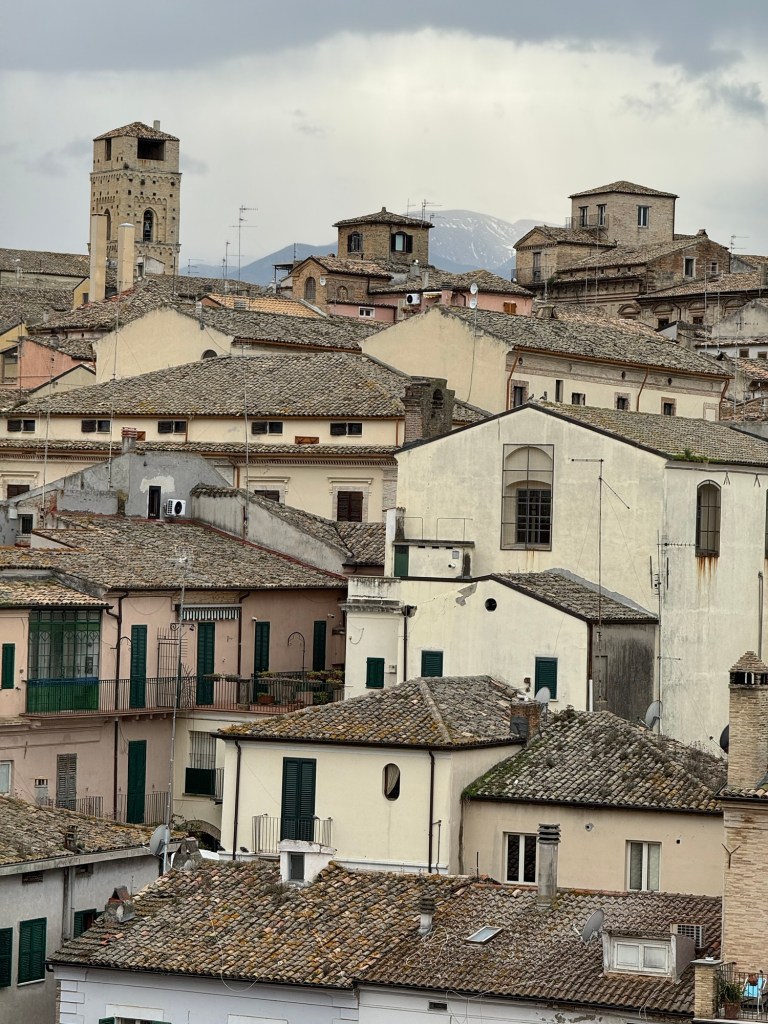
The city of Lanciano has grown up over many centuries creating a rich tapestry of roofs when viewed from the heights of the original citadel. It’s interesting to notice how old combines with new – the roofs of the old buildings with TV antennas, satellite dishes and air conditioning units.
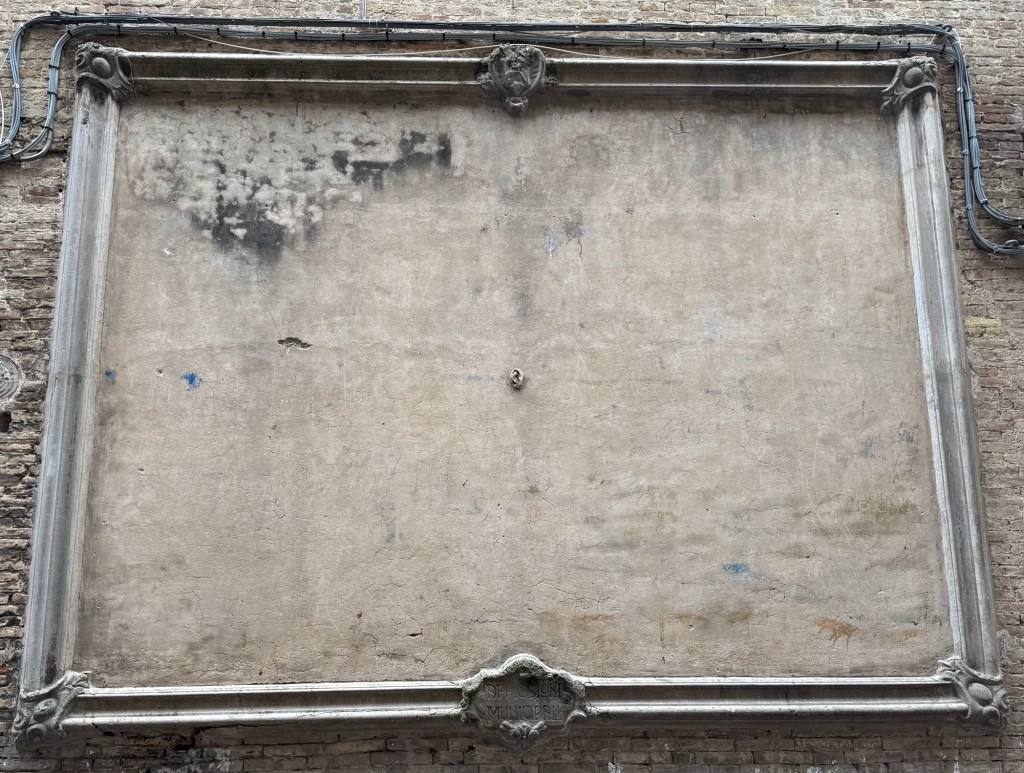
When walking through the old city of Lanciano we saw a spot where citizens could post public notices long ago.
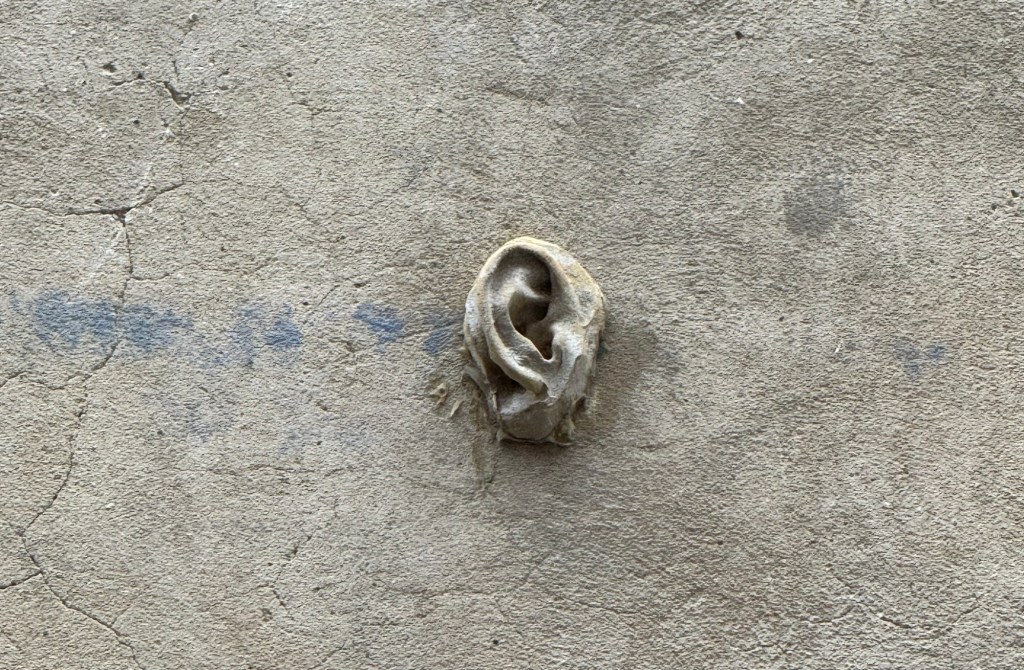
The very center of the board had an interesting addition. I’m sure there is a story there, but I have no idea what it is.
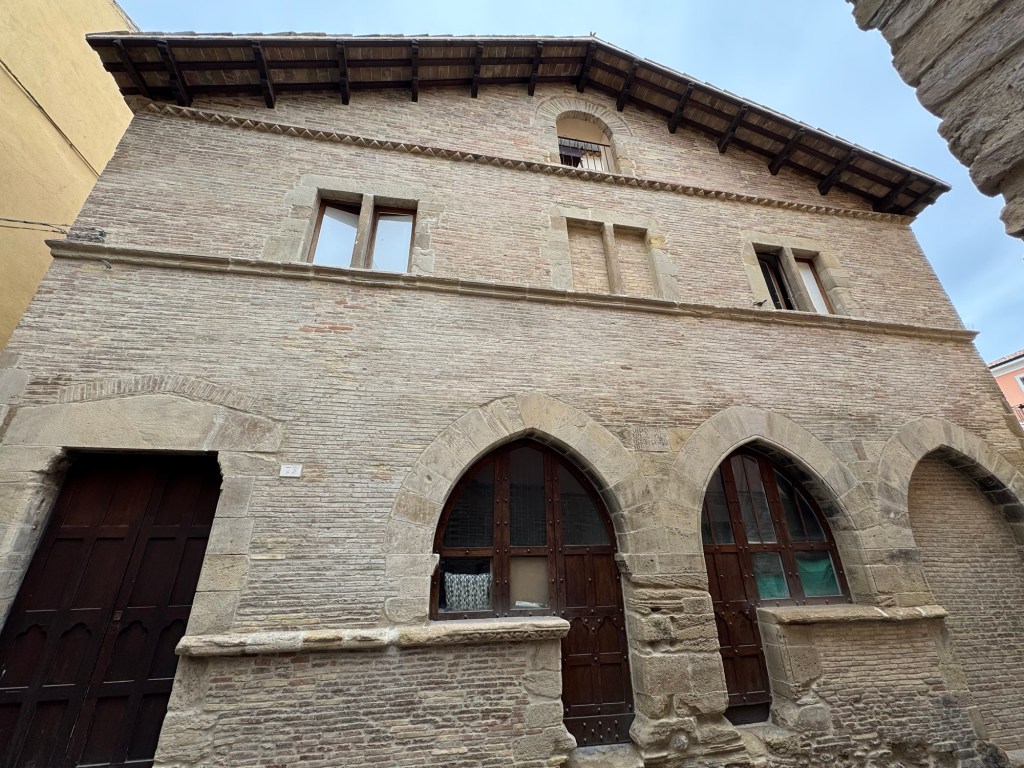
Lanciano was a town of merchants and traders rather than the more usual feudal city. We saw a typical renaissance merchant establishment with a shop on the ground floor and apartments above the store. You can see the typical layout for the store front, with (relatively) wide windows allowing people to look inside and a narrow door for them to enter. Look closely and you can see that the two arches in the center of the picture each have a narrow door.
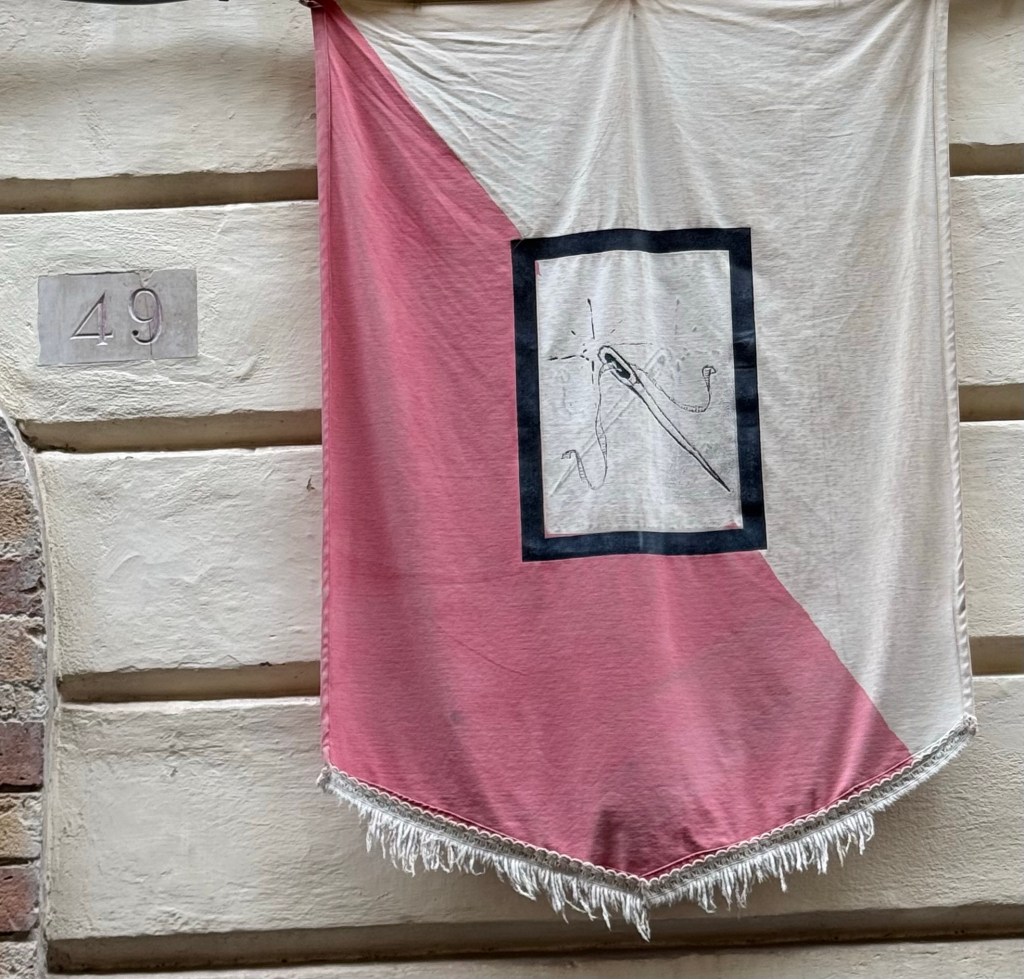
In other areas, artisans would hang a crest in front of their door to illustrate the service they provided. This was for a tailor, which has extra significance because several of the people in our group sew, knit, and quilt.
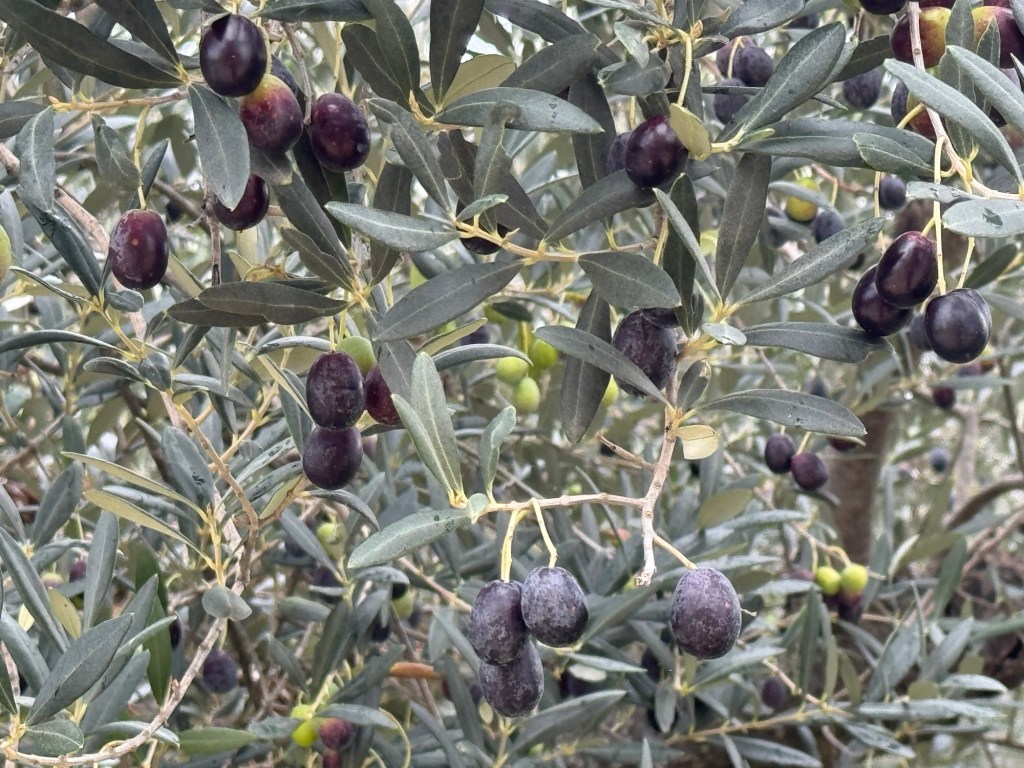
After our morning tour we visited a wine and olive grower. The olives were plentiful on the trees.
The olive harvest was just beginning. Earlier in the week we heard about how difficult this was. It looks easy, and apparently it is interesting for the first hour or two, but from that point on it is exhausting.

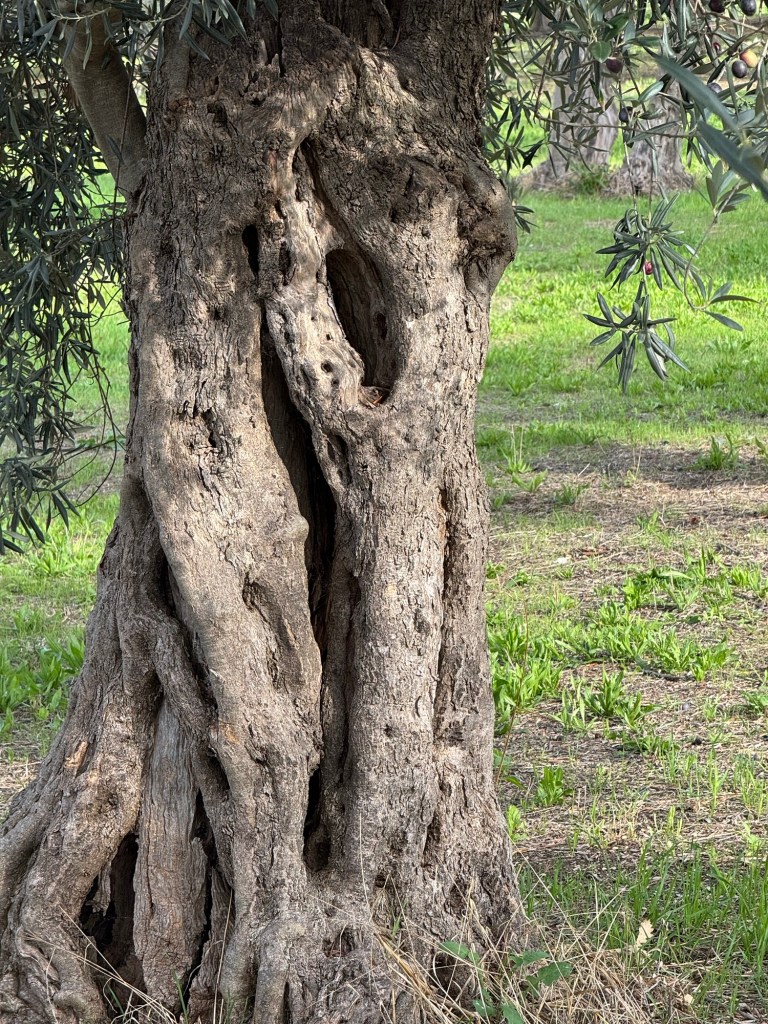
We also learned that olive trees live a very long time – so long that many people claimed that “olive trees never die”. When the center of the tree grows old, new growth continues around the outside, creating a very gnarled and hollowed appearance.
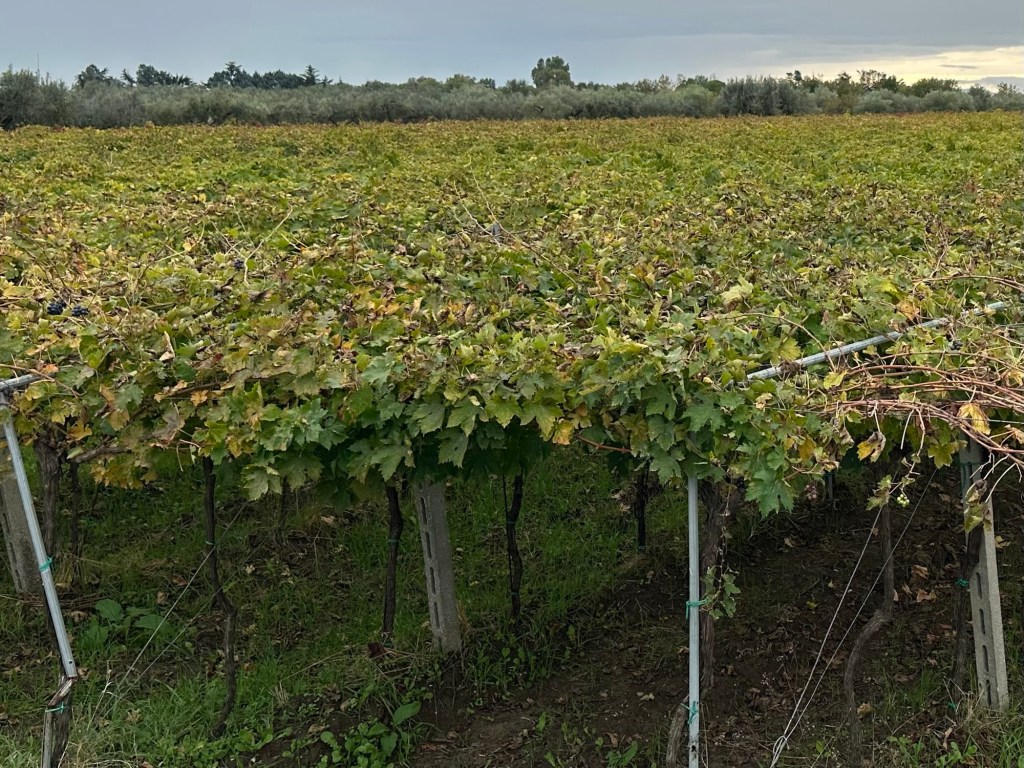
We also learned about a practice that is unique to Abruzzo. Instead of pruning the grape vines into neat rows, they are trained to go between the rows creating a canopy of leaves. This protects the roots from the hot sun and helps in dry conditions, which is happening more and more lately.
After an informative description of the wines produced here, it was time for a light lunch, and of course, wine.
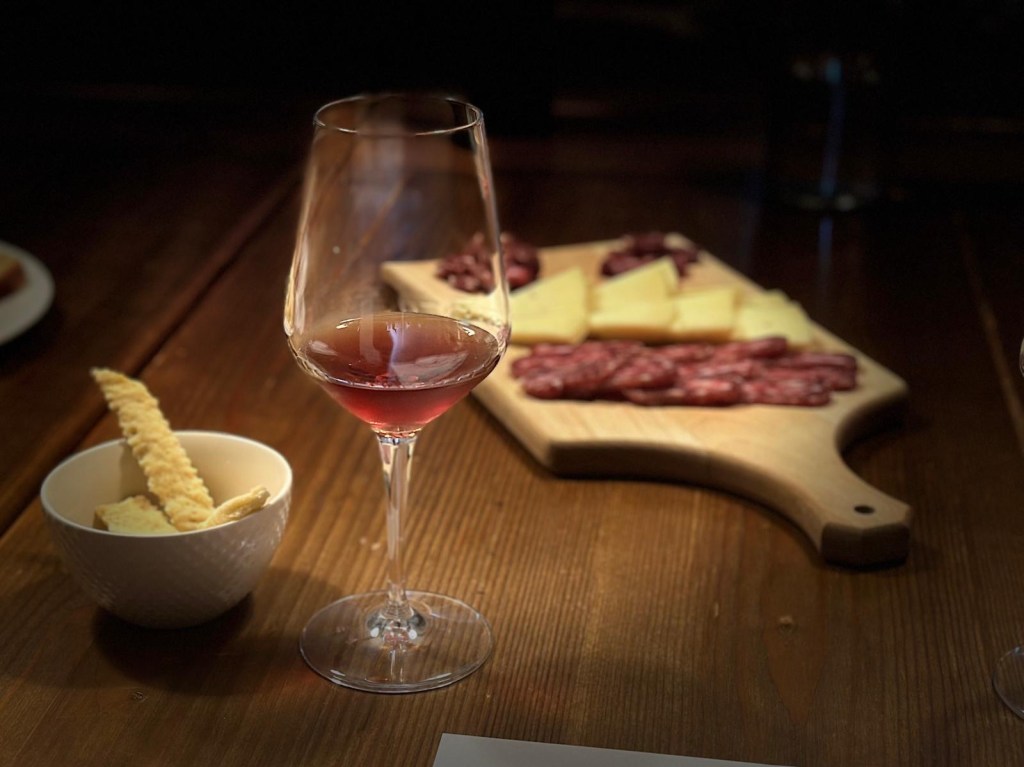
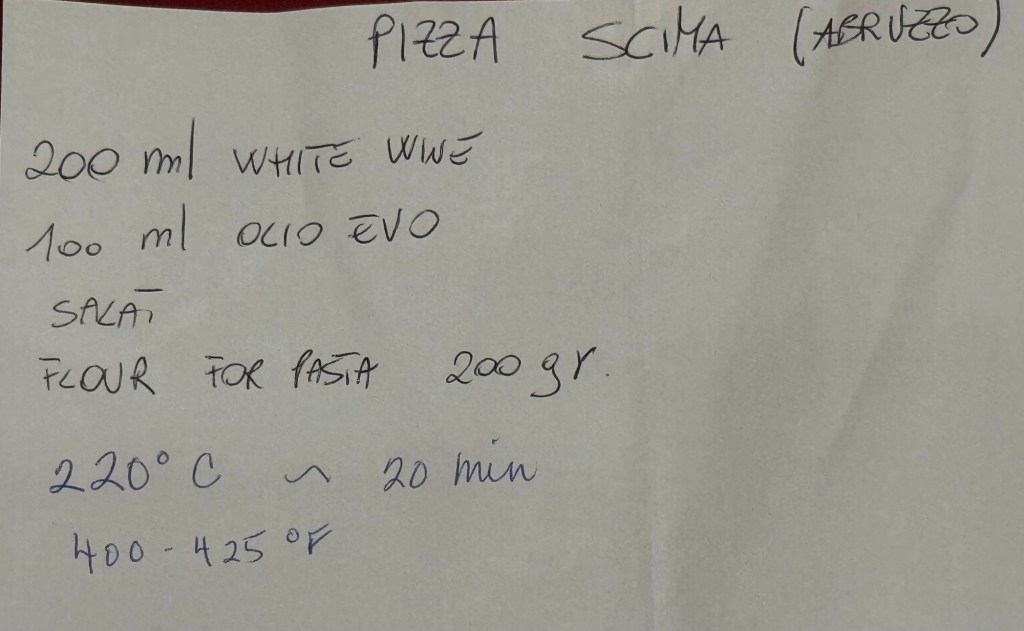
The biscuits you see in this picture were divine, so we asked about the ingredients. Flour, salt, and white wine. We asked if there was olive oil and were treated to a shrug, an eye roll, and “yes, of course”. This has happened more than once this week. Olive oil is so ubiquitous that it’s taken for granted, and there isn’t any need to mention it. Here is the full recipe, with the olive oil explicitly mentioned.
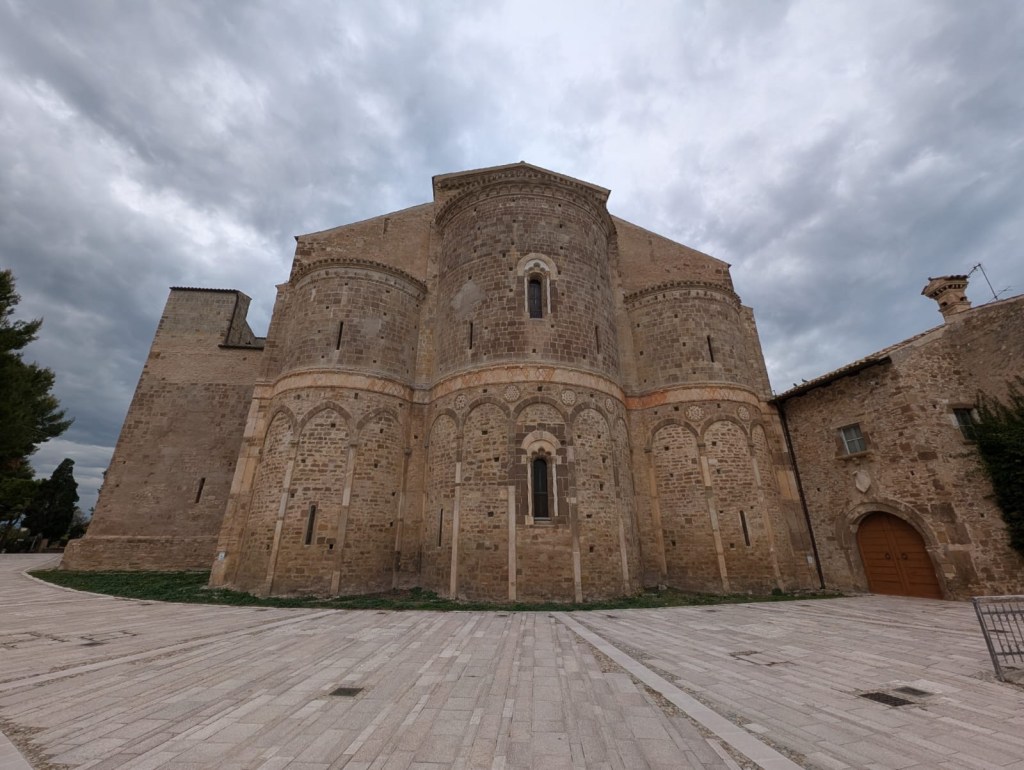
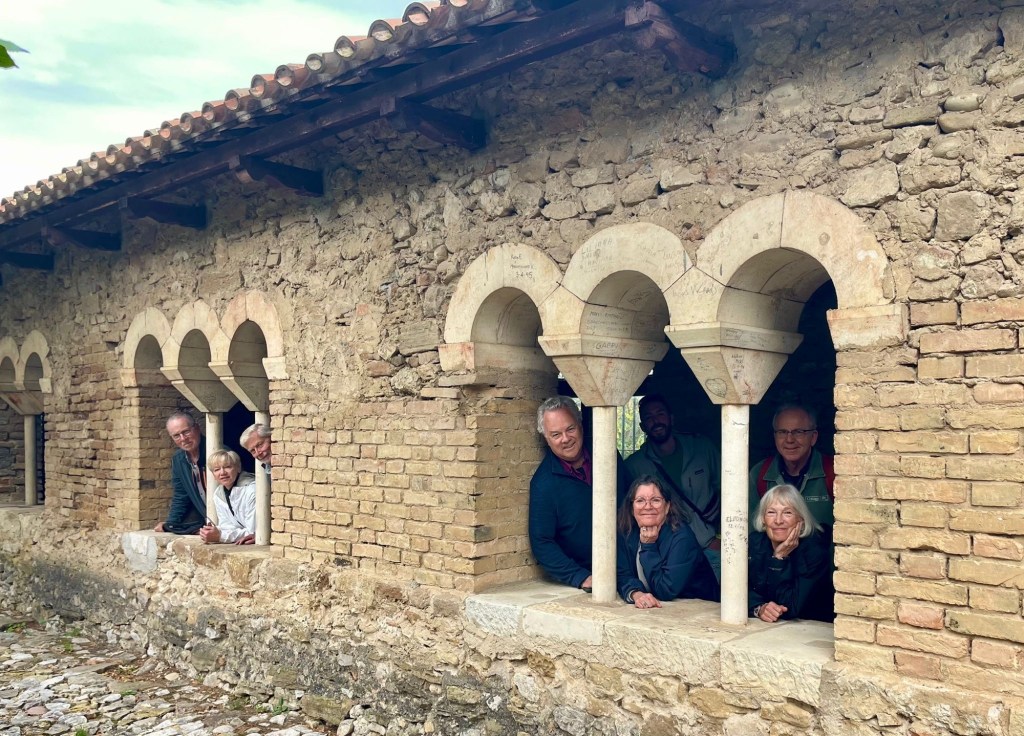
The second group started with a visit to the San Giovanni in Venere Abbey near Ortona.
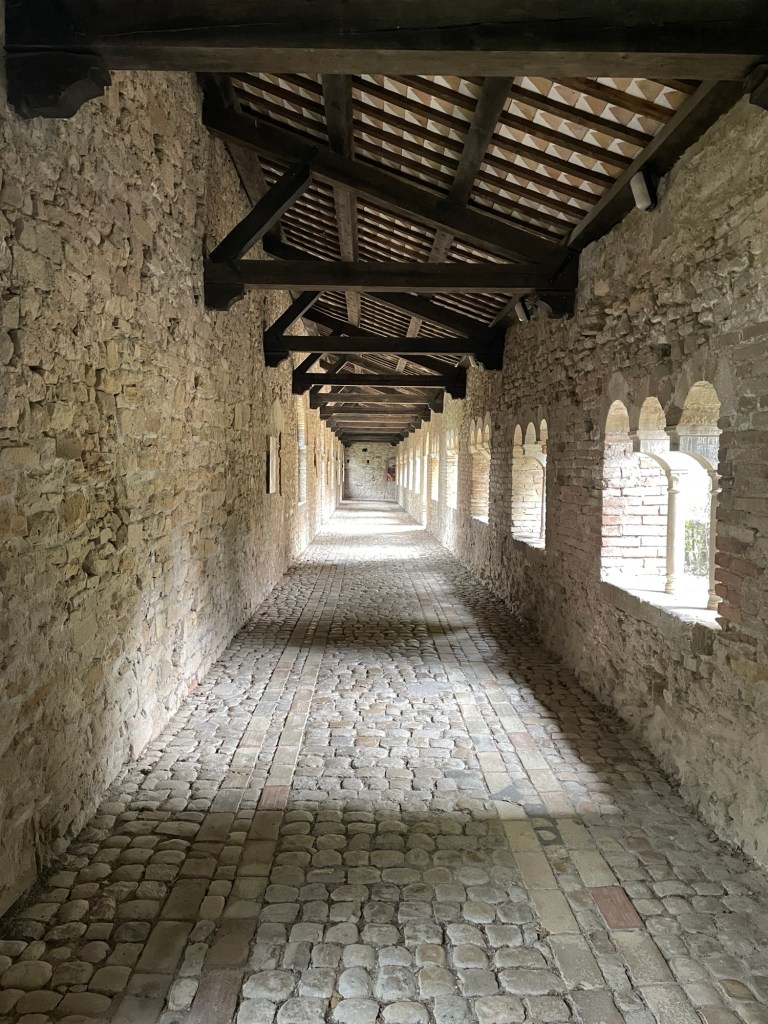
They decided to take an interesting group photo.
This tour included a visit to the Adriatic and the unique fishing platforms there.
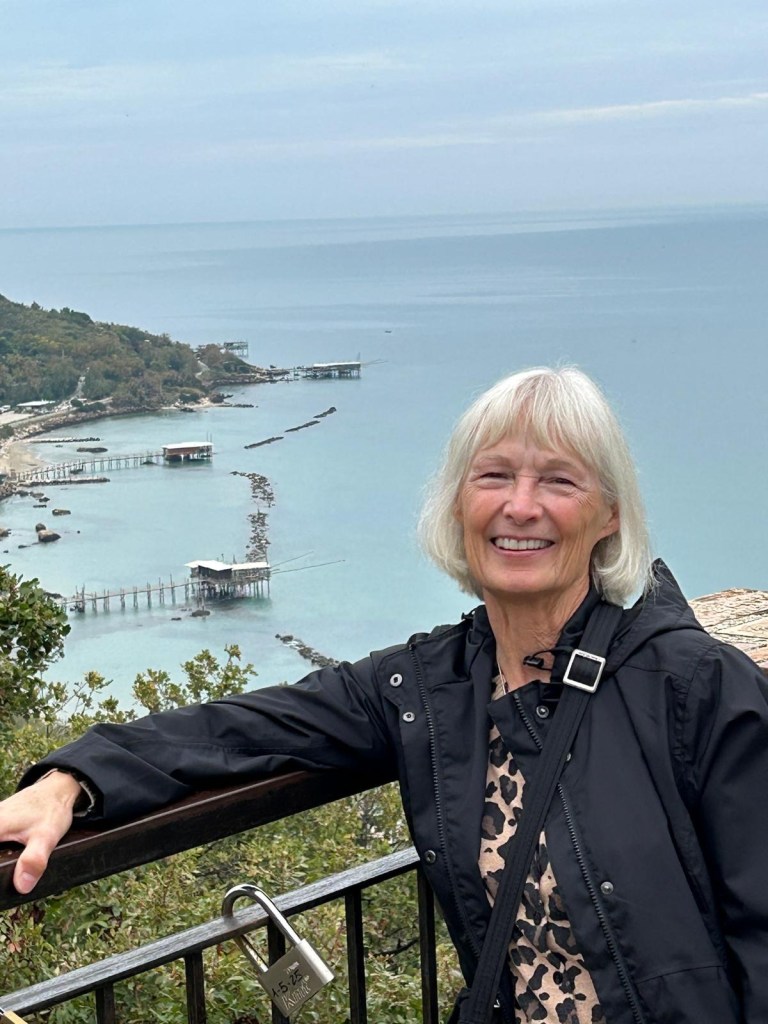
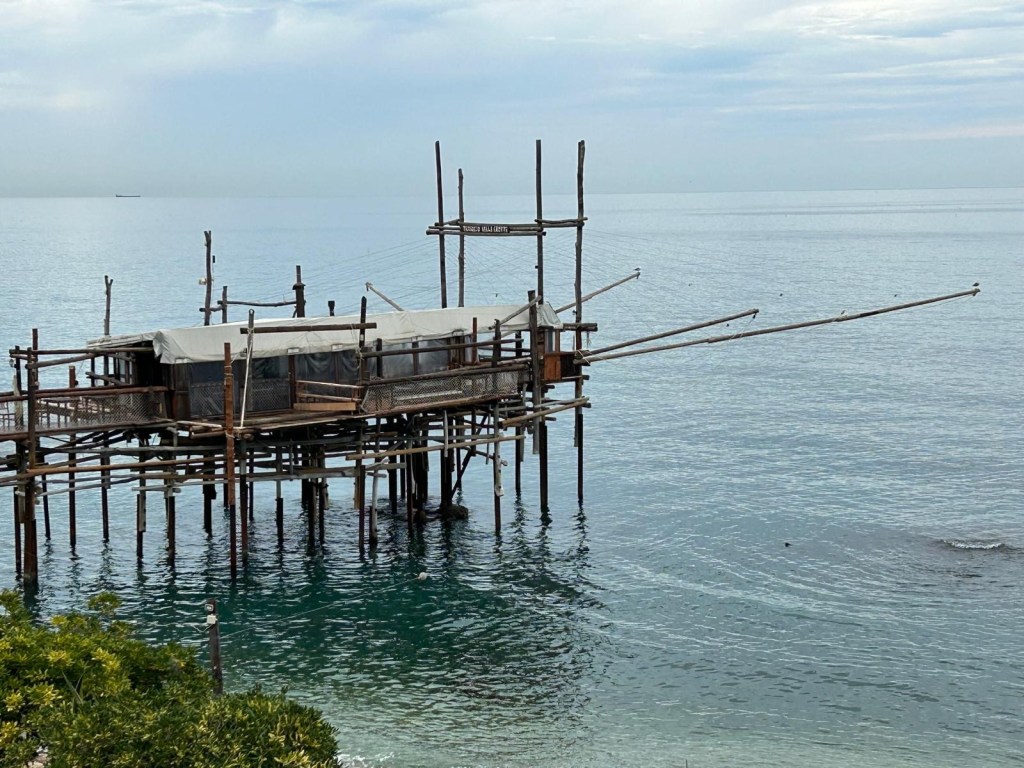
The platforms provide everything you need for fishing. Nets are cast out, and using the poles that project out, they are gathered in to collect the fish. If there is a need, the fish are used immediately. If not, they are trapped in the net and lowered into the water until they are needed.
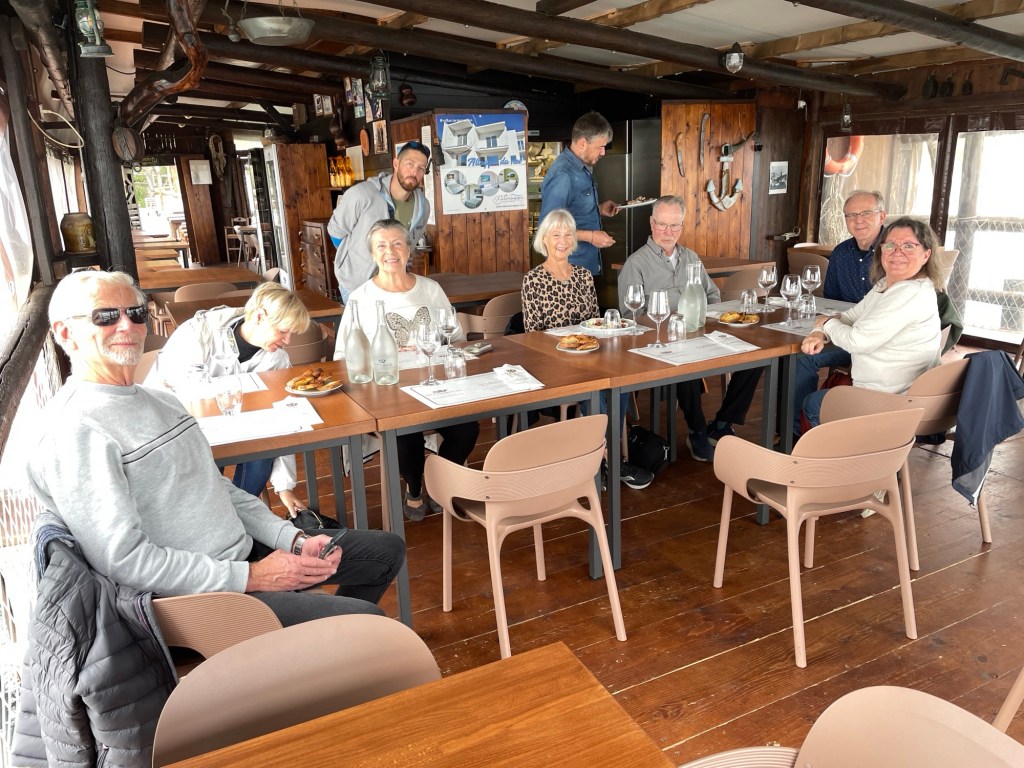
In addition, the platform serves as a restaurant.
Then it was time for a visit to the Ortona war cemetery where nearly two thousand troops died in the Second World War, most of them Canadians, liberating Italy from the nazis. It was a somber scene.

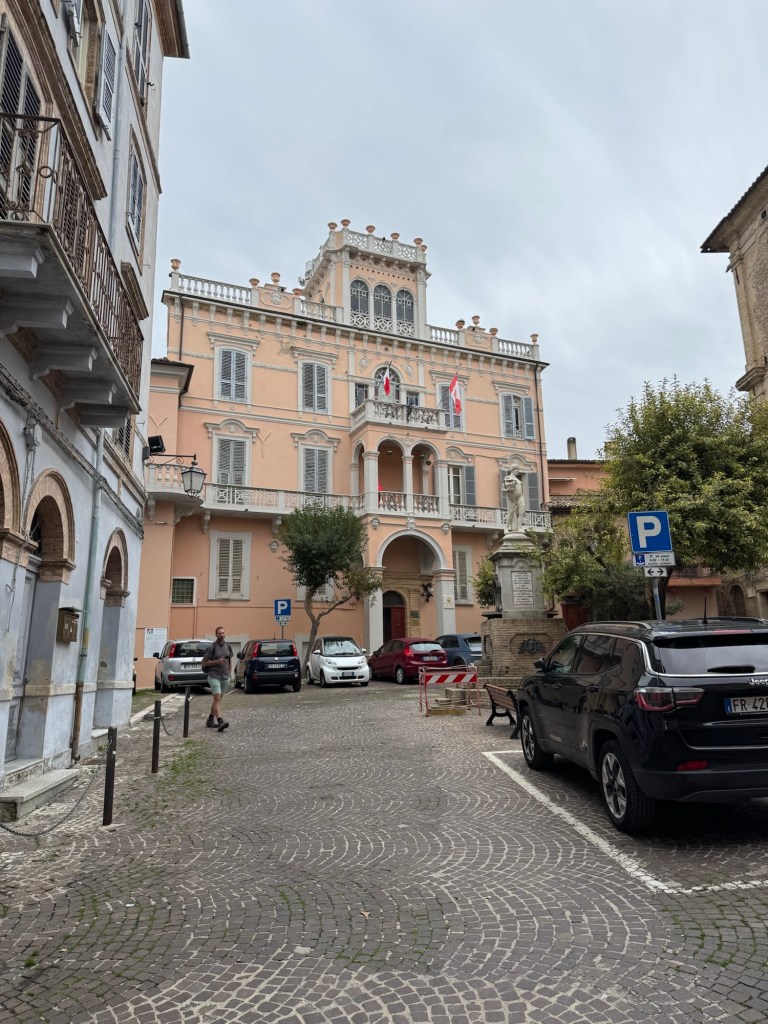
That was then, but what about now? When the first group was touring Lanciano, we saw a group of teens in school uniforms and heard them speaking English. One of them also had a maple leaf sewn on their school uniform so we asked our guide. Because of the war experience, there are strong ties between this region and Canada, including a Canadian high school in Lanciano. The things that happened then continue to shape what happens now.
As always at The Amazing Abruzzo, we finished our day with a fabulous meal prepared specially for us by local chefs. Tonight’s meal ended with an amazing dessert. Apparently this is the most special desert made in Abruzzo, and always features prominently at events like birthdays or weddings.
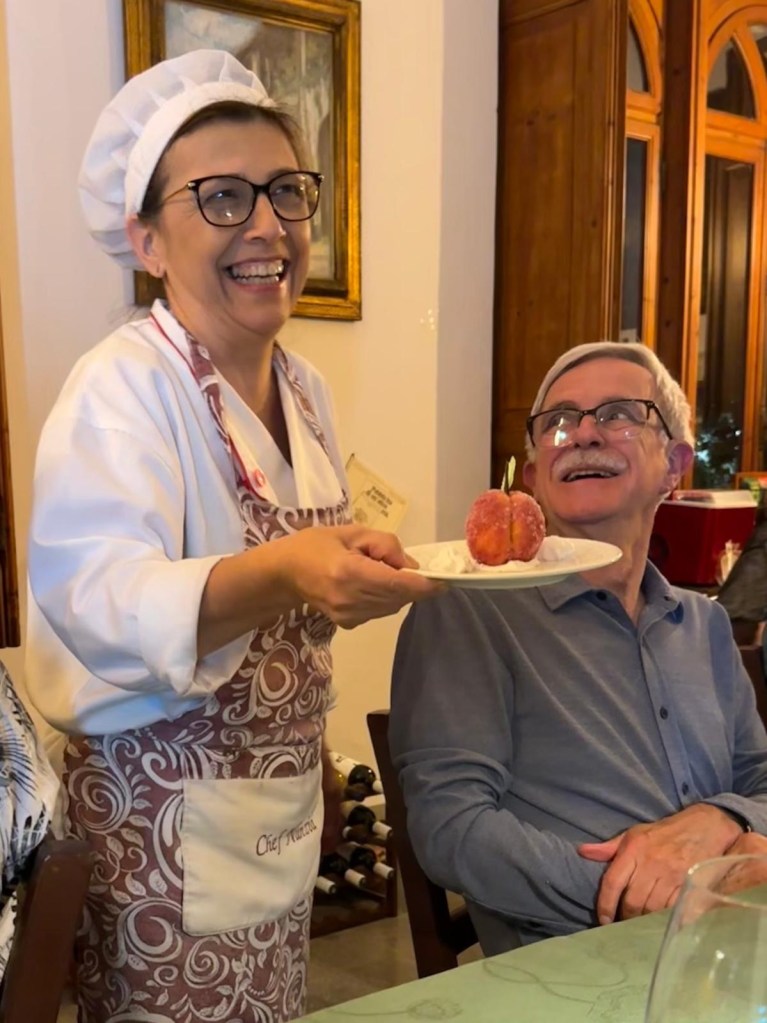
It was fabulous.


 If It Was Today...
Jim you forget to mention olive tasting experience, although I don’t think it is something you will forget!
For those who are wondering, I was told that fresh olives are very bitter … basically inedible. So of course I had to try one. I can confirm that they are indeed extremely bitter and coat your mouth with a lingering bitter aftertaste that lasts an hour or more. That’s why you always find olives in a brine of some sort. It removes the bitter taste. And when the olives are crushed the juice is a combination of oil and water but most of the bitter taste is in the water, which is discarded. However high quality fresh olive oil will have a slight pepper/bitter taste, and that is a good thing.