
We moved from the east coast to the west coast of the Coromandel today. It’s a short drive – only 47 km, but the roads are very narrow and winding, so Google maps says that the trip could take up to an hour. We found that to be pretty accurate. You can do the math and figure out how fast (slow) we were driving. But even with a very slow drive, we still had time to kill before we could check into your next hotel. So we decided to check out … wait for it … more beaches. I saw at least three beaches along our route, but one looked particularly interesting. It was a bit off our path, and had an access road that was even narrower and steeper than the rest of the drive, but it turned out to be well worth it.
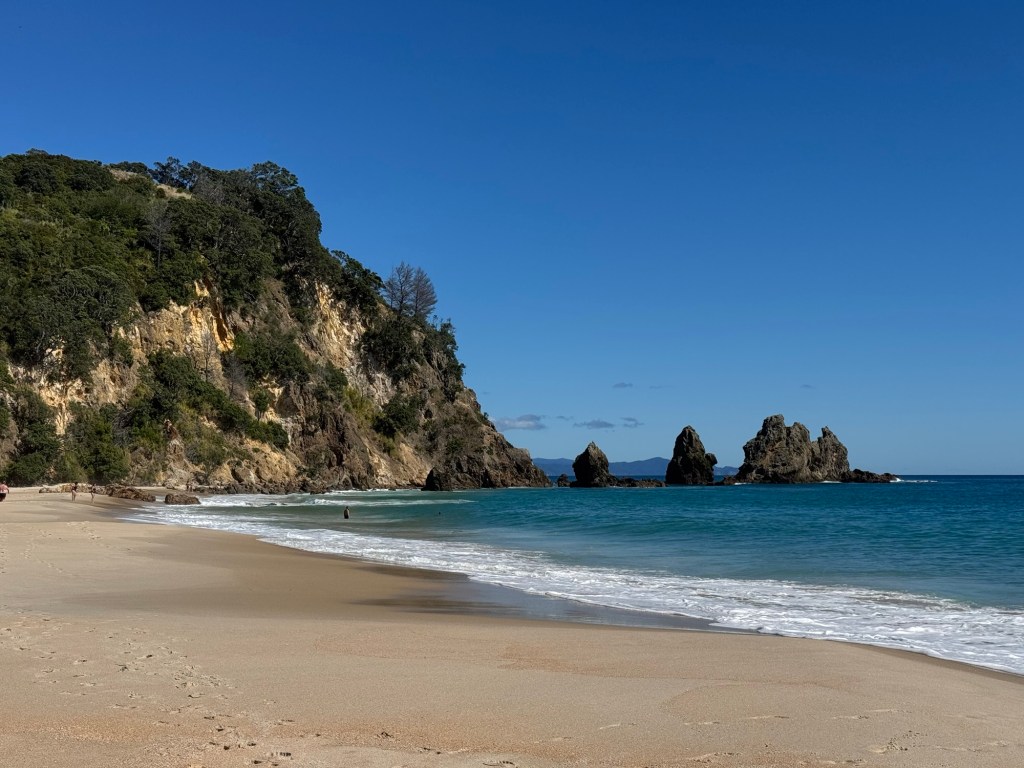
Most of the beach was pure sand, but one end had rocks that jutted out of the water, and other rock that rose out of the beach.
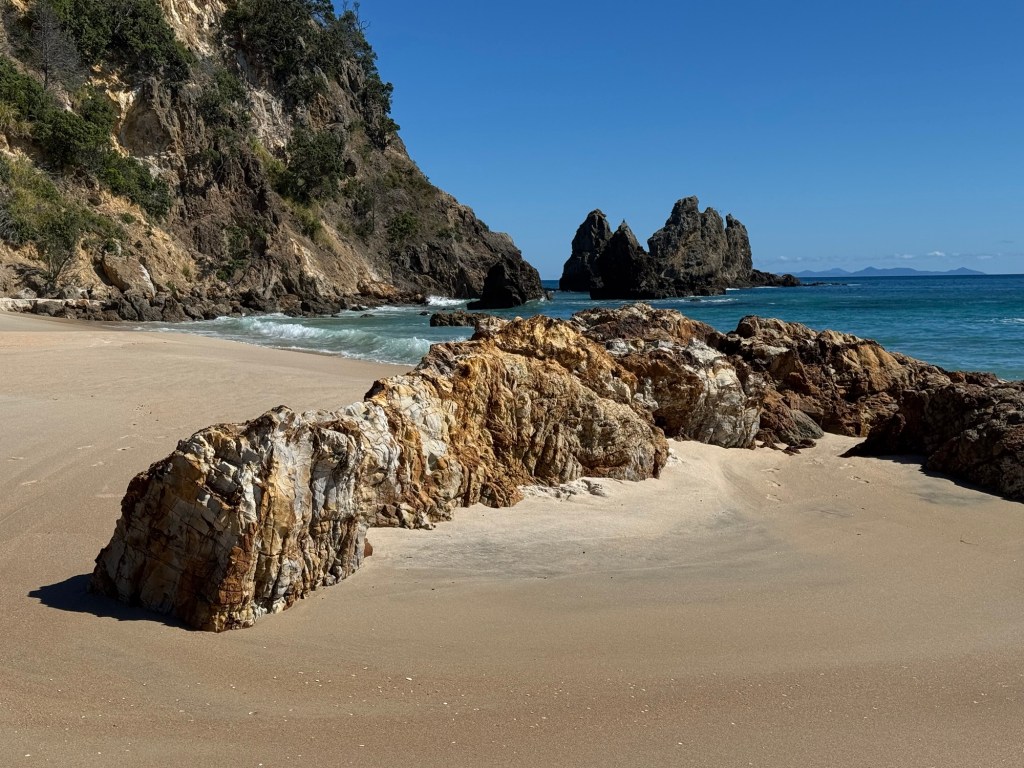
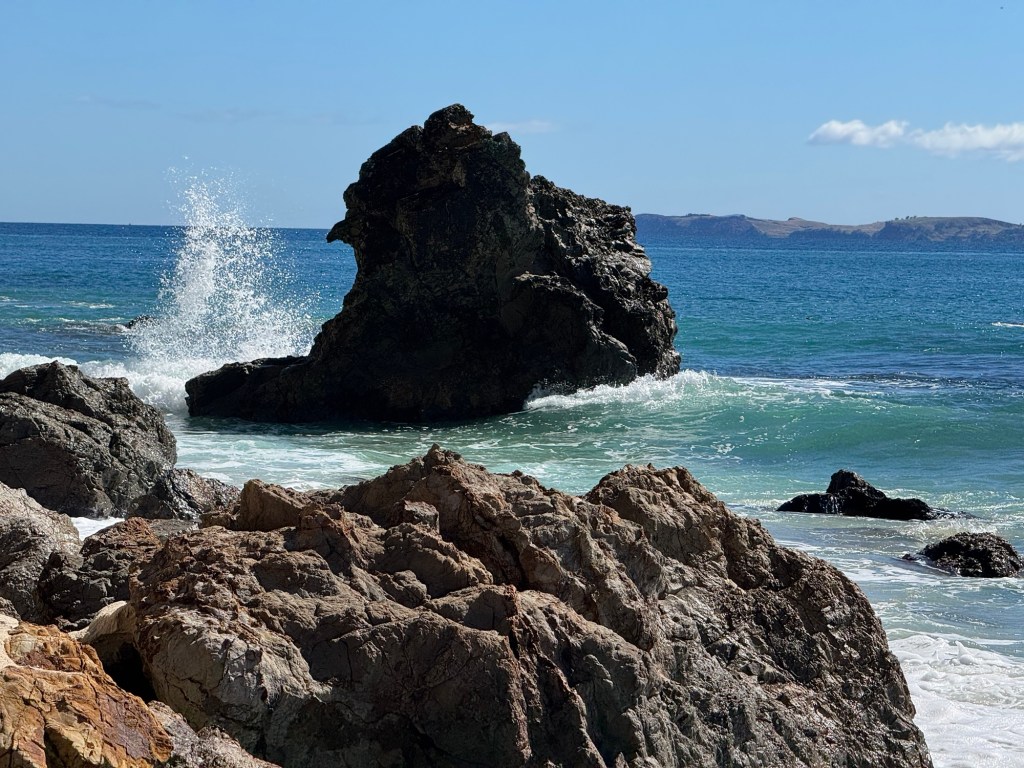
The surf was impressive to watch, but I wouldn’t have wanted to be in the water anywhere near the rocks.
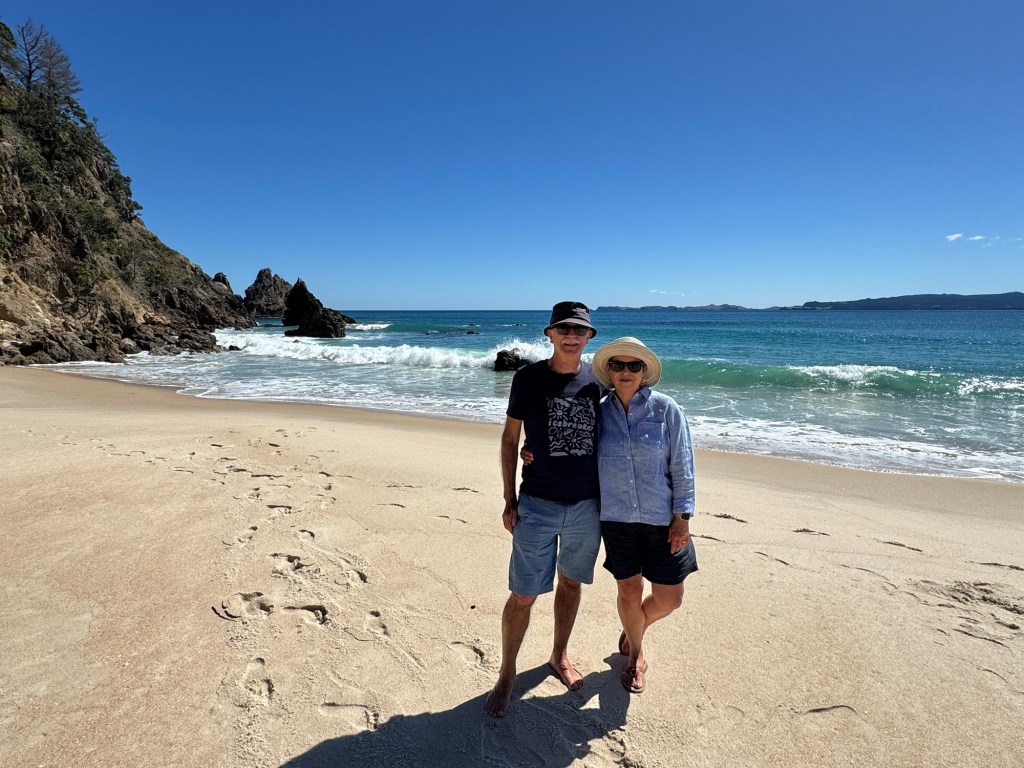
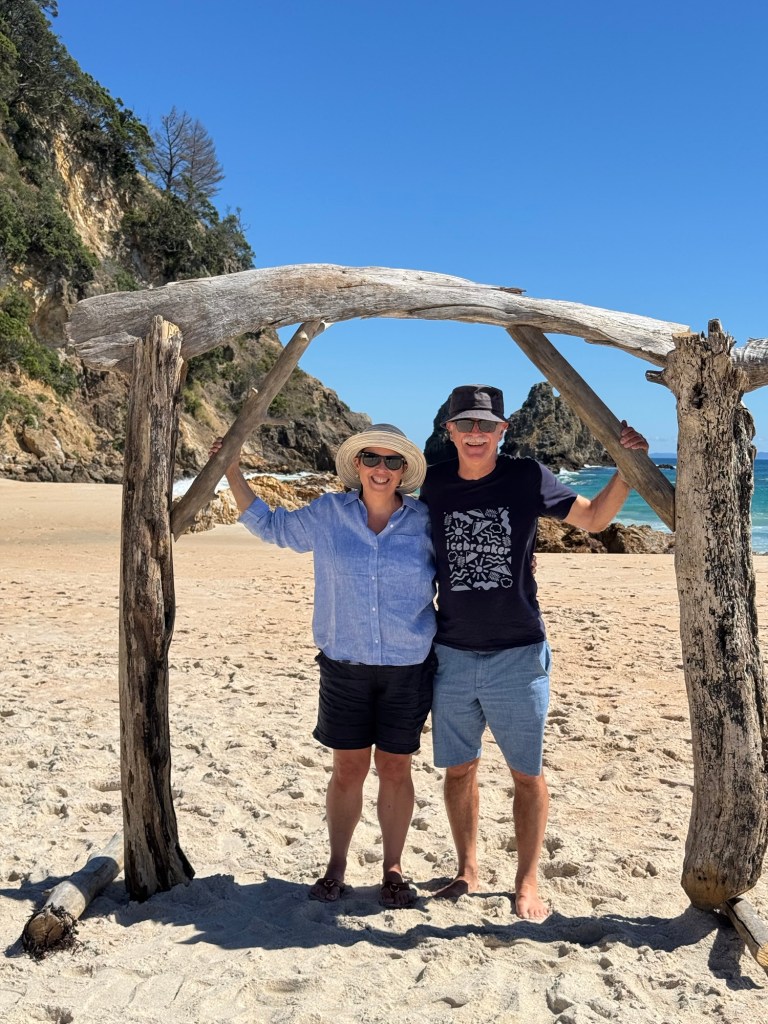
As we were walking along the beach, a couple asked us to take their picture, and we started to talk. They were from Germany on an extended trip to Australia and New Zealand. Like us, they had fallen in love with New Zealand and planned to return, even though for them the flight is even longer than it is for us. As we were leaving, they asked if we wanted them to take our picture as well.
One of the things this beach is known for is the “stick in the sand”. I’ve no idea how it started, but it has become a permanent fixture.
The last beach we stayed at had a ton of sea shells that had just been opened by the seabirds. On this beach, the shells had been worn down to the point where almost nothing remained.

A picnic table under a tree by the beach gives you a sense of how relaxing this beach was.
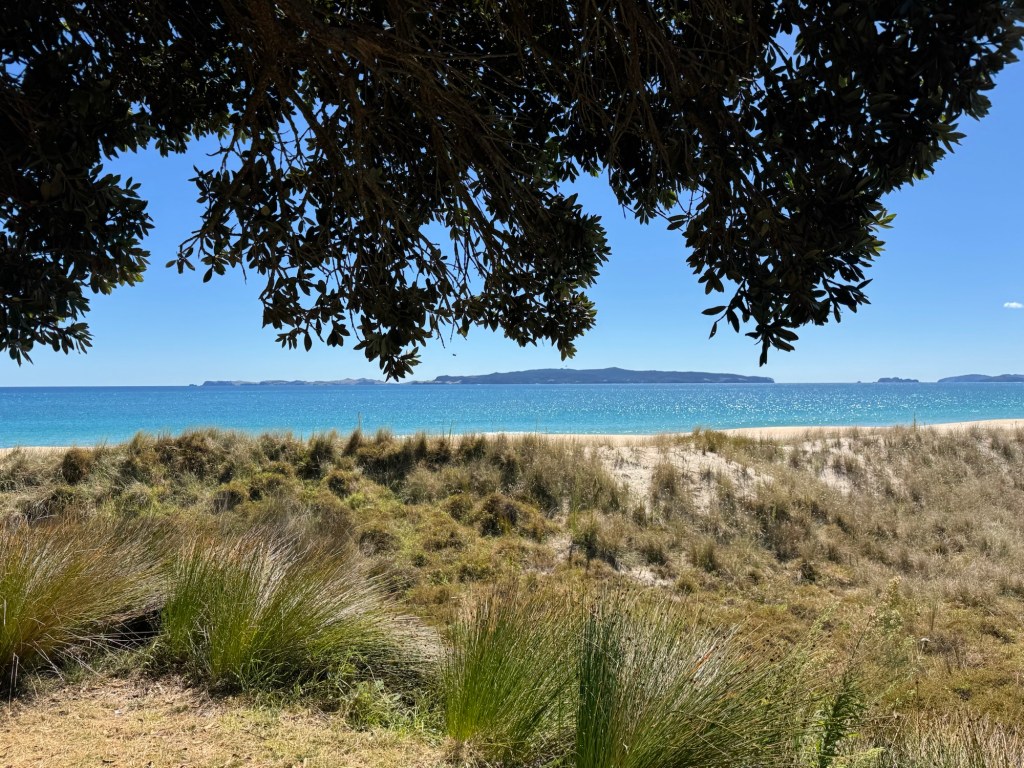
Behind the beach there were equally stunning hills.
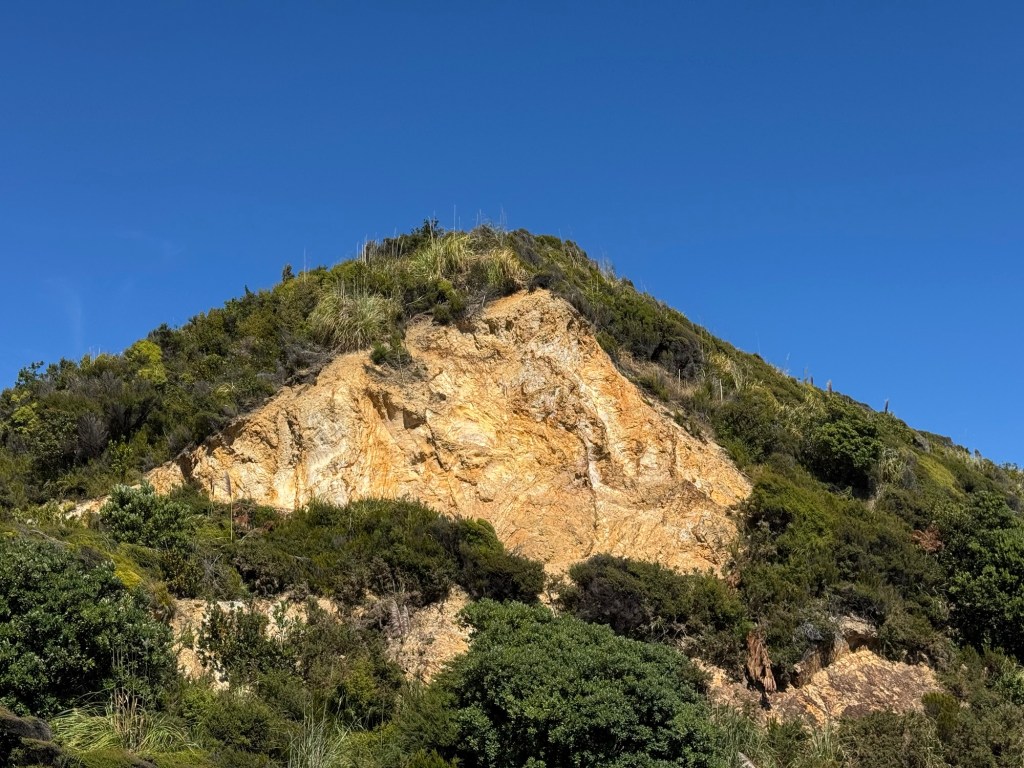
Eventually we had to leave the beach and brave the rest of the drive to our hotel in Coromandel town. We arrived safely, and after checking in and unpacking, we went for a walk in a nearby nature reserve with native trees and birds.
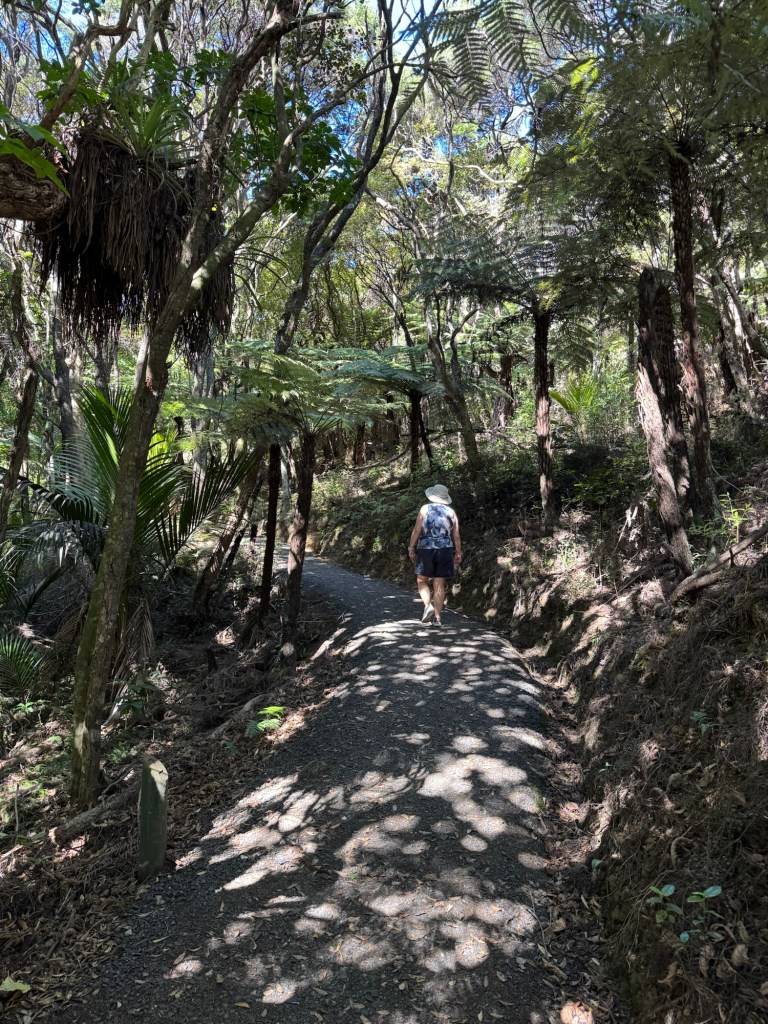
The star attraction of the reserve is a 1200 year old kauri tree. Let that sink in for a moment as you think about what was happening in the world when that tree sprouted. Here is a picture of the tree. It’s hard to capture the true scale of the tree, but it is over two meters in diameter.

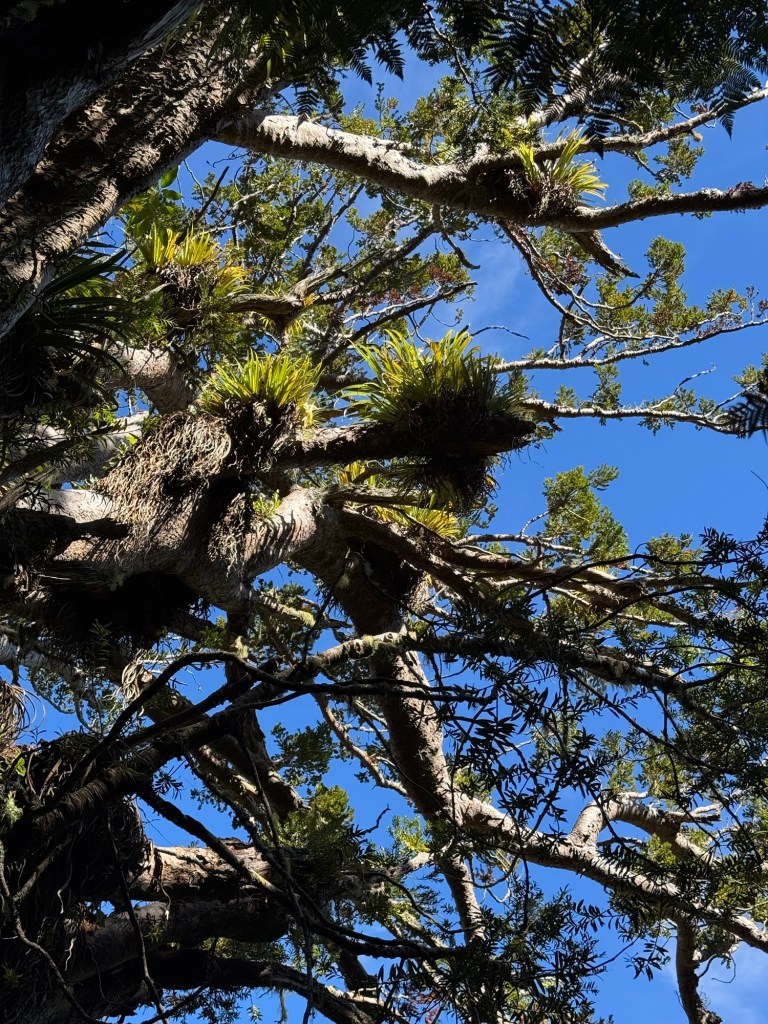
The upper branches held an entire ecosystem of their own.
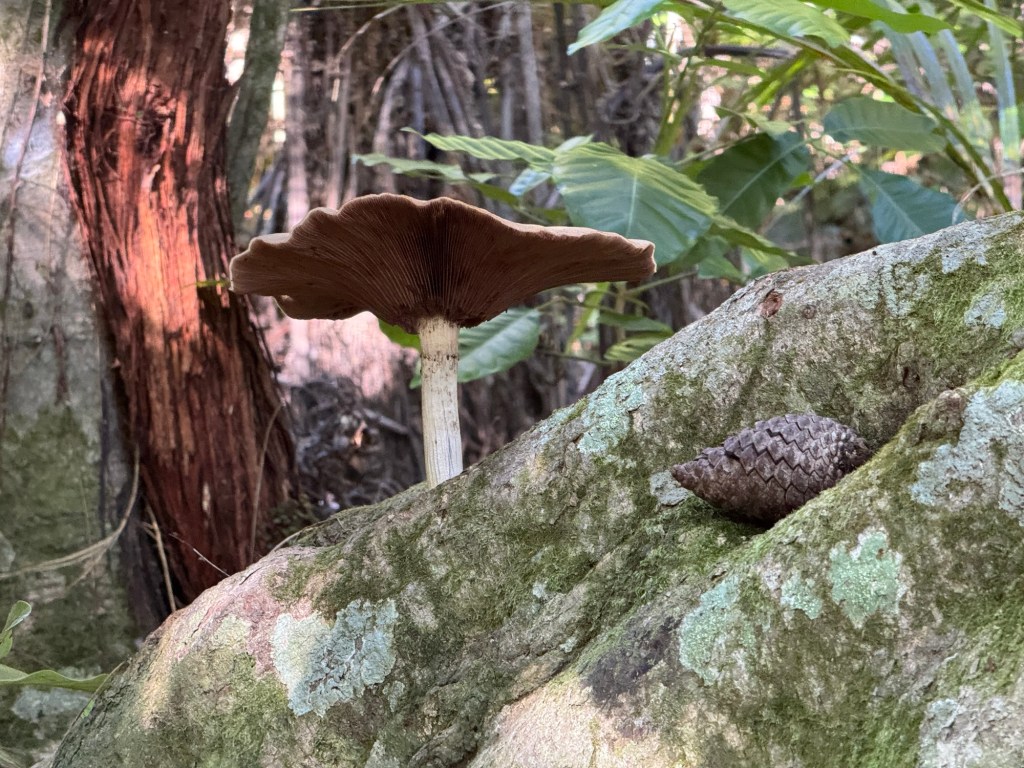
Later on the walk we spotted this mushroom near a pine cone and thought it made an interesting picture.
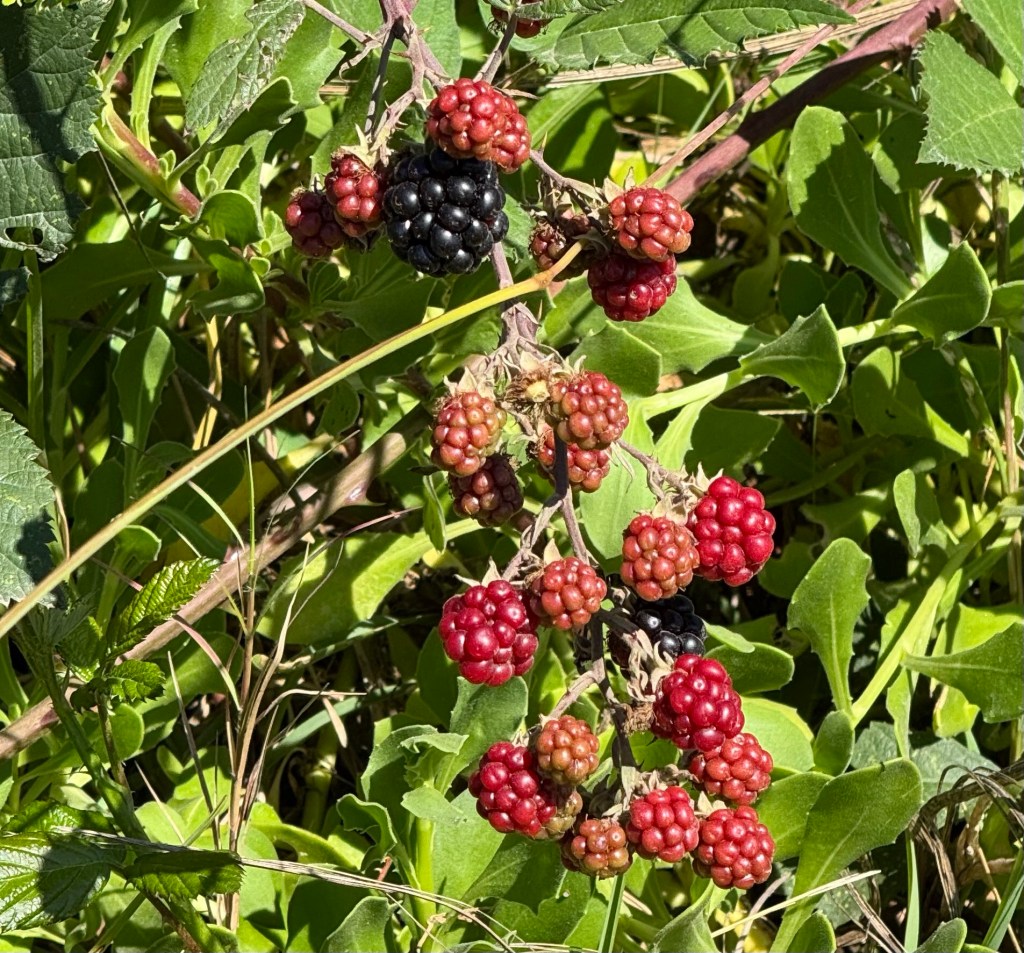
And then, outside the reserve, some blackberries. All I could think of was the snow at home.
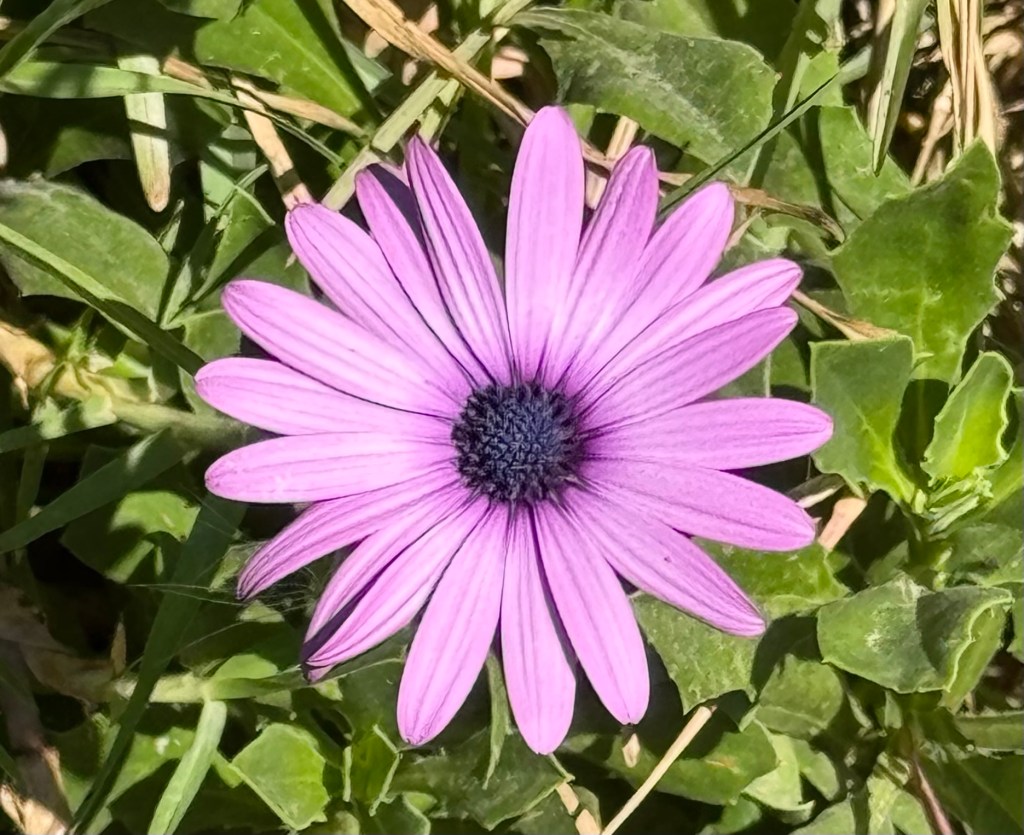
And a single African Daisy. More thoughts of snow.
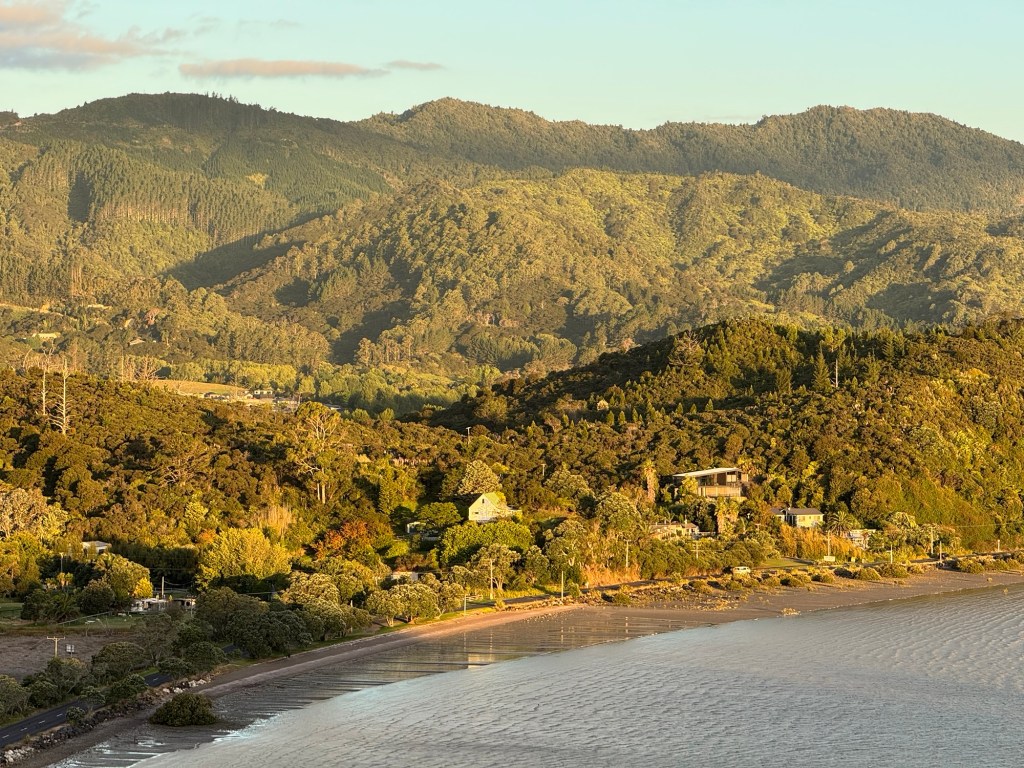
Then it was back to the B&B for drinks on the deck as we looked through pictures to find the theme for the day. The temperature dropped as the sun set, and we enjoyed a lovely Pinot Noir we bought at the winery in Blenheim as we ate on the deck. We enjoyed a steak salad with blue cheese. New Zealand makes fantastic blue cheese, by the way. Every one we have tried here has been amazing. But not as amazing as the view of the setting sun illuminated the hills.
Tomorrow … will be another day. Another lovely day, no doubt.


 If It Was Today...
I ‘liked’ your blog article, too, but I don’t think it registered it. Just wanted you to know that I’m faithfully keeping up and enjoying travelling with you!
oh boy!
Kauri trees are a) amazingly old, b) amazingly big, and c) were valued for their ‘non-rotting’ nature. They can have a girth if 16m and live over 2000 years!! We travelled through a kauri forest in the north part of the North Island many years ago.