
For over a hundred years, the valley that is now Zealandia was the main water reservoir for Wellington’s water supply. And then, in 1978, an engineering report discovered that the dam was an earthquake risk. It was directly over the Wellington fault, which isn’t a great place to build a dam. The water level was lowered and the upper dam was decommissioned in 1991. The lower dam was decommissioned later, with only a small lake remaining as an emergency water supply for Wellington, and habitat for the local birds.
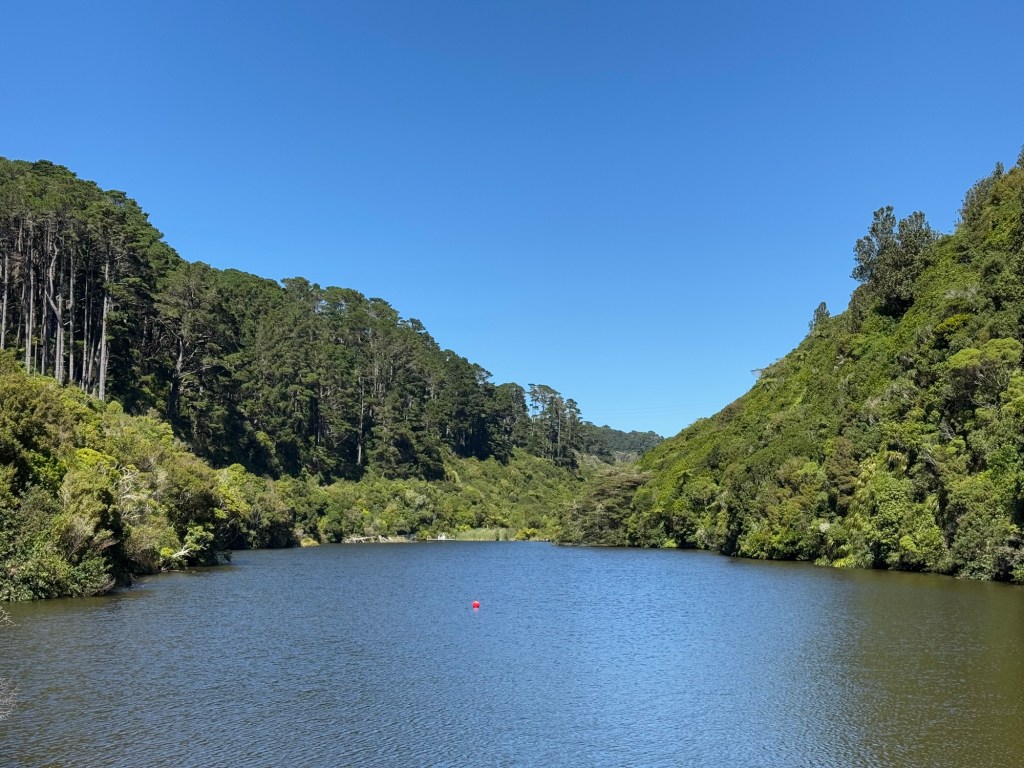
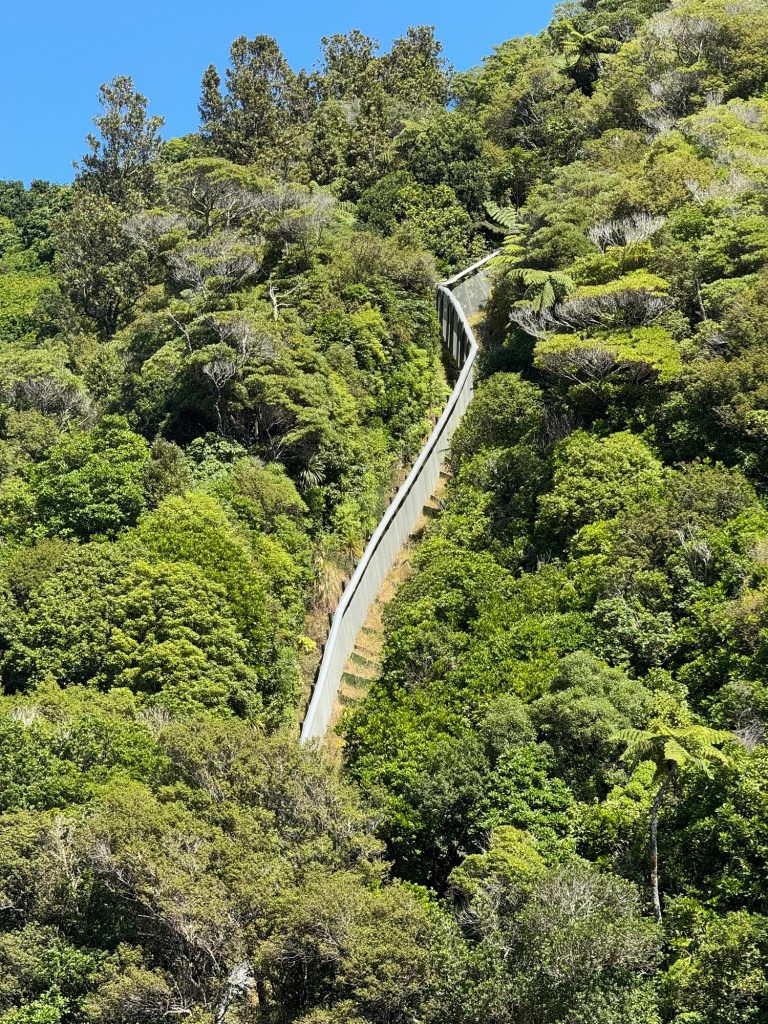
Local groups were already working on a plan for a wildlife sanctuary for native New Zealand birds. The former reservoir was perfect, but first they needed a way to keep invasive species out – things like rats, mice, stoats, cats, and possums. A special fence that provided a barrier both above and below ground was developed and now encloses the site. The fence is 8.6 km long and completely surrounds the sanctuary.
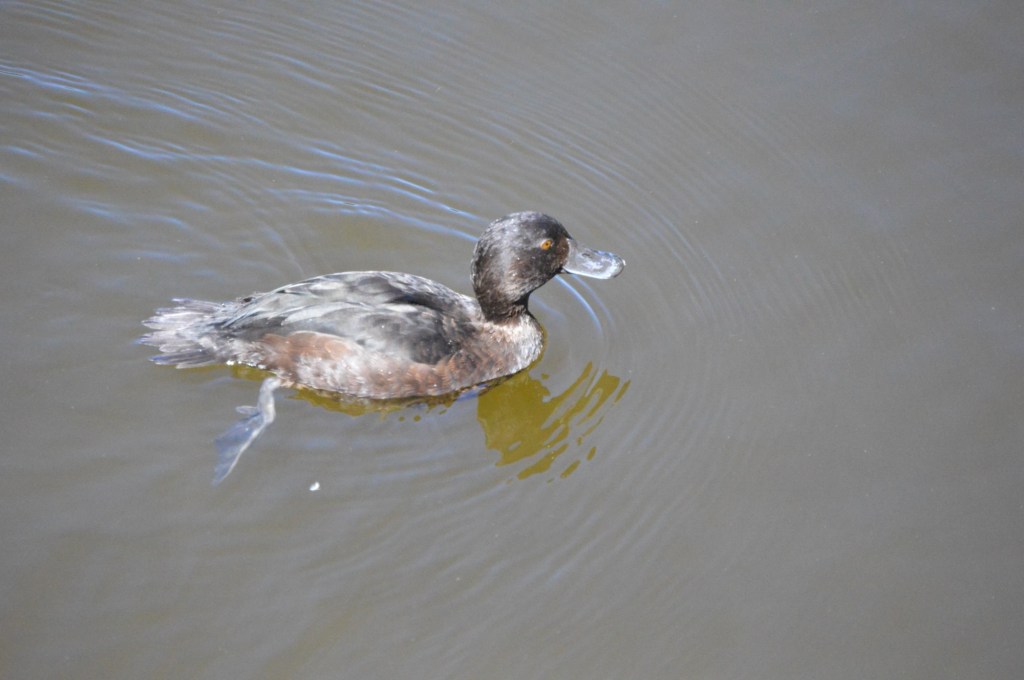
Zealandia is an amazing place where you can walk through native flora and observe native birds. This means lots of excellent pictures.
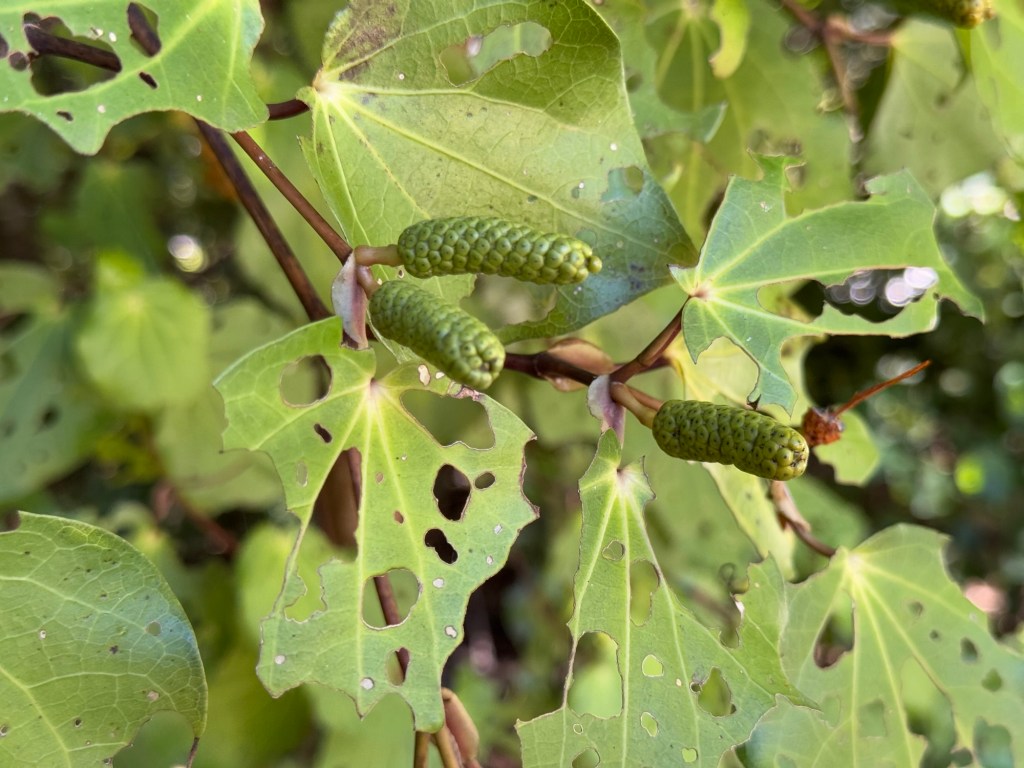
This next plant is the Kawaka, which a local caterpillar loves. When it eats the leaves, the Kawaka produces a substance that the caterpillars don’t like, so they move elsewhere. But this substance has useful medicinal properties, so the partially eaten leaves were prized by the Māori.
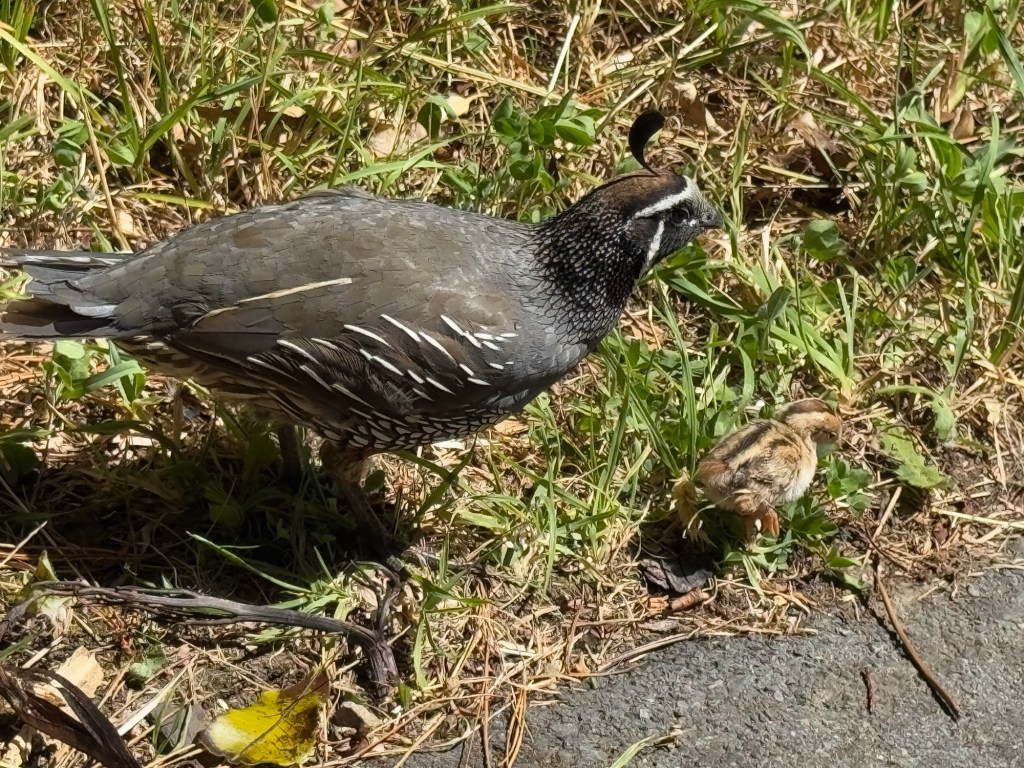
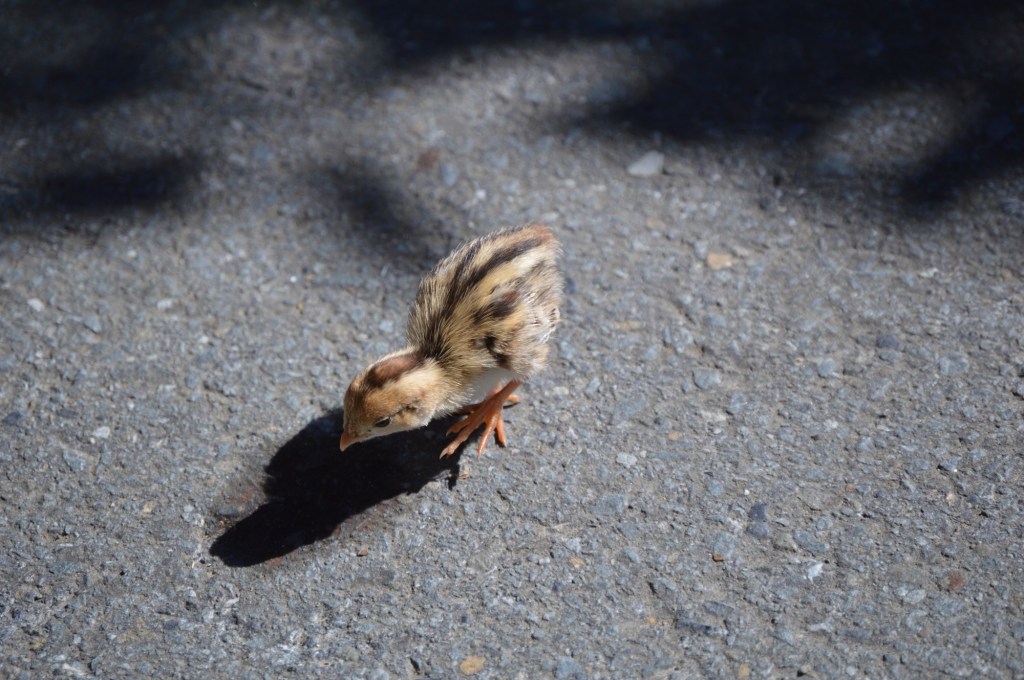
One of the popular bird species at Zealandia is the California Quail. It isn’t native, but it fills an important ecological niche that had been filled by a New Zealand quail that is now extinct. When we were visiting, the baby quails were following their parents around. They have no fear of people, so we got many excellent pictures. The babies are soooo cute -it took enormous restraint to show only one picture.
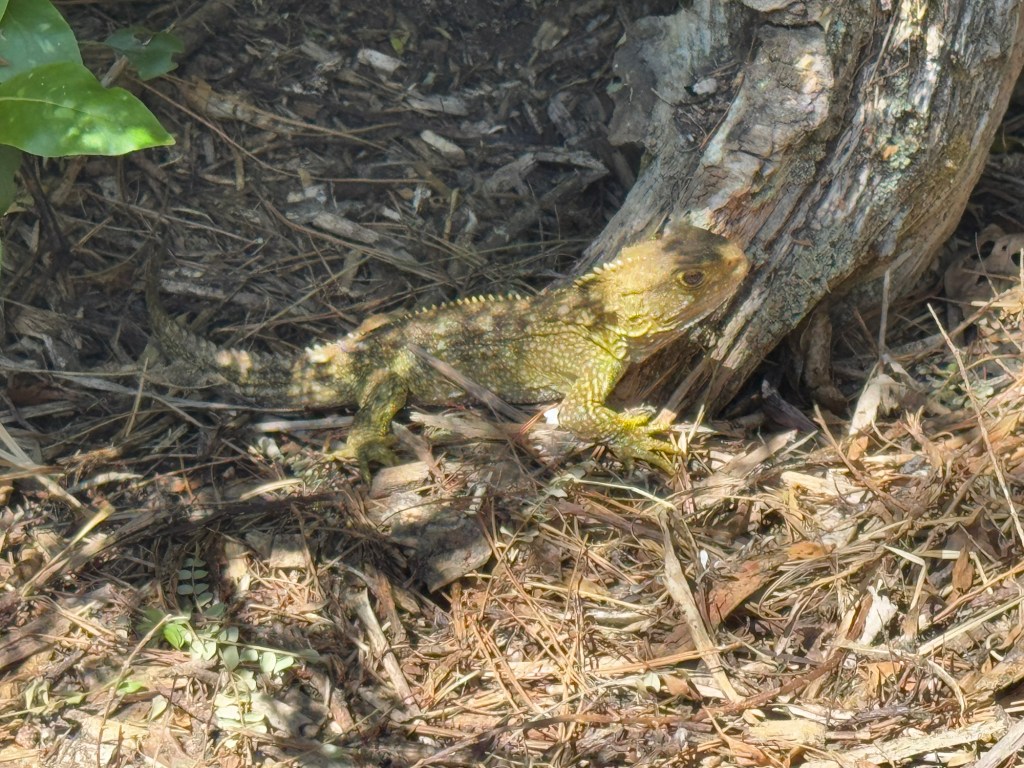
This next picture looks like a lizard, but I was informed that it is definitely not a lizard, but a reptile. It is the Tuatara, another native species.
The Kereru is a species of wood pigeon, native to New Zealand.

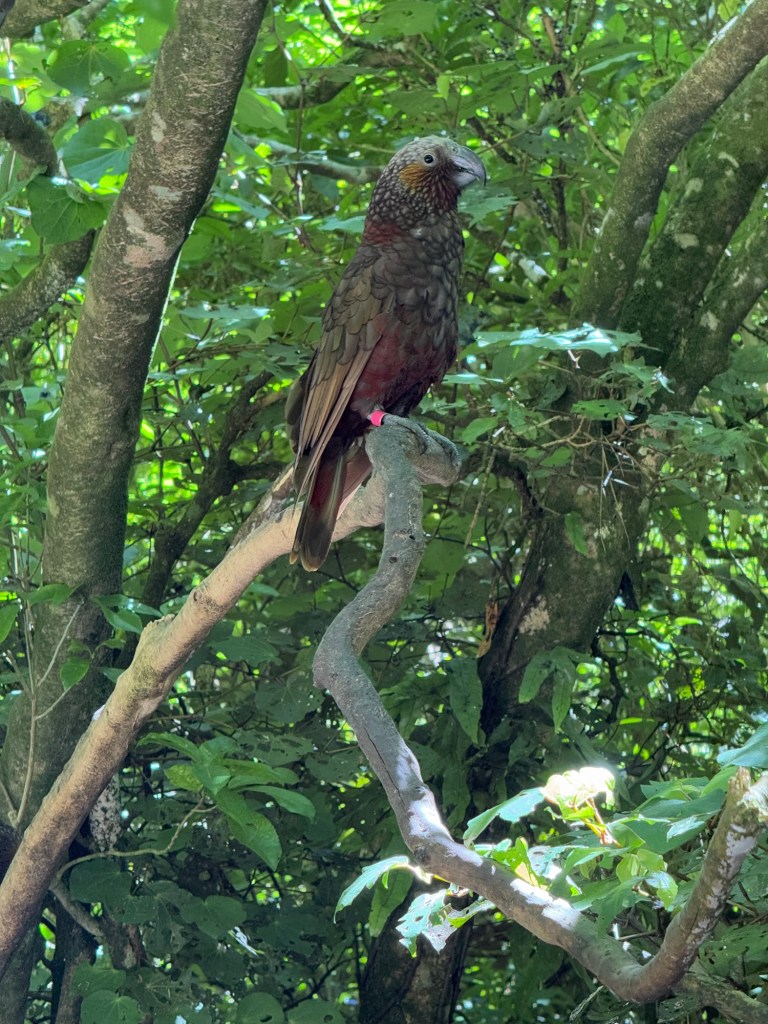
The Kaka is a native New Zealand parrot, and like all parrots, they are intelligent and very dexterous with their feet. We watched them open the feeders and then hold the food pellets in one claw as they ate them.
The Kawaka Nut is another native species.

At various points around the park, decaying logs had cavities with a plexiglass cover, and a wooden door to keep it dark inside. You could open the outer wooden door and see what insects were eating the dead tree. It’s a bit like the traditional “ant farm” with a glass side. In one of them we found a Weta – about 5 cm in length.

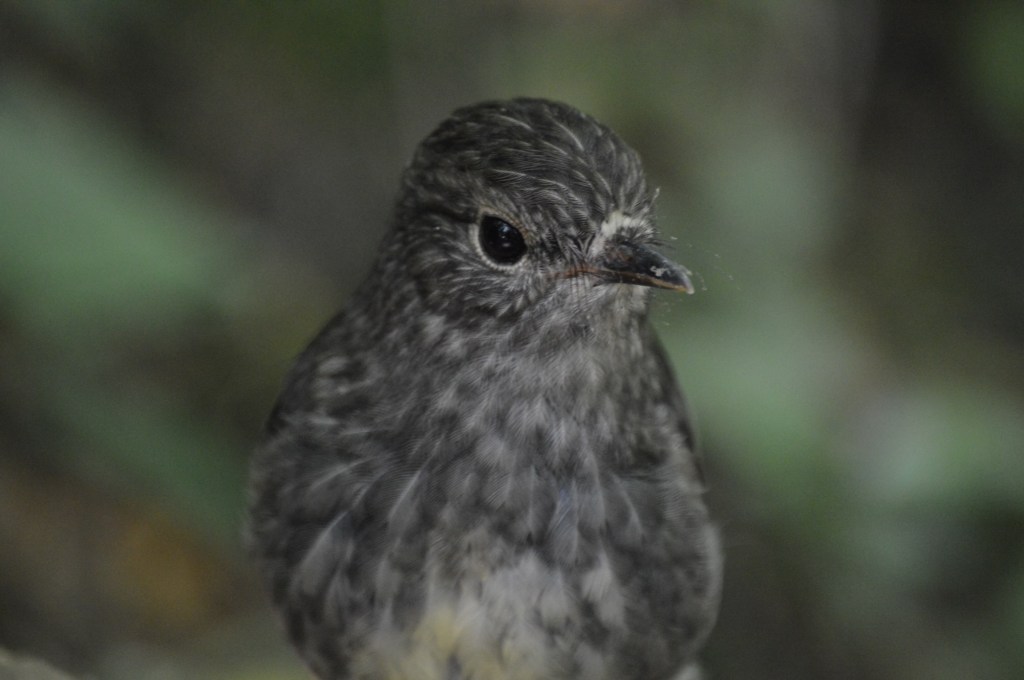
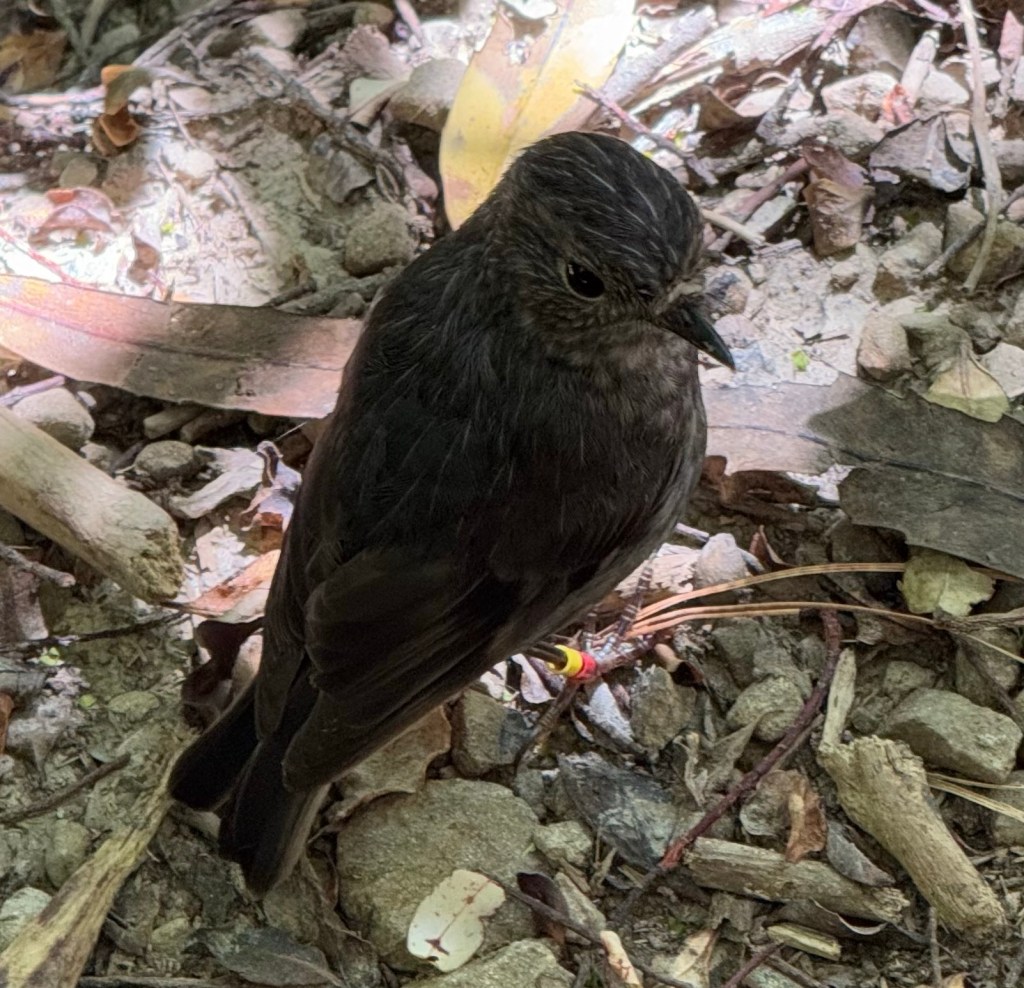
We also spotted a North Island robin, which is only distantly related to North American and European robins. They are very inquisitive and if you stand very still they will come so close that you could almost reach out and touch them.
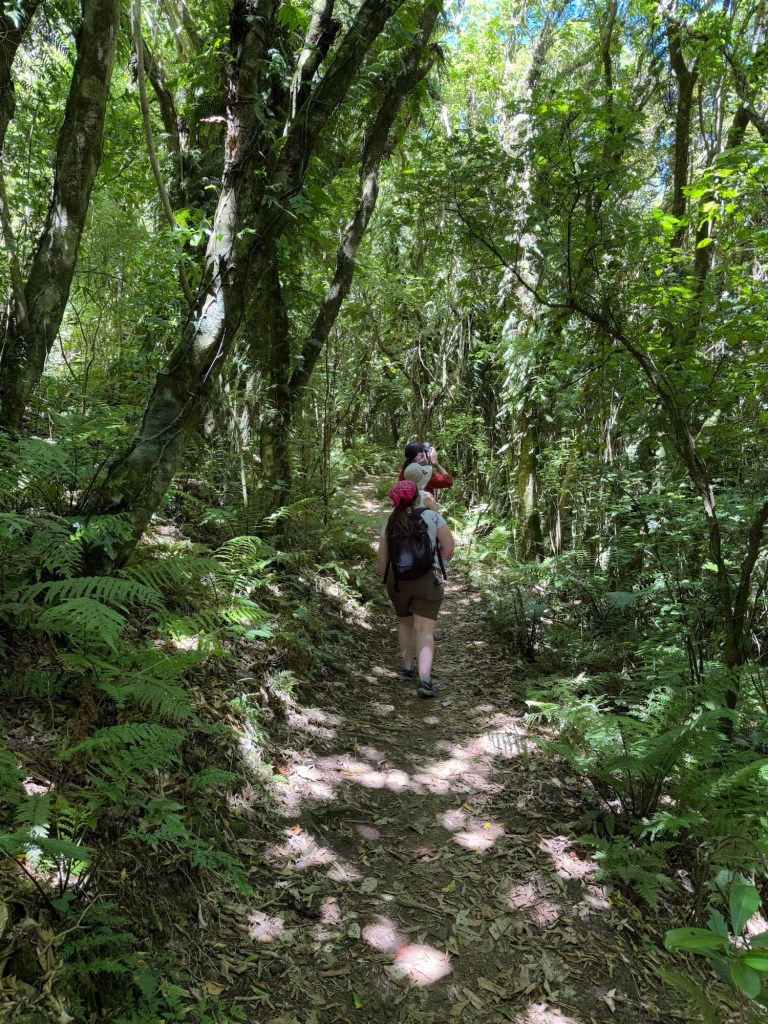
There are a number of trails around Zealandia, some gentle and some more challenging. But you are always immersed in nature and have opportunities to see native birds, and take pictures, of course.
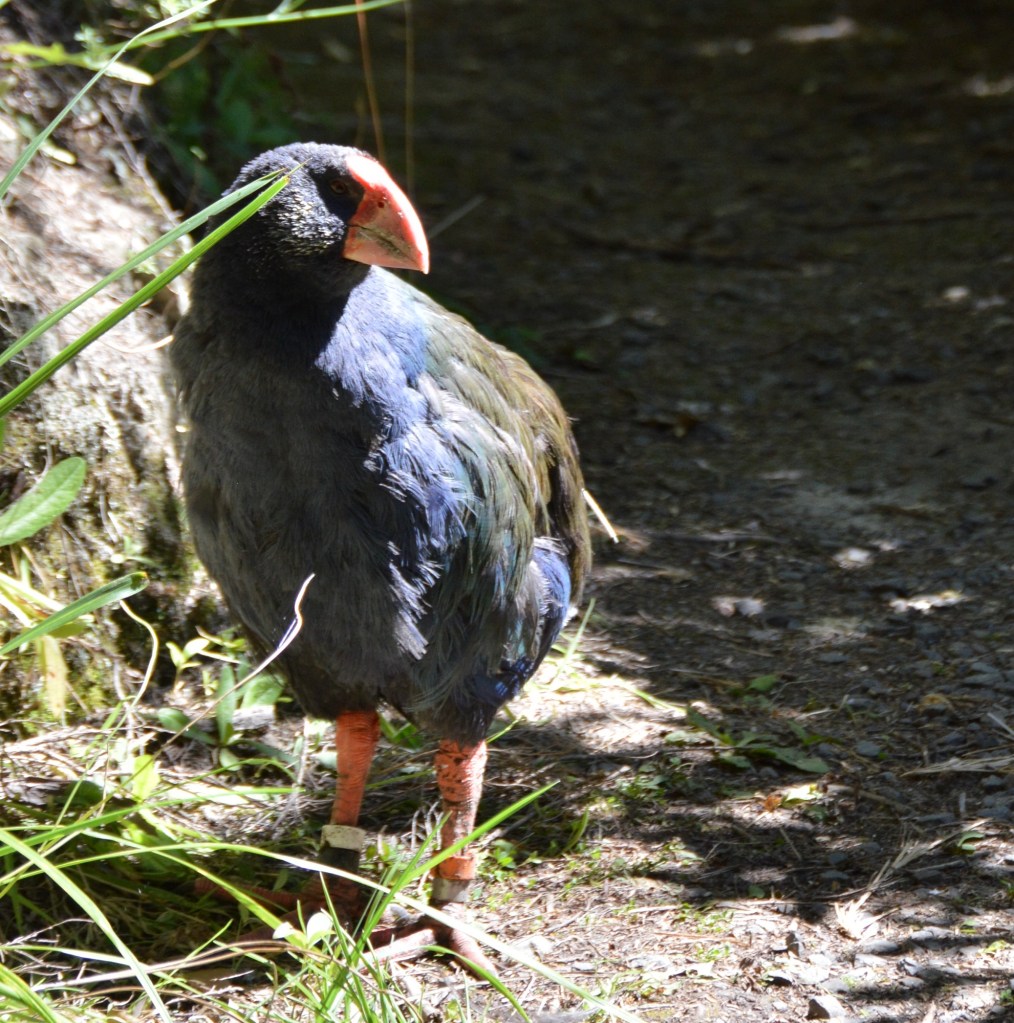
One of the main attractions at Zealandia is the Takahe. These flightless birds were believed to be extinct, until a small group were discovered in a remote area on the South Island in 1948. They are slowly making a recovery – there are currently over 500 individuals, some in Zealandia. These birds mate for life, and we were very fortunate to come across a pair.
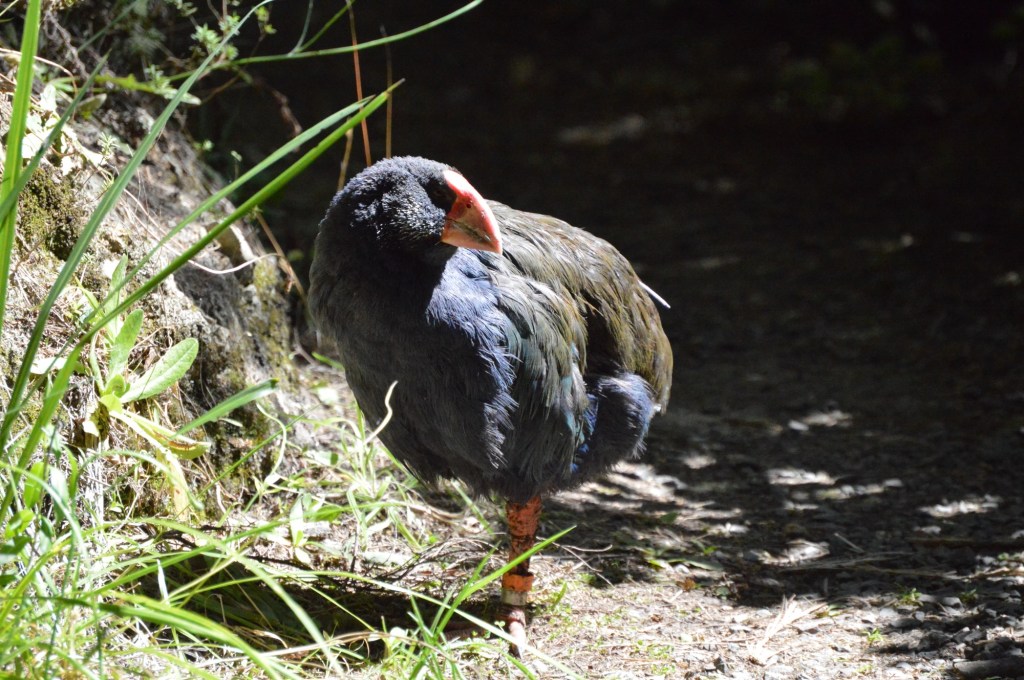
At first we could only see the female. We stood very still and watched, and then she called to her mate.
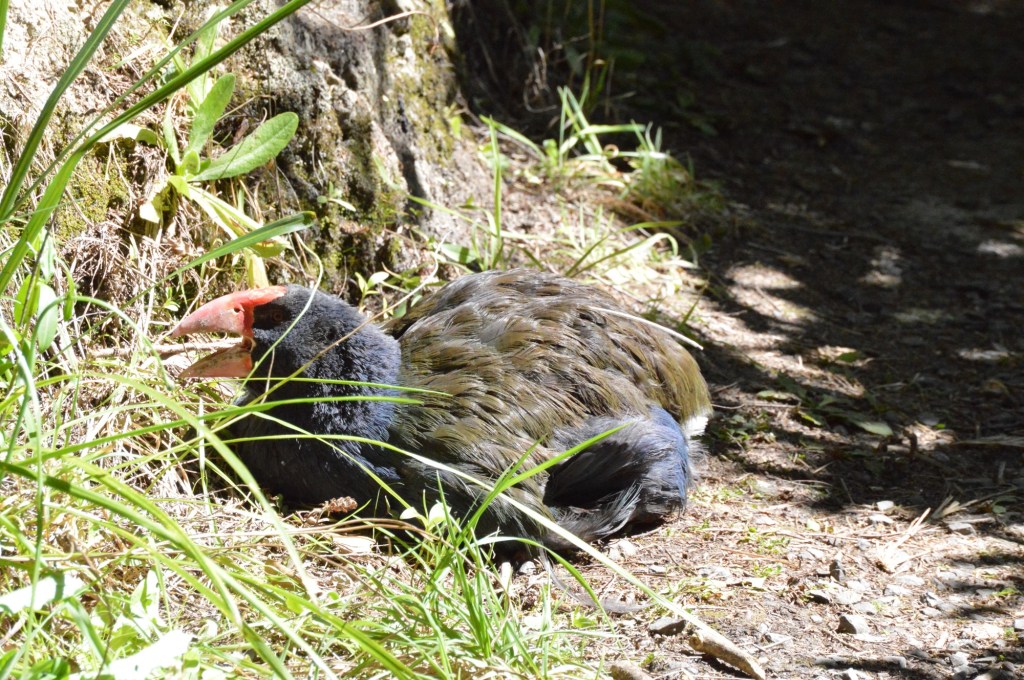
We kept watching and eventually he came into view.
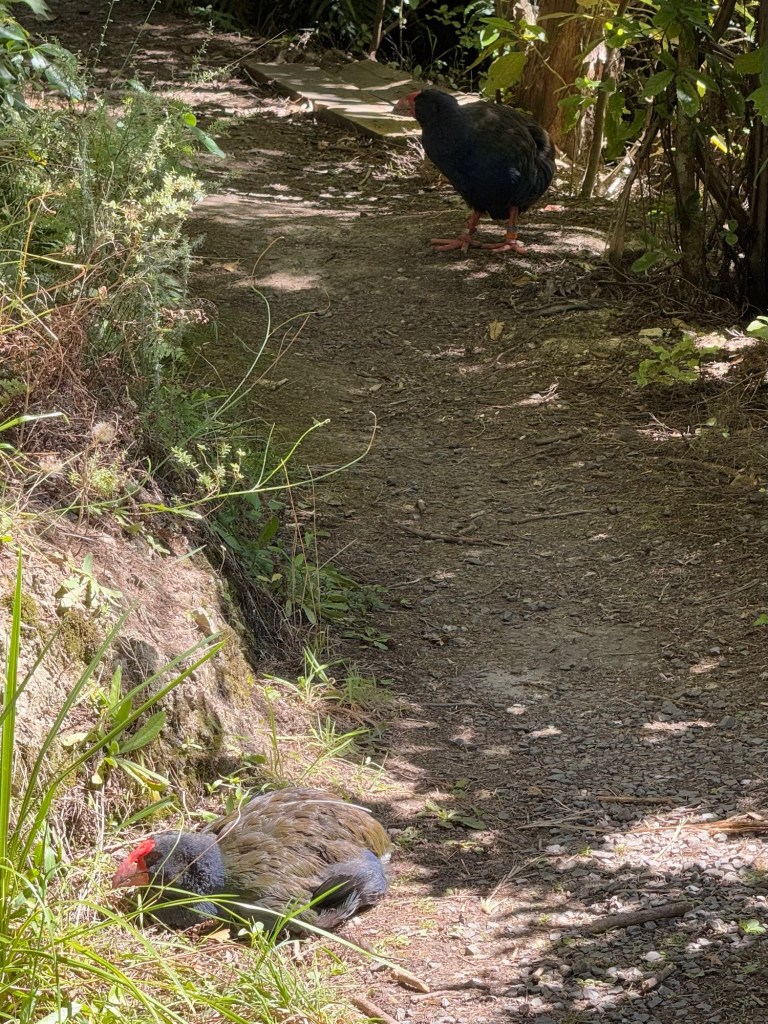
Here is another view of the female.
It was getting late, so we headed back and spotted a Rifleman or tītipounamu. Look carefully and you will see it hanging upside down from the branch.
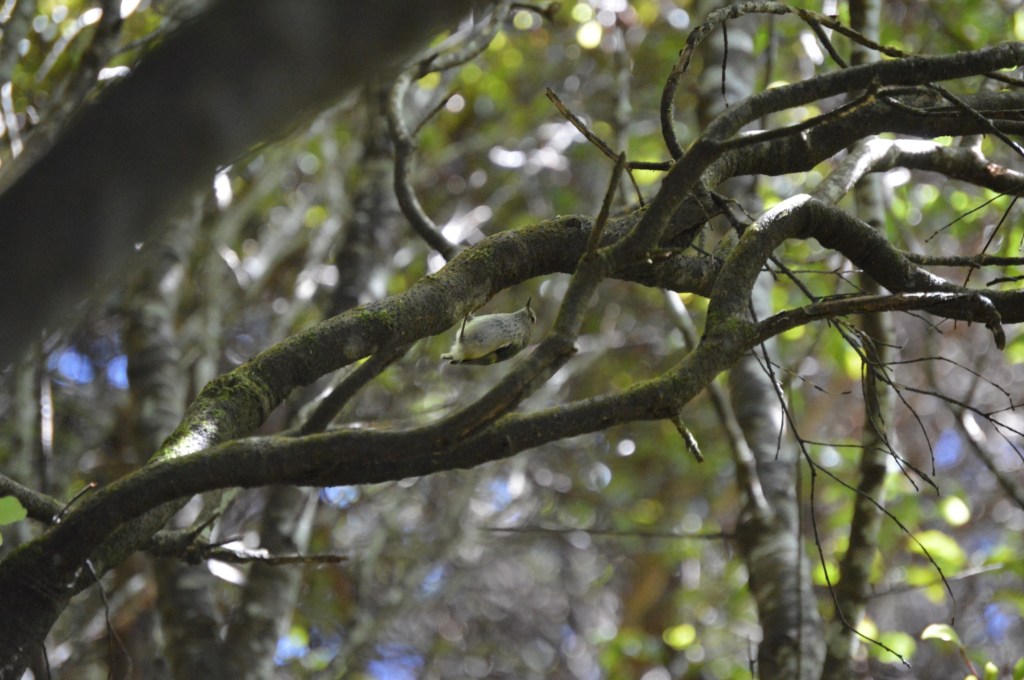
Rifleman – Māori: tītipounamu
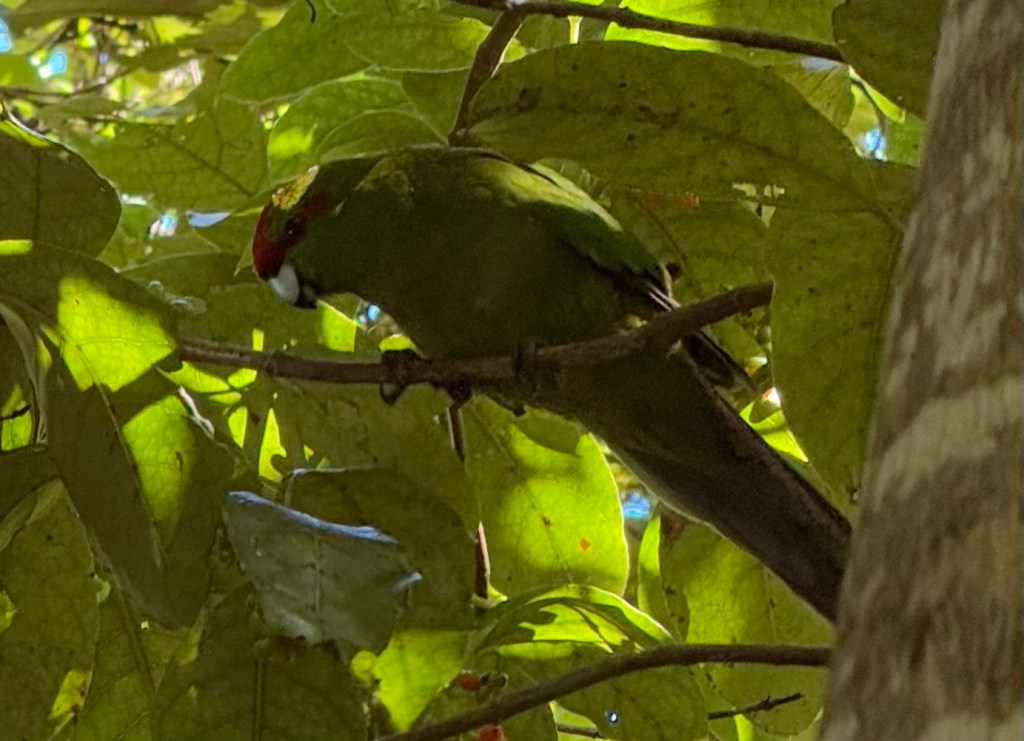
When we were nearly back, Jan suddenly spotted a Kakariki, which is a native New Zealand parakeet. The kakariki has excellent camouflage, so seeing it was a real treat. Kudos to Jan.
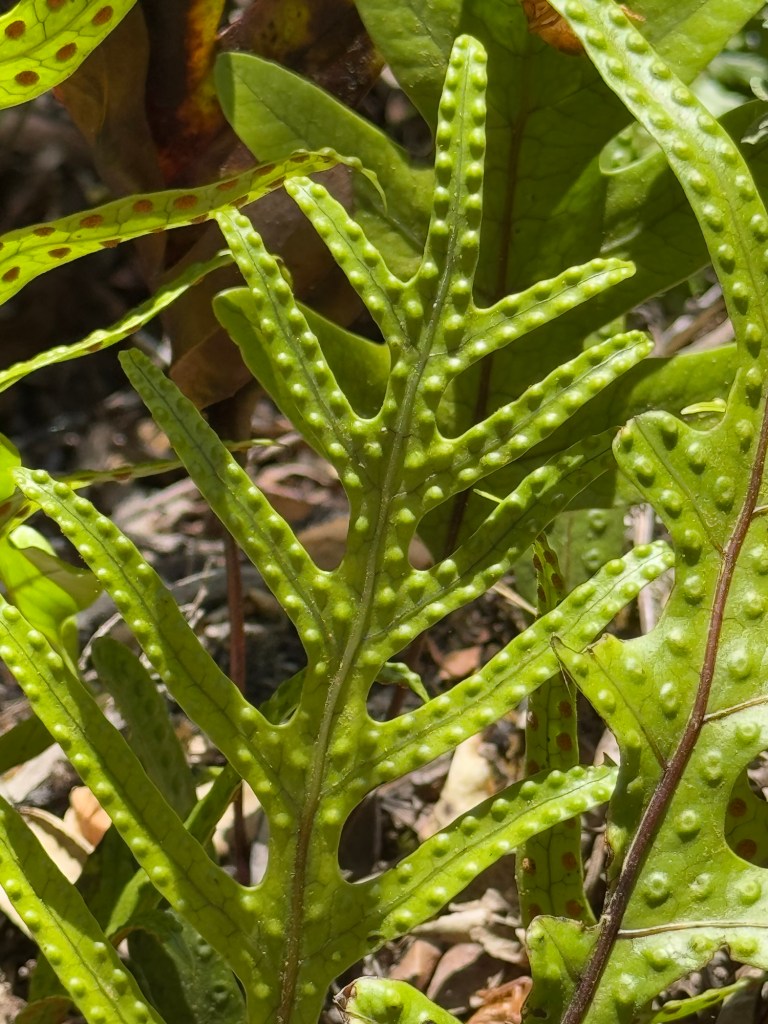
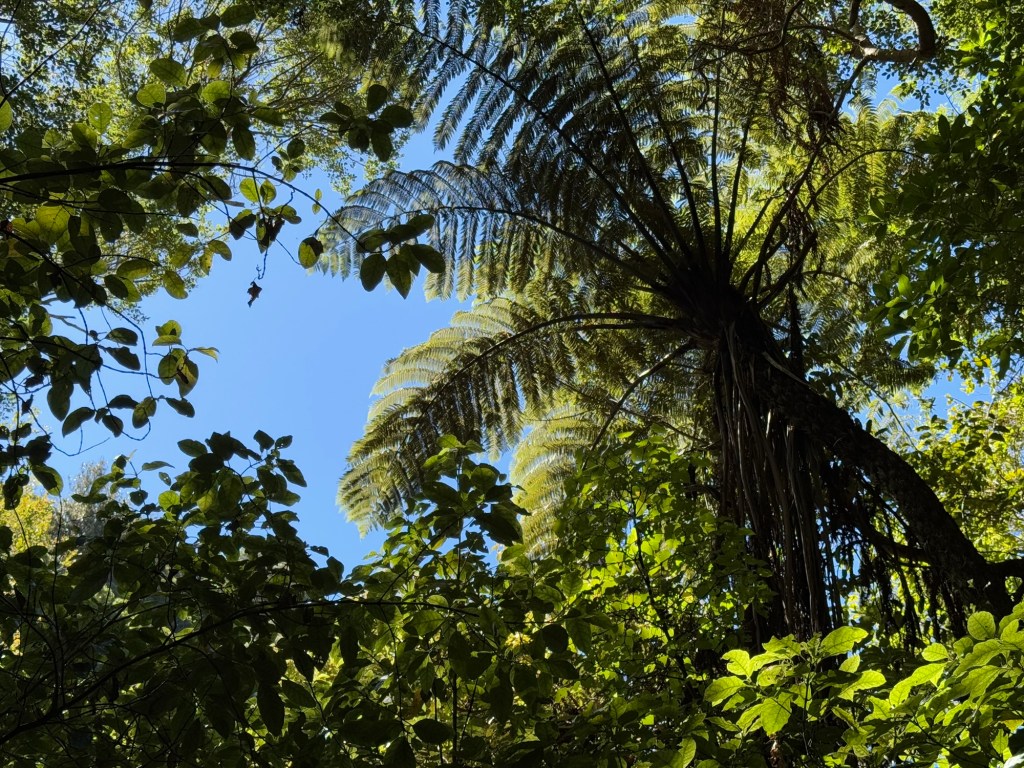
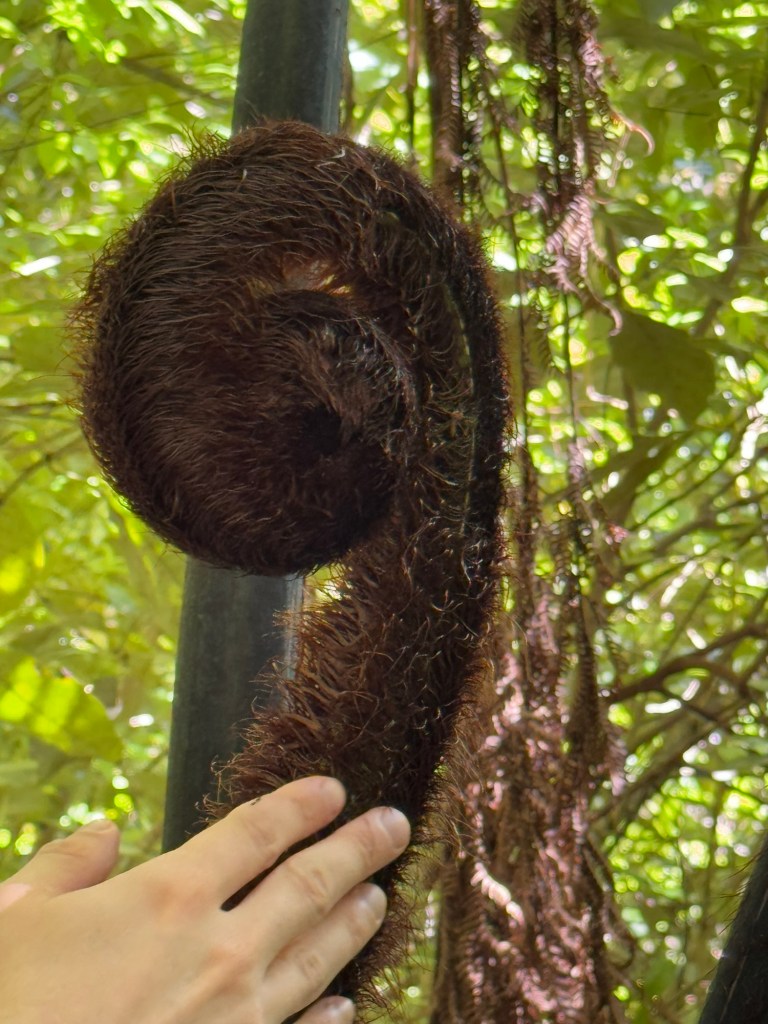
The main focus of Zealandia is the native New Zealand birds, but they are also trying to create the natural vegetation as well. It looks so strange to us, like something out of Jurassic Park. I’ll include a few shots to give you an idea. The first picture is a fern. Note the regular dots on the surface of the leaves. On one plant you can see the underside, which shows that they are spore sacs.

I’ll end with another picture of the California Quail chick. They were so incredibly cute.


 If It Was Today...